Cells participate in crucial intercellular communication by releasing exosomes, a process of paramount importance in biological and medical research. To deeply understand the mechanisms of exosomes under various physiological and pathological conditions, scientists need to modulate the release of exosomes. Particularly, exosomes originating from tumor cells have been proven to be closely associated with the worsening and spread of tumors. This discovery underscores the importance of studying tumor-derived exosomes and the use of exosome release modulators.
Fig.1 Tumor-derived exosomes promote cancer metastasis.1,2
At Creative Biolabs, we view innovating and optimizing exosome research as our mission. We are proud to introduce our latest exosome release modulation reagent products, the pioneering tools designed to offer new perspectives and possibilities in the scientific research and clinical applications of exosomes. Our modulators can either enhance or suppress the release of exosomes, opening doors for researchers to explore their potential applications in tumor development, regenerative medicine, inflammatory responses, and immune regulation among various biological processes. With further understanding of exosome functions, we believe these modulators will become a key factor in advancing the field of biomedical sciences.
Features
Effectively inhibits exosome release
Efficiently supports research on various exosome-related biological processes
Experimentally validated
Solution for exosome regulation mechanisms
FAQs
Q: Is this inhibitor suitable for all cell types? Are specific experimental conditions required to use it?
A: This inhibitor can be used with various cell types and is generally compatible with standard cell culture conditions; however, its effectiveness may vary depending on cell type and culture conditions. We recommend that customers conduct preliminary experiments to determine the optimal inhibitor concentration, ensuring the best inhibitory effect in the desired cell line.
Q: How to determine the optimal inhibitor concentration?
A: It is recommended to conduct a gradient concentration screening experiment to determine the optimal working concentration of the inhibitor for a specific cell type. Gradually increasing the inhibitor concentration allows observation of its effect on exosome release, and the concentration with the best effect and minimal cytotoxicity can then be selected.
Q: Will the inhibitor affect cell growth or viability?
A: In general, the inhibitor is designed to minimize effects on cell growth and viability at the optimal concentration. However, different cell types may respond differently. We recommend testing the inhibitor's effect on cell viability at the initial stages of the experiment to ensure it does not interfere with the accuracy of the target experiment.
Q: Can this inhibitor be used in combination with other reagents?
A: The inhibitor can be used in conjunction with other cell treatment reagents, but it is advisable to test the effects of each reagent separately before combining them to avoid interference. When used together, optimizing the order and timing of reagent addition can help achieve the best experimental outcome.


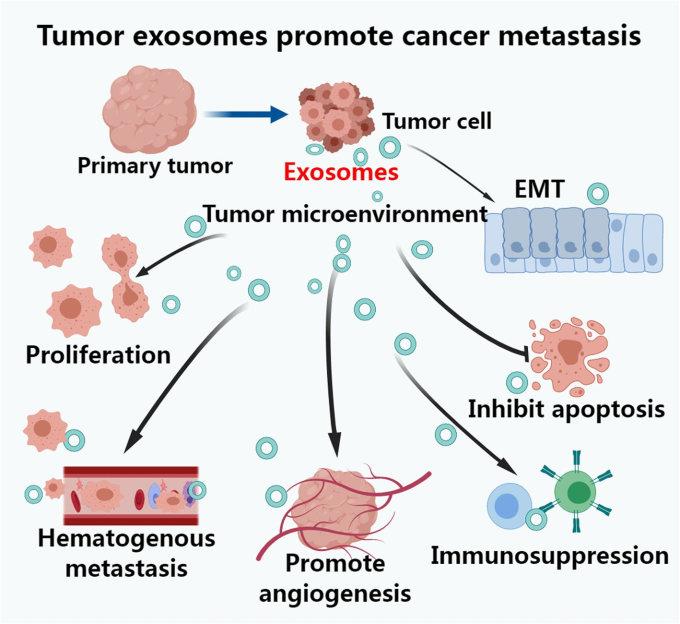 Fig.1 Tumor-derived exosomes promote cancer metastasis.1,2