Size Exclusion Chromatography (SEC) based Exosome Purification Service
Overview Services Features FAQs
Overview
Exosomes, 30-150 nm tiny vesicles, can be isolated and purified from plasma and other body fluids and are valuable biomarkers for therapeutic and diagnostic applications. With extensive experience in exosome preparation, Creative Biolabs has developed a size exclusion chromatography (SEC) platform to purify exosomes from plasma and other body fluids, reducing the co-purification of non-exosomal blood proteins and enhancing the purity and integrity of exosomes.
Size Exclusion Chromatography
Size Exclusion Chromatography (SEC), also known as molecular sieve chromatography, separates molecules in solution by size and sometimes molecular weight. It is commonly used for large molecules or macromolecular complexes such as proteins and industrial polymers. When an aqueous solution transports the sample through the column, the technique is called gel-filtration chromatography. If an organic solvent is used as the mobile phase, it is known as gel permeation chromatography.
Services
Exosomes Purification by SEC
In exosome purification, SEC is an effective tool for achieving high yield and high purification. SEC separates sample components based on their differential movement through a gel matrix. Smaller components penetrate the gel matrix more easily, resulting in longer retention and later elution times. Larger components, such as exosomes, cannot penetrate the gel matrix and are excluded, allowing for separation from smaller protein and nucleic acid contaminants. Combining SEC with ultrafiltration or ultracentrifugation can further enrich exosomes from various samples.
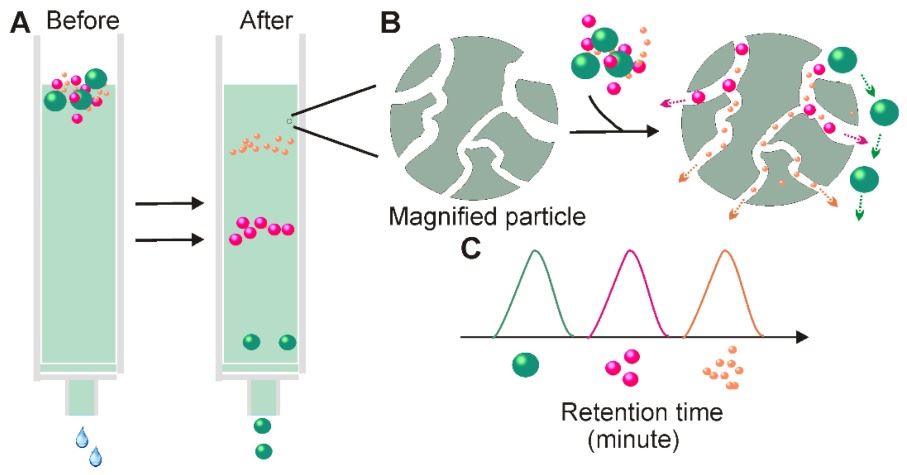 Fig.1 Schematic of size-exclusion chromatography-based exosome isolation.1,2
Features
-
State-of-art technology platform
-
Experienced and professional technical team
-
Best after-sale service
-
High yield and low consumption
-
Relatively integrated exosomes
High-purity and intact exosomes will contribute to your downstream analyses, including more accurate quantification of vesicles and proteomic characterization. Creative Biolabs' skilled experts can help global customers to isolate and purify exosomes from various body fluids based on the advanced SEC platform. If you have any demands in exosome preparation, please don't hesitate to contact us for more information.
FAQs
Q: Can SEC be combined with other separation techniques?
A: Yes, SEC can be used in conjunction with other exosome separation techniques to further enhance exosome purity. For example, it can be preceded by ultracentrifugation or followed by affinity chromatography to remove impurities or enrich specific exosome populations, providing greater flexibility and customization in exosome purification strategies.
Q: Is SEC the best method for exosome purification?
A: SEC may not be the optimal choice for all samples. The selection of purification methods depends on various factors such as sample type, desired purity, and downstream applications. You can contact our team to help assess the most optimal purification method for your project.
References
-
Yang, D.; et al. Progress, opportunity, and perspective on exosome isolation-efforts for efficient exosome-based theranostics. Theranostics. 2020, 10(8):3684-3707.
-
Distributed under Open Access license CC BY 4.0, without modification.
For Research Use Only. Cannot be used by patients.
Related Services: