
Antisense Oligonucleotides (ASOs) Products for Duchenne Muscular Dystrophy
As a leader in ASO research and development, Creative Biolabs is committed to providing the resources and expertise needed to accelerate the discovery of safe and effective ASO products. We believe that through continuous innovation and collaboration, we can bring new hope to DMD patients and their families.
Duchenne Muscular Dystrophy Overview
Duchenne muscular dystrophy (DMD) is an X-linked recessive disorder that is characterized by progressive muscle degeneration. The disease is usually caused by loss-of-function mutations in the dystrophin gene that encodes dystrophin. Among numerous other approaches for DMD therapy, exon skipping using antisense oligonucleotides (ASOs) is one of the most promising methods for restoring dystrophin expression. ASOs can bind to dystrophin pre-mRNA complementary sequences to induce skipping of the targeted exon by modulating pre-mRNA splicing. Through the antisense therapy, ASOs can restore the open reading frame of the DMD gene and produce internally deleted, yet partially functional dystrophin protein isoforms in skeletal muscle.
How Do Antisense Oligonucleotides Work?
Mutations in the DMD gene that cause DMD, such as duplications, and point mutations, usually introduce premature stop codons (PTC) or reading frame altering mutations in mRNA, and inactivate or truncate dystrophin. DMD ASO therapy primarily works by exon skipping, which restores open reading frames (ORFs) by instructing spliceosomes to skip mutated exons during pre mRNA splicing.
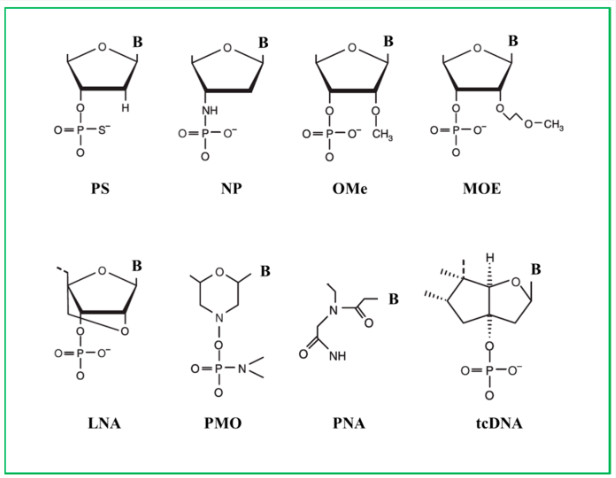 Figure 1 Chemical modifications of ASO backbone.1
Key Mechanistic Steps
- Binding pre mRNA: ASOs recognize and hybridize with complementary sequences within the target DMD exon or its flanking intron splicing site (such as splicing donor/recipient sites or exon splicing enhancers).
- Splice exclusion: ASO-RNA complexes prevent splicing from assembling at the target exon, thereby excluding it from mature mRNA.
- Truncated but functional muscular dystrophy protein: The produced mRNA has a restored ORF and is translated into "mini muscular dystrophy protein" - shorter than the wild type but able to maintain muscle membrane integrity and slow down degeneration.
How to Design Antisense Oligonucleotides?
-
Step 1
Target identification and bioinformatics analysis: We first conducted a detailed bioinformatics analysis of the gene mutations in patients with DMD. We use proprietary algorithms to identify potential splice sites and exon splicing enhancers/silencers that can be used for exon skipping.
-
Step 2
Oligonucleotide Chemistry and Modification: We synthesize ASOs with a range of chemical modifications to enhance their therapeutic properties. These modifications include:
- Phosphorothioate (PS) Backbone: Provides nuclease resistance and improves cellular uptake.
- 2'-O-Methyl (2'-OMe) and 2'-O-Methoxyethyl (2'-MOE) Ribose Modifications: increase binding affinity with target RNA and enhance stability.
- Morpholino Oligomers (PMOs): These oligomers are known for their high stability and resistance to degradation, making them particularly suitable for in vivo applications.
-
Step 3
In Vitro Screening and Validation: We screened the ASO candidate drug library in patient derived myoblast cell lines. This step is crucial for evaluating its effectiveness in inducing exon skipping and restoring muscle dystrophin expression. We use techniques such as RT-PCR and Western blotting to quantify exon skipping levels and functional muscular dystrophy protein production.
-
Step 4
In Vivo Efficacy and Safety Assessment: We will test the most promising candidate drugs in preclinical animal models, such as the widely used DMD model mdx mice. We evaluate the ability of ASO to restore muscle dystrophin in muscle tissue, improve muscle function (such as grip strength, treadmill performance), and assess its potential toxicity.
Our Advantages
- Scientific Expertise: Our team is composed of doctoral degrees. A high-level scientist with profound expertise in ASO technology, molecular biology, and DMD research.
- State of the Art Technology: We utilize advanced bioinformatics tools, automated synthesis platforms, and high-throughput screening techniques to accelerate the discovery and development process.
- Customized Solutions: We understand that each research project is unique. We work closely with our clients to provide customized solutions that meet their specific needs and goals.
- Commitment to Quality: We adhere to the highest standards of quality control and assurance, ensuring the purity, identity, and efficacy of all ASO products.
Frequently Asked Questions
Q: Can ASO products be used in combination with other emerging DMD therapies, such as gene therapy and dystrophin modulators?
A: Yes, combination therapy represents a hopeful future direction. ASO has strong synergistic potential with other therapies:
- Combined use with gene therapy: ASO can serve as a salvage or complementary strategy for patients receiving AAV mediated gene transfer of microglial dystrophin to address immune response, unstable transduction efficiency, or decreased transgenic expression over time.
- Combined use with dystrophin modulators: Dystrophin is a paralogous homolog of dystrophin. The combination of ASO (muscle dystrophin for repairing modifications) and upregulation of muscle dystrophin can provide a dual mechanism to stabilize the muscle membrane and may produce additional or synergistic effects.
Q: Is ASO therapy suitable for all types of DMD mutations?
A: ASO mediated exon skipping therapy is mainly effective for frameshift mutations that can be repaired by skipping specific exons. It is not applicable to all DMD mutations and requires comprehensive genetic diagnosis to determine its applicability.
Q: What are the main challenges currently faced by ASO therapy?
A: The three core challenges are delivery efficiency, chronic characteristics of treatment, and accessibility of treatment.
- Delivery: Improving the biological distribution of drugs (especially in cardiac tissue) and enhancing their internal escape remain crucial. We are addressing this issue through next-generation coupling strategies such as cell penetrating peptides, PPMO, and novel nanoparticle formulations.
- Chronic treatment: Current ASO requires lifelong repeated administration. We are researching techniques to extend the half-life of treatment (such as ligand coupled ASO) and exploring one-time supplementation methods such as gene editing.
- Accessibility: The high cost of developing and producing drugs for rare diseases is a major obstacle. We focus on optimizing platform processes to reduce development costs, and actively collaborate with patient rights organizations and payers to explore innovative value-based pricing models.
Reach Out to Us Now!
Creative Biolabs is a world-renowned service provider for antisense oligonucleotides therapy development. We provide a variety of top-quality ASO products for DMD therapy. A series of stringent criteria are applied to implement quality control of antisense products in order to guarantee reliability. We are dedicated to providing the best-characterized antisense therapy service to help our customers and expedite their project application. Please feel free to contact us by e-mail for a quote and further discussion with our scientists.
Reference
- Sardone V, Zhou H, Muntoni F, et al. Antisense oligonucleotide-based therapy for neuromuscular disease. Molecules, 2017, 22(4): 563. https://doi.org/10.3390/molecules22040563 (Distributed under Open Access license CC BY 4.0, without modification.)
