
Small Interfering RNA (siRNA)
Small interfering RNA (siRNA) is a class of double-stranded, non-coding RNA molecules, usually about 20-25 base pairs long. By RNA interference pathway, the siRNA is either loaded onto RISC directly or utilizes a Dicer mediated process, thereby initiating the RNAi process via targeting mRNA cleavage and degradation. Based on the outstanding expertise and rich experience, Creative Biolabs has the expertise and ability in providing abundant siRNA products with the best quality to advance our global clients' projects. We also provide custom siRNA synthesis service, producing highly pure siRNA in diverse amounts (nmol) and offer various combinations of sizes, modifications, and purifications for convenient online ordering.
What is siRNA?
siRNA is a non-coding double stranded RNA molecule. It is also known as silencing RNA and short interfering RNA. It is similar to microRNA (miRNA), with a short and clear structure. Their structure has hydroxylated 3 'and phosphorylated 5' ends. This is a powerful tool in drug targeting and therapy development, as it regulates gene expression through transcriptional or translational inhibition. In principle, any gene can be silenced by synthetic siRNA with complementary sequences. This makes them important tools for drug targeting and validating gene function. There have been many important studies on the application of siRNA in different fields of medical research.
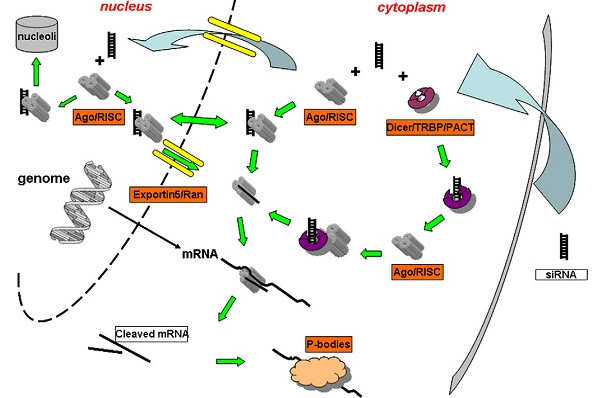 Figure 1 Schematic of the siRNA mediated RNA interference pathway.1
Origins of siRNA
The Discovery of RNAi
Scientists discovered the world of RNAi in 1998, which completely changed contemporary understanding of gene regulation. At that time, they discovered that the silencing effector of Caenorhabditis elegans was double stranded RNA.
The Discovery of siRNAs
In 1999, siRNAs were found in plants and also proved to be able to guide sequence dependent endonuclease cleavage of mRNA regulated by them in mammalian cells.
The Beginning of Optimization
By 2001, it was discovered that miRNAs contained a wide range of small RNA regulatory factors, with at least dozens of representatives in each of several animal and plant species. With this discovery, we believe that two types of small RNAs have been firmly embedded in the field of gene regulation: iRNA, as defenders of genomic integrity against foreign or invasive nucleic acids such as transposons, transgenes, and viruses, and miRNA, as regulators of endogenous genes.
Types of Small Interfering RNA (siRNA) and Their Applications
| siRNA Type | Key Features | Applications |
|---|---|---|
| Conventional siRNA | The classic 21-25 base pair double-stranded RNA. | Fundamental research, transient gene knockdown, in vitro and in vivo studies. |
| Chemically Modified siRNA | Contains modified nucleotides (e.g., 2'-O-methyl, phosphorothioate bonds) to enhance nuclease stability and reduce immunogenicity. | Therapeutic applications, pre-clinical and clinical trials, long-term gene silencing. |
| GalNAc-Conjugated siRNA | Conjugated to N-acetylgalactosamine (GalNAc), which targets the asialoglycoprotein receptor (ASGPR) on hepatocytes. | Liver-specific gene silencing, common in approved siRNA drugs for hepatic diseases. Examples include Patisiran, Givosiran, and Inclisiran. |
| Short Hairpin RNA (shRNA) | A single RNA strand that folds into a hairpin structure; typically expressed from a plasmid or viral vector. | Long-term gene knockdown, stable cell line generation, gene function studies. |
| Self-Delivering siRNA | Modified to enable passive uptake by cells without the need for a transfection reagent. | Gene silencing in difficult-to-transfect cell types, in vivo applications. |
Mechanism of siRNA Action
The method of inducing gene silencing by siRNA is as follows:
- Double stranded RNA is cleaved by Dicer enzyme. This forms siRNA.
- Double stranded siRNA enters cells and forms RNA induced silencing complexes (RISC) with other proteins.
- This is untied to form a single stranded siRNA.
- The thermodynamically unstable 5 'end base pairing RNA strand is still part of the RISC complex. This chain can now scan for complementary mRNA.
- Once this antisense chain binds to the target mRNA, it induces mRNA cleavage.
- Exogenous mRNA is recognized as abnormal by host cells and degraded. Translation is impossible, so genes are silenced.
Frequently Asked Questions
Q: Will siRNA be the next frontier as a therapeutic agent?
A: SiRNA may represent one of the next frontiers in medical science. We are currently evaluating how they can be utilized in the drug development process and as therapeutic agents. If the current challenges in siRNA development and delivery can be addressed, siRNA can be used to target almost any gene for therapeutic intervention. This field is exciting, and the pharmaceutical industry may continue to fund its research in the coming years.
Q: How can I improve the transfection efficiency of siRNA in cells that are difficult to transfect, such as primary cells and neurons?
A: Creative Biolabs recommends:
- Using optimized delivery systems: lipid-based reagents Reagents) or electroporation (for primary cells).
- Adjust siRNA concentration: Test 10-100nM siRNA to balance efficacy and toxicity (higher concentrations may lead to off target effects).
- Including positive controls: siRNA targeting housekeeping genes such as GAPDH and ACTB was used to validate transfection efficiency through qPCR.
Q: What is the difference between siRNA and shRNA (short hairpin RNA)?
A: SiRNA is a short double stranded RNA (21-23nt) that directly mediates mRNA cleavage. ShRNA is a single stranded RNA (50-70nt) that folds into a hairpin structure; It is processed into siRNA by Dicer in vivo. Main differences:
- Silence duration: siRNA provides brief silencing (3-7 days in dividing cells), while shRNA (delivered via viral vectors) can achieve stable long-term silencing (weeks to months).
- Application: siRNA is an ideal choice for short-term research (such as knockout assays), while shRNA is used for long-term experiments (such as animal models, stable cell line generation).
Q: How is siRNA delivered to cells in therapeutic applications?
A: The most common delivery method for clinical use is encapsulation in lipid nanoparticles (LNPs). Other methods include chemical conjugation (e.g., GalNAc conjugation for liver targeting), viral vectors, and cationic polymers.
What Creative Biolabs Offers?
As a leader in the biomedical and gene therapy industry, Creative Biolabs is at the forefront of siRNA research and development. We understand the complexities of designing, synthesizing, and delivering highly effective and specific siRNA molecules. Our comprehensive siRNA platform is designed to support researchers and developers at every stage, from initial concept to final therapeutic candidate. Please feel free to contact us for more details and we are pleased to offer you the best products.
Reference
- Dana H, Chalbatani G M, Mahmoodzadeh H, et al. Molecular mechanisms and biological functions of siRNA. International journal of biomedical science: IJBS, 2017, 13(2): 48. 28824341 (Distributed under Open Access license CC BY 4.0, without modification.)
