Cerebrospinal Fluid derived Exosome Isolation & Development Service
Overview Workflow Exosome Significance Advantages Testimonials FAQs
Overview
Cerebrospinal fluid (CSF) is one of the most informative biofluids for studying molecular processes within the central nervous system. Because CSF circulates around the brain and spinal cord, the exosomes it contains reflect signals derived directly from neuronal, glial, and meningeal cells. For research teams examining neural communication, biomarker candidates, or disease-associated molecular profiles, CSF-derived exosomes represent a uniquely valuable resource. At Creative Biolabs, we offer a specialized CSF-derived exosome isolation and development service tailored for research use.
How Creative Biolabs Handles CSF Exosome Projects
CSF samples require a distinct handling strategy due to their limited volume, low particle concentration, and sensitivity to environmental factors. Creative Biolabs follows a structured yet customizable workflow, balancing purity and recovery.
Pre-Analysis Sample Evaluation
-
CSF is assessed for volume, appearance, and initial debris content. This helps determine the best preparatory steps and ensures that downstream procedures are not compromised by particulates or residual cells.
Primary Isolation Strategy: Size-Exclusion Chromatography (SEC)
SEC is the preferred method for CSF because it:
-
Maintains the physiological structure of vesicles despite the small sample volume.
-
Effectively separates exosomes from soluble proteins, which are particularly abundant in CSF and may interfere with high-resolution analyses.
This approach is especially beneficial for small RNA profiling, surface protein analysis, and proteomic discovery workflows.
Optional Isolation Enhancements
For research questions requiring specific exosome populations, Creative Biolabs offers:
-
Affinity-based capture, using antibodies or affinity ligands targeting markers such as L1CAM or GFAP (depending on availability and client interest).
-
Two-step purification workflows, combining SEC with ultrafiltration to concentrate vesicles for omics applications.
These optional enhancements are particularly useful in studies aiming to map cell-type-specific signatures.
Exosome Characterization & Data Delivery
Creative Biolabs offers a selection of downstream analyses, including:
-
Nanoparticle quantification and sizing
-
Imaging of vesicle morphology by TEM
-
Western blot validation of canonical marker proteins
-
Small RNA and microRNA sequencing
-
Protein composition analysis through mass spectrometry
Investigators receive a structured data package containing raw outputs, processed summaries, and technical notes.
Optional Kits for Self-Use
Creative Biolabs also provides research-grade CSF exosome isolation kits, enabling laboratories to replicate consistent isolation results at a lower cost. Technical support is available for all kit users.
Contact Creative Biolabs for assistance in customizing your workflow to meet the scientific goals of your CSF exosome project.
Why CSF-Derived Exosomes Matter
Direct Access to CNS Molecular Signatures
CSF-derived exosomes contain small RNAs, long RNAs, membrane proteins, and lipids originating from various neural cell types. This makes them a valuable substrate for studies focused on neurodevelopment, synaptic signaling, neuroinflammation, and neural stress response pathways.
Strong Potential for Biomarker Discovery
Researchers increasingly view CSF exosomes as a promising reservoir for identifying early-stage biomarker candidates relevant to neurodegenerative processes, metabolic dysregulation, or traumatic injury. Their cargoes often remain intact under proper storage, providing stable molecular readouts for discovery-driven research.
Ability to Capture Subtle or Low-Abundance Signals
Compared with plasma or urine, CSF contains fewer background components that obscure vesicle-derived signals. As a result, CSF exosomes often permit clearer interpretation in small RNA sequencing or proteomic profiling studies.
High Relevance in Neuron–Glia Communication Studies
Exosomes play an essential role in mediating communication between neurons, oligodendrocytes, astrocytes, and microglia. Studying this communication at the CSF level offers new insights into how the CNS maintains homeostasis or responds to long-term perturbation.
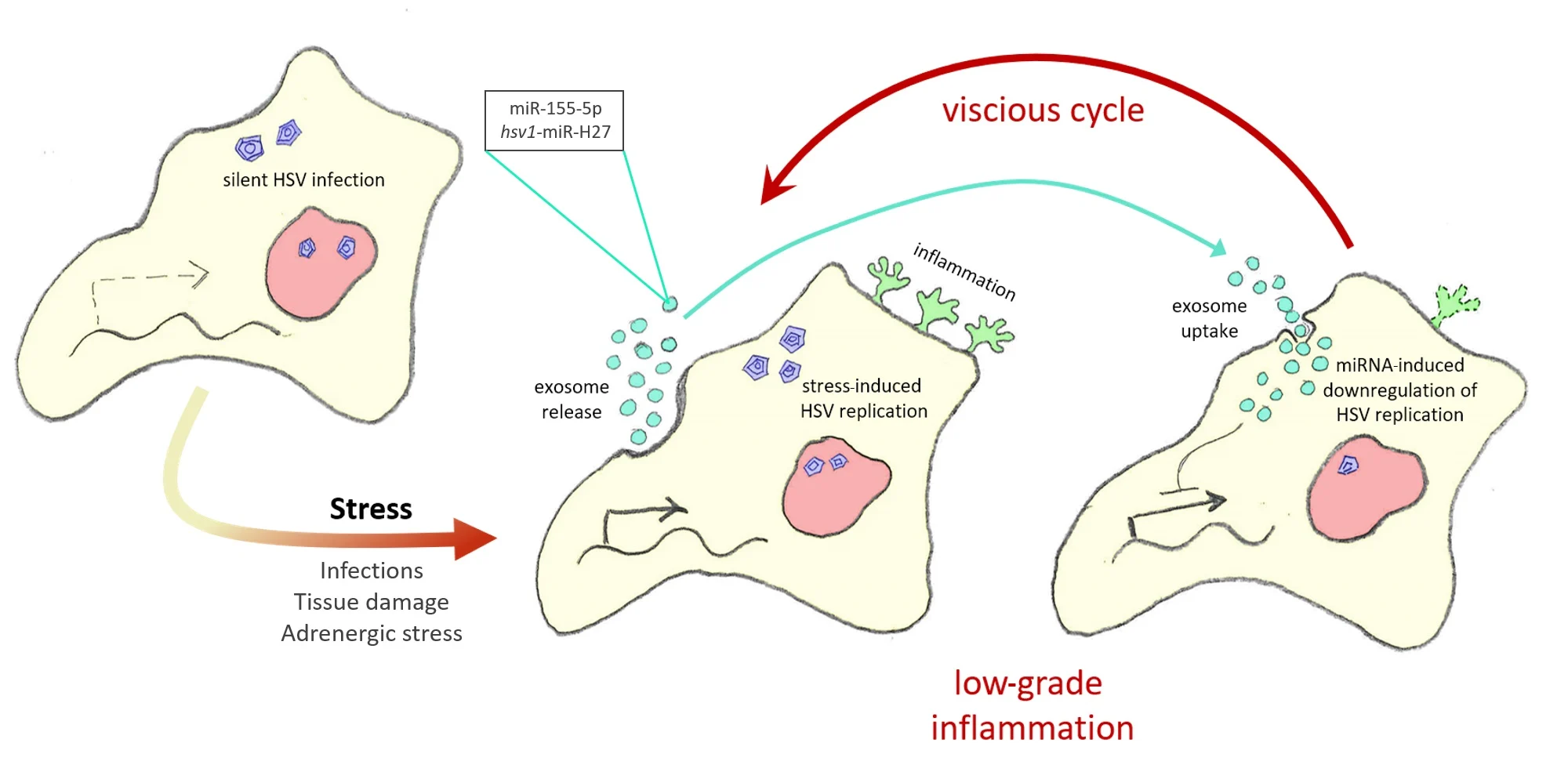 Fig.1 Exosomes as Biomarkers: HSV-1 and miRNAs in Neuroinflammation.1
Contact Creative Biolabs if you are exploring the scientific potential of CSF-derived exosomes in your research.
Why Researchers Choose Creative Biolabs
 Precision Workflows for Low-Volume Samples
CSF is often collected in milliliter quantities. Creative Biolabs has optimized isolation methods to preserve vesicles from small sample inputs, ensuring reliable recovery without compromising structural integrity.
High-Purity Preparations for Sensitive Downstream Methods
SEC-based workflows minimize contamination from proteins and lipoprotein particles. This purity is essential for sequencing, proteome mapping, and membrane-marker analysis.
Integrated Analytical Services
Creative Biolabs offers a complete suite of characterization methods, enabling researchers to abstract meaningful biological insights in fewer work cycles. From RNA sequencing to vesicle imaging, all analyses can be coordinated through one team.
In addition to fully managed projects, Creative Biolabs also manufactures cost-effective kits for laboratories that wish to isolate CSF exosomes on their own. This offers flexibility for routine studies or pilot experiments.
Contact Creative Biolabs to learn how our advantages can support your study design.
Experiences from Collaborating Teams
"Creative Biolabs handled our small CSF samples with impressive care. The SEC workflow gave us clean vesicles that performed exceptionally well in RNA sequencing."
"Reliable communication and strong scientific insight. Working with Creative Biolabs helped us accelerate the analytical phase of our CNS research."
Contact Creative Biolabs to begin planning a collaboration tailored to your neuroscience research goals.
CSF-derived exosomes offer an unparalleled view into central nervous system biology, enabling researchers to explore molecular communication within neural tissues and uncover promising biomarker candidates. At Creative Biolabs, we are committed to providing scientifically robust, carefully optimized services tailored to the unique challenges of CSF-based studies. Whether you need isolation only, full analytical support, or guidance in selecting the right workflow, our team stands ready to collaborate.
FAQs
Q: Which isolation method is recommended for CSF exosomes?
A: SEC is the preferred method due to its gentleness and ability to separate vesicles from the high-protein background commonly observed in CSF. Affinity methods can be added when cell-type specificity is essential. Creative Biolabs will recommend a workflow based on sample volume, purity requirements, and analytical goals.
Q: Can Creative Biolabs perform downstream analysis after isolation?
A: Yes. Creative Biolabs offers small RNA sequencing, lipidomics, proteomics, TEM imaging, and surface marker validation. You may request only isolation or complete analysis depending on the study design.
Q: Do you provide services for CSF from animal models?
A: Absolutely. Creative Biolabs regularly processes CSF from rodents and non-human primates. Workflows are adjusted to match species-specific constraints and sample volumes.
Reference
-
Scheiber, Christian et al. "HSV-1 and Cellular miRNAs in CSF-Derived Exosomes as Diagnostically Relevant Biomarkers for Neuroinflammation." Cells vol. 13,14 1208. 17 Jul. 2024. https://doi.org/10.3390/cells13141208. Distributed under Open Access license CC BY 4.0. The image was modified by revising the title.
For Research Use Only. Cannot be used by patients.
Related Services: