Microorganism derived Exosome Research & Applications
Overview Advantages Research Services FAQs
Microorganism derived exosomes are potential important mediators
In the complex and intricate biological system, the paradigm of intercellular communication is undergoing a profound transformation. In the past, people mainly understood cell communication through direct cell and cell contact or the secretion of soluble factors; but now, we have recognized a more refined and complex communication hierarchy mediated by exosomes. Among them, exosomes derived from microorganisms nanosized vesicles encapsulated by lipid bilayers are gradually becoming a key medium in interkingdom signal transmission.
These vesicles are widely present in various aspects of life and are far more than mere tools for removing metabolic waste. They represent a highly specialized evolutionary strategy for transporting bioactive cargoes, including proteins, small RNAs, lipids, and metabolites. In the context of the human microbiome and pathogen infections, these exosomes facilitate bidirectional communication between microorganisms and host cells. Studying these vesicles is not merely for academic interest, but is a necessary requirement to unravel infection mechanisms, immune evasion, and the molecular basis of symbiotic homeostasis. As we gradually reveal the functional aspects of microbial exosomes, a hidden regulatory network emerges, influencing various physiological processes ranging from inflammatory responses to the metabolic status of distant host organs.
Ask With Our Experts to Formulate Solutions for Microbial Exosome Research.
The Inherent Advantages of Exosomes Derived from Microorganisms
Microbial exosomes differ from mammalian exosomes in both physicochemical properties and biological characteristics. These unique advantages make them highly promising for research and therapeutic applications:
Outstanding structural stability
These exosomes have evolved to adapt to diverse and often extreme environments from the acidic gastrointestinal tract to nutrient and poor soil environments and therefore exhibit significant tolerance to enzymatic degradation and pH changes.
Natural immunogenicity and adjuvant properties
Unlike synthetic nanoparticles, microbial exosomes naturally carry pathogen associated molecular patterns, which can act as potent immunomodulatory factors, making them ideal candidates for the next generation of vaccine platforms.
Target specificity
Many microbial exosomes have ligands on their surface that have evolved in concert with host receptors, enabling them to deliver cargos to specific cell types or tissues with high precision.
Scalability and advantages of bioproduction
The microbial system, especially bacteria and yeast, possesses rapid growth kinetics and a mature genetic engineering toolkit, making it possible to produce and customize exosomes on a large scale. This is still challenging in the mammalian cell culture system.
With our professional services, we can facilitate your research on microbial exosomes.
Expand The Research Boundaries of Microbial Exosomes Science
The diversity of the microbial world is also reflected in the highly heterogeneous functions of its exosomes. At Creative Biolabs, our research portfolio covers the three major microbial fields, each of which offers unique opportunities for clinical and biotechnological development.
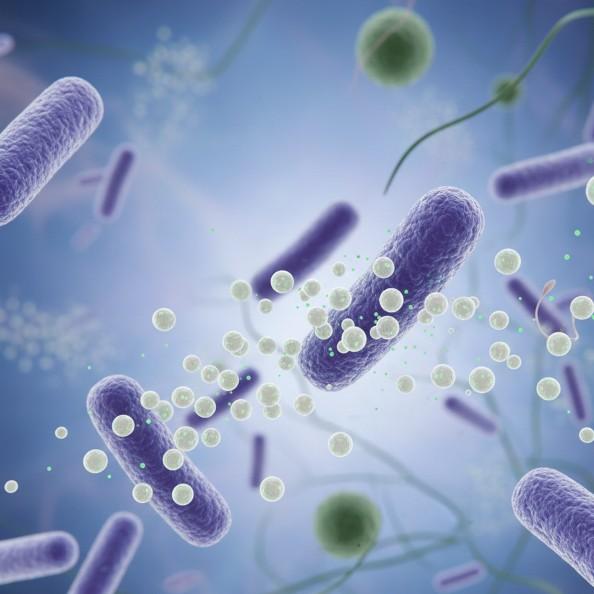
In Gram negative bacteria, these vesicles are usually referred to as outer membrane vesicles, while Gram positive bacteria produce membrane vesicles. These vesicles play a central role in the pathogenic process of bacteria, often carrying toxins and antibiotic resistance related enzymes. On the contrary, exosomes derived from symbiotic bacteria are important for the training of the host immune system. The research focus in this field includes the development of OMV vaccines and the use of them as traps to neutralize bacterial toxins.
Fungal exosomes can penetrate the complex cell wall structure and regulate the host fungus interaction. They have been proven to carry virulence factors and pigments (such as melanin), helping fungi resist host oxidative stress. A deeper understanding of fungal vesicles is important for dealing with systemic fungal diseases and developing new antifungal delivery strategies that bypass traditional resistance mechanisms.
Parasitic protozoa (such as Leishmania and Plasmodium) utilize exosomes to precondition the host's microenvironment during infection and to reconfigure the host's immune state to facilitate their own survival. Mapping the protein profiles of these vesicles is expected to provide new diagnostic biomarkers for parasitic diseases that are difficult to detect at an early stage.
Let's support your microbial exosome project.
Integrated Discovery System for Exosomes Derived from Microorganisms
Creative Biolabs is at the forefront of exosome research, offering a service platform that spans from basic microbiological research to clinical applications. Our integrated process ensures the capture of every complex dimension of exosomes with high fidelity.
Precise separation and purification
Characterization and Quality Control
Multimodal analysis
Function Verification
Precise separation and purification
Advanced isolation technologies such as differential ultracentrifugation, size exclusion chromatography (SEC), and tangential flow filtration (TFF) were employed to isolate highly pure exosomes from complex microbial culture systems.
Characterization and Quality Control
The size and morphology on of the vesicles were determined by nanoparticle tracking analysis (NTA) and transmission electron microscope (TEM), and the MISEV (Minimum Information for Extracellular Vesicle Research) guidelines were strictly followed.
Multimodal analysis
The platform integrates RNA deep sequencing and high resolution mass spectrometry technology to systematically analyze the protein, metabolites and lipid characteristics profiles of microbial exosomes.
Function Verification
From in vitro cell models to complex in vivo animal models, conduct a multifaceted assessment of the biological effects of exosomes on the host's immune response, metabolic pathways, and disease progression.
Unleash the potential of extracellular vesicles derived from microorganisms. Please contact us immediately.
FAQs
Q: I'm not sure if my microbial strain can produce exosomes. Could you help evaluate it?
A: Of course. Although most microorganisms have been proven to be capable of secreting exosomes, there are significant differences in the production volume and composition among different strains. We can first conduct a small scale preliminary experiment or feasibility assessment. Through the initial separation, we can confirm the presence of exosomes, and then decide whether to carry out large scale separation and subsequent research.
Q: Can I send my specific microbial strains for exosome extraction?
A: Some microorganisms may pose potential biological safety risks. Therefore, considering safety concerns, we currently only accept bacterial culture supernatant samples.
Q: What is the minimum culture volume required for successful isolation of exosomes?
A: This largely depends on the specific microorganism and its growth rate. It is usually recommended to conduct a preliminary experiment to assess the secretion level. Our efficient isolation platform is suitable for both small scale research samples and large volume samples required for specific applications.
Q: After receiving the exosomes, do you provide storage and operation instructions?
A: Yes. Each delivery comes with recommended storage temperatures and operation suggestions to prevent the aggregation or degradation of the vesicles, ensuring the effectiveness of subsequent experiments.
Q: Can these exosomes be directly used for animal injections or cell experiments?
A: Our research grade exosomes have been purified and systematically characterized, and are suitable for various in vitro and in vivo research applications. We will provide the required concentration and purity data to facilitate your accurate calculation of the experimental dosage.
You can contact us to discuss the solution.
For Research Use Only. Cannot be used by patients.
Related Services: