CD31-Expressed Exosome Modification Service
Overview Services Features FAQs
Overview
Introduction to CD31 Function
Macrophages determine whether to kill cells based on programmed cell death (apoptosis). Apoptotic cells send an "eat me" signal, while active cells emit a "rejection" signal to avoid removal. CD31, also known as platelet and endothelial cell adhesion molecule 1, is a type I transmembrane glycoprotein (130 kDa) in the immunoglobulin superfamily's C2 subgroup. CD31 plays a key role in anti-phagocytosis by binding to itself on adjacent cells, and is expressed on endothelial cells, platelets, monocytes, neutrophils, certain T cells, and tumor cells. It regulates biological processes like leukocyte migration, cell proliferation, apoptosis, and tumor metastasis by activating or inhibiting signaling proteins such as Akt, Bcl-2, and caspase. CD31's anti-phagocytic function helps active cells survive by signaling macrophages to distinguish them from apoptotic cells.
Excitingly, with the anti-phagocytic properties of CD31, some researchers have proposed to modify CD31 on therapeutic exosomes to avoid triggering harmful immune responses. Creative Biolabs offers CD31-expressed exosomes production sevice for customers to help the transformation of exosome drugs.
Services
Featured CD31 Modification Service at Creative Biolabs
Creative Biolabs has been improving the exosome surface functionalization platform around customer needs and following up on exosome research progress, and can provide customers with two technical services to design CD31-expressed exosomes.
-
On the one hand, our professional technicians can integrate CD31 into the exosome membrane protein through strict and complex genetic operations, so that the exosomes produced by the donor cells have the ability to escape from the immune system.
-
On the other hand, the connection mediators are modified on the surface of exosomes and CD31 respectively, and then through covalent bonding (such as click chemistry and protein ligase) or non-covalent bonding (such as electrostatic interaction, hydrophobic interaction, receptor-ligand interaction, nucleic acid aptamer-based surface modification, anchor peptide modification) to attach CD31 to the surface of exosomes.
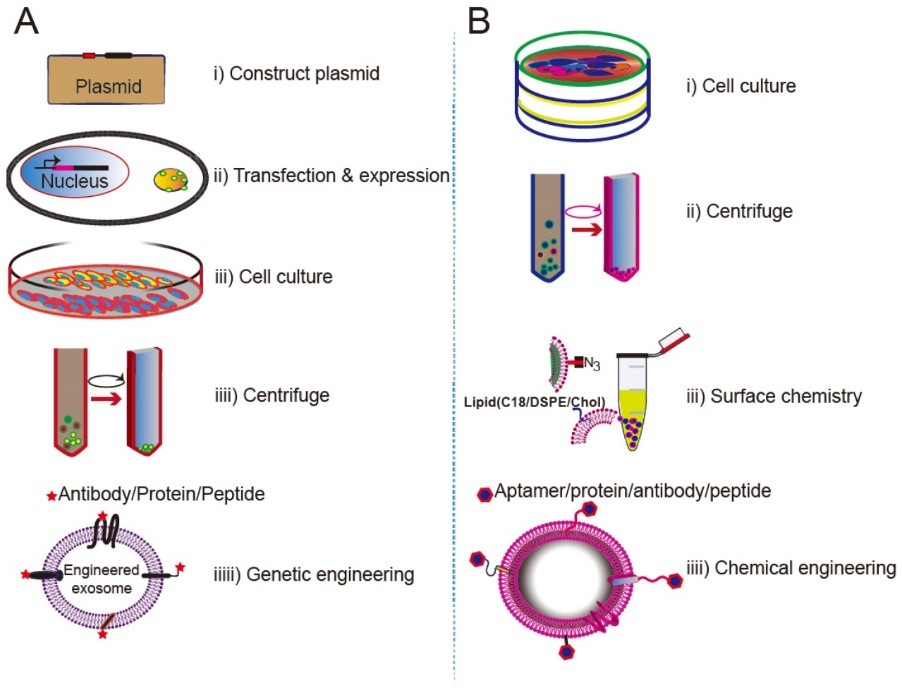 Fig.1 Approaches for engineering exosomes displaying targeting ligands.1,2
Features
-
Advanced exosome modification technology
-
Efficient immune evasion
-
Strict quality control
-
Professional technical support
Creative Biolabs has established a leading functionalized exosome development system, which can construct surface functionalized exosomes for customers. In order to better deliver results to customers, we can also provide exosome isolation and identification services before engineering, exosome loading services and targeted modification services during engineering, and efficiency verification and in vivo and in vitro functions research services after engineering. If you want to make therapeutic exosomes less immunogenic, please contact us with your ideas and needs. Our professional sales Manager and technical supporter will formulate the most optimized plan for you.
FAQs
Q: How do I choose the right CD31-expressing exosomes for my experimental needs?
A: Before selecting exosomes, you need to clarify the specific goals and requirements of your experiment. Please inform us of your cell type, targeted application, and expected results. Our scientists will determine whether to use endogenously modified or directly modified CD31-expressing exosomes to advance your project based on your goals and downstream applications.
Q: What are the advantages of your CD31 Modification Service?
A: Our team of scientists has mature experience in exosome modification. Combining published literature and laboratory experience, our technicians will follow strict quality control standards during the process of modifying CD31 into exosomes to ensure the purity and consistency of CD31-expressing exosomes. Additionally, our customized services can provide research solutions tailored to specific therapeutic targets according to client needs.
Q: Are the CD31-expressing exosomes you construct subjected to quality testing?
A: Yes, we conduct rigorous quality control and testing, including particle size distribution, exosome marker expression, and CD31 expression. We guarantee that the returned exosome products are strictly verified and quantified, which will present the detailed production process and verification results to customers in the form of a report.
References
-
Liang, Y.; et al. Engineering exosomes for targeted drug delivery. Theranostics. 2021, 11(7):3183-3195.
-
Distributed under Open Access license CC BY 4.0, without modification.
For Research Use Only. Cannot be used by patients.
Related Services: