Phagocytosis Escape-Reinforced Exosome Modification Services
Overview Services Features FAQs
Overview
Drug-carrying therapeutic exosomes can be prepared by loading therapeutic small molecules into the lumen of exosomes using membrane perforation technology. However, such engineered exosomes still cannot avoid some of them being cleared by the body's immune system. Therefore, it is necessary to modify some functional proteins that can resist immune system clearance on the surface of exosomes. Fortunately, researchers found that modifying such anti-phagocytic proteins on the surface of exosomes can increase the half-life of exosomes in circulation and improve the therapeutic potential of exosomes. Creative Biolabs provides customers with anti-phagocytic protein modified exosomes to enhance the delivery efficiency of exosomes.
Antiphagocytic Protein Introduction
Normally, immune cells called macrophages detect cancer cells, engulf them and destroy them. However, the researchers found that cancer cells can evade clearance by macrophages by overexpressing a class of antiphagocytic proteins, the best known of which is CD47. CD47 is widely expressed on the surface of normal cells and releases a signal of refusal to be phagocytized by binding to the signal regulatory protein α (SIRPα) on the surface of macrophages, thereby protecting healthy cells from being cleared by macrophages. Unfortunately, cancer cells also express abundant CD47 on the surface, allowing macrophages to treat them as normal cells and avoid being eliminated. Based on the understanding of the immune escape mechanism of cancer cells, scientists have discovered that CD47 can be modified on exosomes to inhibit the removal of exosomes in the circulatory system and enhance the delivery of exosomes to target tissues or cells. However, not only CD47, but cancer cells also have other anti-phagocytic proteins. These findings suggest that engineered exosomes modified by anti-phagocytic proteins have great therapeutic potential.
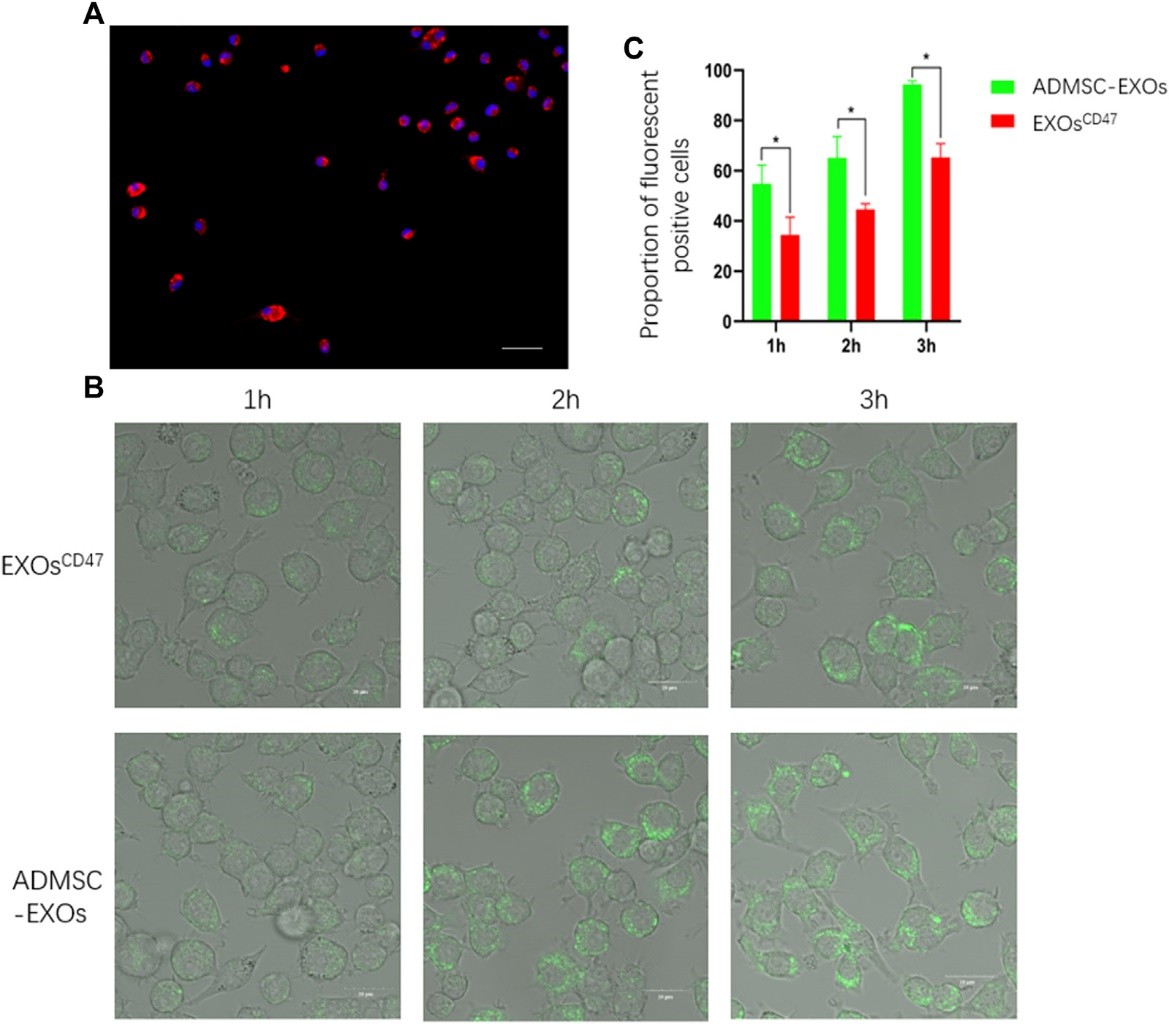 Fig.1 Immunofluorescence analysis of the phagocytosis of EXOsCD47.1,2
Services
Anti-Phagocytosis Modified Exosomes Services at Creative Biolabs
Creative Biolabs has a professional technical team that can construct engineered exosomes that can enhance the ability to escape phagocytosis for customers according to their specific requirements and relevant literature. Specific anti-phagocytosis modification methods are divided into the endogenous modification and exogenous modification.
-
For endogenous anti-phagocytosis modification, we can construct the highest quality plasmids in the genetic engineering of donor cells to improve transfection efficiency, thereby increasing the yield of engineered exosomes.
-
For exogenous anti-phagocytic modification, we can choose the best binding method to provide engineered exosomes that efficiently bind anti-phagocytic proteins.
The specific anti-phagocytic protein modified exosome services are as follows.
Features
-
Prolonged In Vivo Study Stability
-
Enhanced Research Delivery Efficiency
-
Reduced Off-Target Effects in Research
-
Broad Research Application Potential
-
Advanced Technical Support
Creative Biolabs is a supplier that provides a full range of exosome technology services and has been supporting the research and discovery of exosome drugs. From exosome isolation, identification, and engineering to content analysis and in vivo and in vitro functional research, our professional team can provide you with efficient services. If you want to improve the accumulation and targeting efficiency of exosomes in the body, please contact us. Our professional sales team will respond to your special needs as soon as possible.
FAQs
Q: How do the anti-phagocytic proteins on modified exosomes work?
A: Simply put, CD47 protein acts as a "don't eat me" signal, which reduces the risk of exosomes being engulfed by macrophages and other immune cells. By modifying the exosomes' surface with CD47, we can assist you in studying the drug delivery capabilities of the exosomes.
Q: How can the anti-phagocytic effect of modified exosomes be verified?
A: Techniques such as flow cytometry, fluorescence microscopy, and in vivo imaging can be used to verify the anti-phagocytic effect of modified exosomes. We can provide these validation services.
Q: Can you guarantee the quality of the modified exosomes?
A: Yes, our modified exosomes undergo strict quality control to ensure efficient and consistent modification. We can provide detailed technical data, including modification efficiency and exosome characteristics, to assure quality.
References
-
Ben, XY.; et al. Construction of exosomes that overexpress CD47 and evaluation of their immune escape. Frontiers in Bioengineering and Biotechnology. 2022, 10:936951.
-
Distributed under Open Access license CC BY 4.0, without modification.
For Research Use Only. Cannot be used by patients.
Related Services: