Breast Cancer-Targeted Exosome Modification Service
Overview Services Features FAQs
Overview
Breast cancer (BC) is one of the most prevalent malignant tumors among women, with its incidence rising annually. It has become the most frequently occurring cancer globally. The primary treatments for BC are surgery and chemotherapy; however, the long-term outcomes remain suboptimal. Therefore, exploring more new treatment strategies is still an urgent clinical need.
Exosomes are lipid bilayer vesicles produced by most cells, which have good biocompatibility, in vivo circulation ability, and material delivery ability, and are easy to genetically modified. Recently, exosomes have attracted increasing attention as drug delivery systems. Directional modification of the surface of exosomes is an effective way to enhance the targeting of exosomes, so it is widely used in the research of BC-targeted therapeutic drugs. Creative Biolabs can provide targeted exosome modification technology and in vivo and in vitro functional verification services to construct and verify BC-targeted engineered exosomes for customers, helping drugs to be delivered to tumor sites precisely by exosomes
Services
Breast Cancer-Targeted Exosome Modification Service
Exosomes can not only be used as carriers to load drugs but also can be modified to construct targeted exosomes to enhance their affinity to target cells and reduce their affinity to normal tissue cells, thereby enhancing efficacy and reducing adverse reactions. Two primary methods exist for displaying targeting peptides on exosome membranes:
-
Fusion Expression: This involves genetically engineering donor cells to express BC-targeting peptides fused with exosomal membrane proteins, such as lysosomal-associated membrane protein 2.
-
Lipid-Conjugated Peptides: BC-targeting peptides are linked to lipid molecules and then incorporated into the exosomal phospholipid bilayer through co-incubation.
A large number of literatures have proved that exosomes modified with BC cell-targeting peptides can efficiently target BC cells in vitro and in vivo, and can be used to deliver drugs that can inhibit the proliferation of BC cells, such as doxorubicin, siRNA, etc., thereby inhibiting tumors grow. Therefore, engineered exosomes targeting BC have great potential value for clinical application.
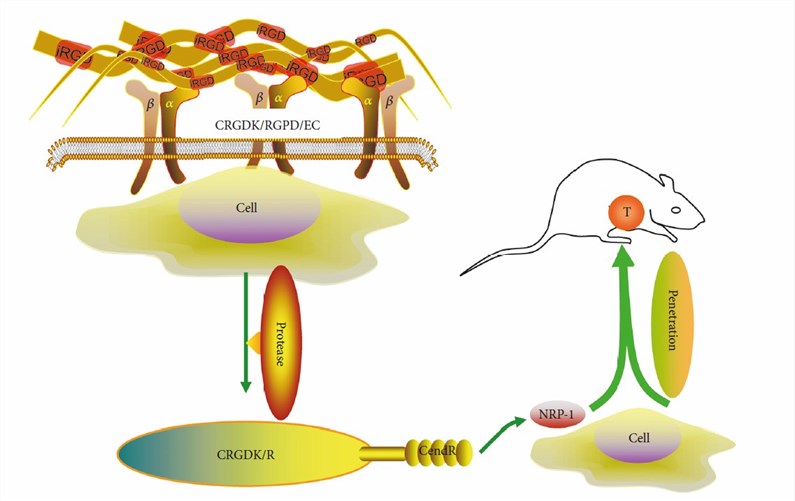 Fig.1 The key steps in the tumor-targeting process of the iRGD peptide.1,2
Creative Biolabs can provide including but not limited to the following BC-targeting peptides that have been verified by literature and can be constructed on exosomes.
Tab. 1 BC-Targeting peptides
|
PEPTIDES TARGETING BC
|
TARGET
|
TARGETING MECHANISM
|
|
iRGD peptide
|
αV integrins on tumor cells
|
iRGD peptide first binds to αV integrins on tumor cells. Subsequently, iRGD peptid is enzymatically hydrolyzed to produce CRGDK/R, which can interact with neuropilin-1, thereby promoting the internalization of exosomes and the penetration of drugs.
|
|
GE11 peptide
|
Epidermal growth factor receptor (EGFR)
|
EGFR is overexpressed in BC. The GE11 peptide targets tumor tissues with high EGFR expression, interacting with signaling molecules involved in tumor growth and metastasis.
|
|
AS1411 aptamer
|
Nucleolin
|
AS1411 is a G-quadruplex aptamer that can target nucleolin and inhibit tumor cell proliferation.
|
Features
-
Precise targeting
-
Subsequent in vivo and in vitro functional validation services
-
Natural delivery advantage
-
Innovative technology support
Creative Biolabs can genetically engineer exosomes together with tumor-targeting proteins, peptides or antibodies for more precise drug delivery. Please feel free to contact us to help you develop a systematic solution.
FAQs
Q: How do you verify the functionality of targeted exosomes?
A: We provide comprehensive in vivo and in vitro functional validation services. This includes assessing the targeting capability and drug delivery efficiency of exosomes in vitro cell models, as well as evaluating the biodistribution and therapeutic effects of exosomes in in vivo animal models.
Q: Can exosome modifications be customized according to specific client needs?
A: Yes, we offer customized exosome modification services based on the client's existing research data and research objectives. This includes selecting appropriate targeting peptides for the client.
Q: Can you assist with the analysis and interpretation of experimental data?
A: Yes, we not only provide technical support for experiments but also assist clients in analyzing and interpreting experimental data, offering scientific insights and recommendations to support the client's research progress.
References
-
Zuo, H. iRGD: a promising peptide for cancer imaging and a potential therapeutic agent for various cancers. Journal of Oncology. 2019:9367845.
-
Distributed under Open Access license CC BY 4.0, without modification.
For Research Use Only. Cannot be used by patients.
Related Services: