Colon Cancer Tissue Exosome Research and Application
Overview Our Capabilities Biological Insights Workflow Application Areas Why Choose Us What You Get FAQ
Unlocking Exosomal Insights in Colon Cancer Research
Colon cancer, a common and deadly malignancy of the gastrointestinal tract, presents persistent challenges in early detection, prognosis, and therapeutic response. Increasingly, exosomes derived from colon cancer tissues are being recognized as critical mediators in tumor biology. These nanovesicles (30–150 nm) carry a rich cargo of RNA, proteins, and lipids that reflect the molecular signature of the tumor microenvironment.
Unlike circulating exosomes or those derived from cell lines, colon cancer tissue exosomes offer direct, high-fidelity insight into the tumor's behavior at the site of origin. Their molecular contents help decipher key mechanisms driving cancer progression, metastasis, immune modulation, and therapy resistance.
At Creative Biolabs, we are dedicated to supporting colon cancer researchers with a robust exosome profiling platform that includes tissue-specific isolation, multi-omics characterization, and functional analyses, all performed under stringent quality control.
Our Capabilities in Colon Cancer Tissue Exosome Research
With extensive experience in tumor-derived extracellular vesicles (EVs), Creative Biolabs offers comprehensive solutions tailored for the study of colon cancer tissue exosomes. We work with challenging samples—including FFPE tissues and small biopsies—to ensure high-yield, high-purity exosome extraction and downstream analysis.
Our Services Include:
-
Tailored exosome isolation from colon cancer FFPE, fresh-frozen, or cultured tissue samples
-
Characterization by NTA, transmission electron microscopy (TEM), and Western blot for known exosome markers
-
Transcriptomic profiling, including total RNA and microRNA sequencing
-
Proteomic and metabolomic analysis using LC-MS/MS and other advanced techniques
-
Functional assays, such as immune modulation, migration, and organoid co-culture
-
Custom assay development, protocol optimization, and data interpretation support
We collaborate closely with research clients to ensure all project steps—from design to data delivery—are aligned with specific scientific objectives.
Biological Relevance of Colon Cancer Tissue-Derived Exosomes
-
Drivers of Tumor Growth and Progression
Colon cancer tissue exosomes carry bioactive molecules that promote tumor proliferation, angiogenesis, and epithelial-mesenchymal transition (EMT). Elevated expression of molecules like TGF-β1 and CD44v6 on exosome surfaces has been linked to enhanced metastatic potential and stemness features in colon cancer cells.
Additionally, exosomes containing miRNAs secreted by M2-polarized tumor-associated macrophages play a central role in remodeling the tumor microenvironment (TME), suppressing immune surveillance, and supporting metastasis.
-
Exosomes Influence on Stem Cells and Morphogenesis
Exosomes released from primary and metastatic colon cancer tissues significantly impact colon stem cell behavior. Microscopy and 3D organoid culture studies show that these exosomes can induce functional and structural changes in stem cells, promoting invasive growth. This highlights a potential therapeutic opportunity—targeting exosome release or uptake may suppress early metastatic events.
-
Colon Cancer Exosomes as Diagnostic Biomarkers
The cargo of colon cancer tissue-derived exosomes, particularly non-coding RNAs (miRNAs, lncRNAs) and specific proteins, is being actively investigated for its diagnostic and prognostic utility.
-
miR-21, a well-known oncomiR, is consistently upregulated in colorectal cancer exosomes
-
miR-19a overexpression has been associated with poor patient outcomes
-
Proteins involved in Wnt/β-catenin and MAPK signaling pathways are enriched in exosomes from advanced-stage tissues
High-throughput omics approaches—RNA sequencing, differential expression analysis, and proteomic profiling—have facilitated the discovery of such exosomal markers that can help in cancer staging and therapeutic stratification.
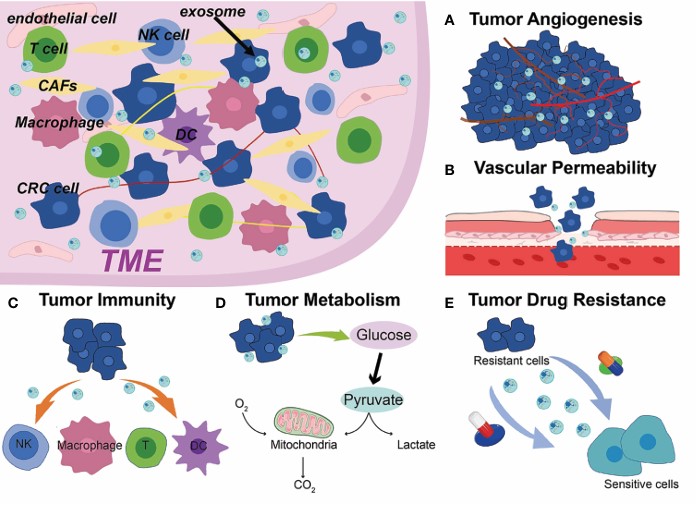 Fig. 1 Exosomal ncRNAs contribute to the TME of CRC.1
Our Research Workflow: From Sample to Discovery
To meet the needs of modern colon cancer research, Creative Biolabs employs a modular, validated workflow adaptable to each client's research goals.
-
Project Consultation: Collaborate with our PhD-level experts to design a scientifically sound and feasible plan tailored to your colon cancer model.
-
Sample Processing & Quality Control: Receive and process your FFPE, fresh, or cryopreserved colon cancer tissues under sterile and traceable conditions. We employ qPCR, immunostaining, and NTA for sample quality assessment.
-
Exosome Isolation & Enrichment: Isolate exosomes using best-fit protocols, including differential ultracentrifugation, size-exclusion chromatography, and immunoaffinity capture.
-
Downstream Multi-Omics Characterization: Analyze molecular contents using small RNA-seq, LC-MS/MS proteomics, lipidomics, and metabolomics, complemented by TEM and confocal microscopy.
-
Data Reporting & Interpretation: Deliver publication-ready datasets, raw files, and expert interpretation. An optional follow-up consultation is available for manuscript preparation or grant application support.
Use Cases: Applications in Colon Cancer Research
Creative Biolabs' colon cancer exosome services have supported a wide range of preclinical research initiatives:
-
Mechanistic Studies: Investigating how exosomal cargo modulates oncogenic signaling or drug response
-
Biomarker Discovery: Identifying stage-specific or mutation-associated exosomal markers
-
Exosome Inhibition: Testing compounds that block exosome secretion, uptake, or function
-
Immunomodulation: Assessing the impact of exosomes on dendritic cells, macrophages, and T-cells
-
Tumor Microenvironment Modeling: Incorporating exosomes into 3D cultures and organoid systems
-
Grant Development & Publications: Data packages suitable for funding proposals and peer-reviewed journals
Why Partner with Creative Biolabs?
-
Tissue Expertise: Experience working with FFPE and difficult colon cancer tissue specimens
-
Integrated Analytics: Access to a full suite of omics technologies under one roof
-
Customization: Flexible services adaptable to your scientific hypothesis
-
Quality Assurance: SOP-driven processes and comprehensive data validation
-
Dedicated Team: Scientists with domain expertise in colorectal cancer biology and exosome science
What You'll Receive
-
Raw & Processed Data Files: All experimental outputs and supporting QC metrics
-
Summary Report: Detailed findings with literature references and scientific commentary
-
Optional Consultation: Post-project meeting to review results and plan next steps
Creative Biolabs is committed to supporting your colon cancer research with precision, reliability, and scientific depth. Contact us now to receive a tailored proposal.
FAQs
Q: How can the integrity and quality of exosome samples be guaranteed while they are being isolated?
A: Throughout the isolation process, we make use of quality control procedures and standard operating procedures. This includes utilizing ultrafiltration and ultracentrifugation techniques to minimize contamination, alongside real-time monitoring of sample integrity via NTA and TEM.
Q: What specific analytical techniques do you offer for characterizing exosomes?
A: Our services encompass a wide array of advanced techniques such as NTA, TEM, and protein marker analysis. These methods allow for detailed characterization of exosome size, morphology, and protein content, facilitating high-resolution studies.
Q: Can you assist with customizing exosome analysis protocols for specific research questions?
A: Absolutely! We pride ourselves on our collaborative approach and can customize our exosome isolation and analysis protocols to meet the unique requirements of your research project, ensuring that your specific scientific goals are achieved.
Q: What kinds of information are available with your exosome analysis services?
A: Our comprehensive analysis provides quantitative and qualitative data, including but not limited to exosome concentration, size distribution, protein profiling, and functional assays. This data will support hypothesis-driven research and enhance your understanding of exosomal contributions to colon cancer.
Q: How do you maintain confidentiality regarding research results and findings?
A: To guarantee the security of all research findings and proprietary information, we abide by stringent confidentiality agreements and data protection rules. We respect the confidence that our customers have in us, and we're determined to maintain the greatest privacy and data management standards.
Reference
-
Chen, Xian, et al. "Exosome-Derived Non-Coding RNAs in the Tumor Microenvironment of Colorectal Cancer: Possible Functions, Mechanisms and Clinical Applications." Frontiers in Oncology 12 (2022): 887532. Distributed under Open Access license CC BY 4.0. The image was modified by revising the title.
For Research Use Only. Cannot be used by patients.
Related Services: