Lung Cancer Tissue Exosome Research & Application
Introduction Research Direction Services FAQs
The Unseen Frontier of Lung Cancer Research
For decades, the diagnosis and management of lung cancer have relied on conventional methods, primarily tissue biopsies. While foundational, these procedures are often highly invasive, can be associated with significant risks, and are not practical for the continuous monitoring required for modern personalized medicine. The static nature of a single biopsy fails to capture the dynamic evolution of the tumor microenvironment (TME) and the development of therapeutic resistance. We, at Creative Biolabs, recognized the pressing need for a new paradigm—one that is non-invasive, precise, and capable of providing a real-time, dynamic snapshot of a patient's disease state. This understanding has propelled us to the forefront of exosome research, a field poised to revolutionize oncology.
Ready to innovate? Request a consultation to discuss your lung cancer exosome project with our experts.
Exosomes: Nature's Nano-Messengers
The Dynamic Alternative
Exosomes are tiny (30-150 nm) vesicles that act as fundamental agents of intercellular communication.
Carriers of Vital Information
They carry a rich and functional cargo of proteins, lipids, and nucleic acids (miRNAs, lncRNAs, and mRNAs) that reflect their parent cell.
Active Players in Disease
Cancer cells use exosomes to actively reprogram their environment, promoting processes like angiogenesis and suppressing the immune system. They aren't just passive markers; they are active drivers of disease progression.
This "messaging" from the tumor actively reprograms surrounding cells, promoting processes like angiogenesis (the formation of new blood vessels to supply the tumor) and suppressing anti-tumor immune responses. Therefore, exosomes are not merely passive markers of disease; they are active agents of disease progression, making their study essential for developing new diagnostic and therapeutic strategies.
Research: Decoding the TME 's Molecular Language
The tumor microenvironment is a dynamic ecosystem where cancer cells, immune cells, and stromal cells—such as cancer-associated fibroblasts (CAFs)—engage in constant communication. Exosomes are central to this dialogue, acting as powerful messengers that orchestrate tumor progression. A research team utilized multi-omic analyses of early-stage lung adenocarcinoma (LUAD) samples, revealed a fascinating finding: high levels of the protein Thrombospondin-2 (THBS2) are a robust, tumor size-independent biomarker for predicting poor post-surgical survival and recurrence-free survival.
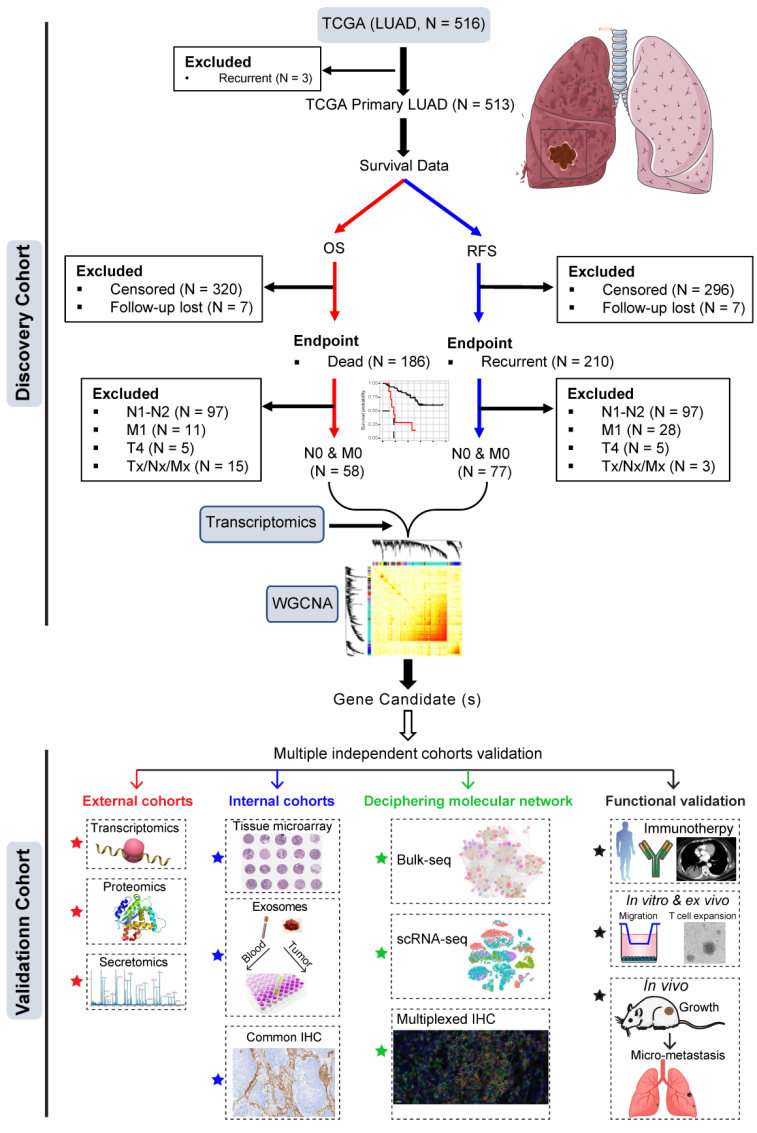 Fig.2 Study design of lung adenocarcinoma tissue exosomes.1
The study demonstrated that THBS2 is preferentially secreted via exosomes from a specific subset of CAFs, which are a major component of the TME. The presence of these THBS2-carrying exosomes in the peripheral plasma of patients was strongly correlated with a shorter recurrence-free survival.
-
Tumors with high THBS2 expression showed a decrease in immune cell infiltrates and an increase in immune exhaustion markers.
-
This unique communication pathway orchestrated by THBS2-positive CAFs can lead to immune escape and immunotherapy resistance.
This groundbreaking work underscores the critical importance of moving beyond general circulating biomarkers to focus on the specific, localized messages carried by tissue exosomes. While circulating exosomes from plasma or CSF can indicate the presence of a tumor, tissue exosomes reveal the precise molecular mechanisms at play, offering unparalleled clarity for both diagnostic and therapeutic development.
Your next breakthrough starts here. Contact us today to learn more.
Direction: The Future of Lung Cancer Exosome Applications
By identifying unique molecular signatures within lung cancer tissue exosomes, we can develop highly specific, non-invasive liquid biopsy panels. These panels would not only aid in the early diagnosis of lung cancer but also allow for precise disease staging, continuous monitoring of minimal residual disease, and real-time tracking of a patient's response to therapy. The ability to detect key molecules like THBS2 in a patient's blood could serve as a powerful predictive tool, enabling clinicians to make more informed decisions about a patient's risk profile and the need for adjuvant therapies.
 Dissecting Exosome-Mediated Disease Mechanisms
The study of tissue exosomes provides a direct window into the communication pathways that drive cancer. By meticulously analyzing their cargo—including specific proteins, genetic materials, and lipids—we can identify novel signaling pathways and cellular interactions that promote tumor growth, metastasis, and drug resistance. This knowledge is essential for the development of new therapeutic targets and strategies that disrupt these pathological communication networks.
Let's build a path forward together. Get in touch to see how our expertise can accelerate your research.
Innovative Tissue Exosome Research Platform at Creative Biolabs
At Creative Biolabs, we are committed to providing a comprehensive, one-stop platform for your lung cancer exosome research. Our services are designed to address every stage of your project, from initial isolation to in-depth functional analysis.
Tailored Isolation for High Purity
Comprehensive Characterization
Advanced Downstream Analysis
We offer tissue exosome isolation services specifically tailored to your research needs, ensuring you receive the highest quality and most abundant exosome preparations from lung cancer tissue.
We provide a full suite of services to verify the properties of your isolated exosomes, including:
Advanced Downstream Analysis
To help you unlock the full potential of your exosome samples, we offer a range of specialized services:
If you are looking to approach the true transport function of lung cancer tissue exosomes, please don't hesitate to contact us with your specific requirements. Our expert team is ready to help you push the boundaries of your research.
FAQs
Q: What are the typical sample requirements for exosome isolation from lung cancer tissues?
A: For tissue samples, we typically require a minimum of 200 mg of fresh or frozen tissue. Our team can provide detailed instructions for sample collection and preservation to ensure the highest quality of exosomes.
Q: How do you ensure the purity of exosomes isolated from complex lung tissue?
A: Isolating exosomes from tissue is notoriously difficult due to the dense extracellular matrix and potential for contamination from other vesicles or cellular debris. We address this by using a meticulous, optimized isolation workflow that combines enzymatic digestion with advanced purification techniques like size-exclusion chromatography and ultracentrifugation. This multi-step approach is specifically designed to yield highly pure and intact exosome preparations.
Q: Can you help me find a specific exosomal biomarker for my research?
A: Yes, absolutely. Our comprehensive profiling services are designed for biomarker discovery. By combining advanced techniques like exosomal proteomics and RNA sequencing, we can identify and validate a wide range of molecular markers—including proteins, miRNAs, and long non-coding RNAs—that are uniquely associated with your specific research question. We then use our extensive bioinformatics capabilities to help you pinpoint the most promising candidates.
Q: How do you ensure the purity of tumor-derived exosomes?
A: Our proprietary isolation protocols include a combination of differential ultracentrifugation and specialized affinity-based purification steps. We rigorously validate the purity of our preparations using established markers such as CD63 and CD81 and by excluding cellular debris and other contaminants.
Q: Do you offer consultations on experimental design?
A: Yes, our team of senior scientists is available for consultation to help you design the most effective experimental strategy to meet your research goals. We believe in a collaborative approach and are happy to share our expertise.
Need a custom solution? Schedule a meeting to explore how we can tailor our services to your specific needs.
Reference
-
Yang, Haitang, et al. "Multi-scale integrative analyses identify THBS2+ cancer-associated fibroblasts as a key orchestrator promoting aggressiveness in early-stage lung adenocarcinoma." Theranostics 12.7 (2022): 3104. https://doi.org/10.7150/thno.69590. Distributed under Open Access license CC BY 4.0, without modification.
For Research Use Only. Cannot be used by patients.
Related Services: