Histoplasma capsulatum-derived Exosome Research & Application
Workflow Features Analytics Advantages Feedback FAQs
Histoplasma capsulatum-derived exosomes have gained increasing attention for their regulatory functions in fungal biology and their role in mediating host–pathogen interactions. These vesicles serve as carriers of diverse biomolecules, facilitating intracellular communication and modulating environmental adaptation. At Creative Biolabs, our exosome research platform supports comprehensive investigations into fungal vesicles to help researchers decipher their molecular composition, regulatory mechanisms, and potential biological significance.
Stepwise Workflow for Exosome Development from Histoplasma capsulatum
At Creative Biolabs, we design and execute reliable workflows for custom H. capsulatum-derived exosome preparation. The standard process includes culture development and exosome isolation, while additional downstream analyses (optional) depend on the availability of strain-specific databases and reference libraries.
Culture Establishment
Preliminary Purification
Concentration & Filtration
Exosome Recovery
Culture Establishment
-
Revive H. capsulatum from frozen stocks under sterile conditions.
-
Verify viability and identity using morphology or PCR (optional).
-
Conduct shaking culture in optimized fungal medium to promote exosome-rich supernatant formation.
Preliminary Purification
-
Centrifuge the culture to eliminate intact fungal cells.
-
Perform secondary centrifugation to remove debris and non-vesicular fragments.
-
Collect the supernatant containing extracellular vesicles for downstream processing.
Concentration & Filtration
-
Concentrate supernatant using ultrafiltration to enrich vesicles.
-
Filter through a 0.22 μm membrane to ensure high purity of vesicle-containing fractions.
Exosome Recovery
-
Conduct sequential ultracentrifugation cycles to pellet H. capsulatum-derived exosomes.
-
Wash and resuspend pellets with PBS buffer to obtain exosome preparations suitable for further studies.
Request Creative Biolabs' workflow customization options for your fungal vesicle project.
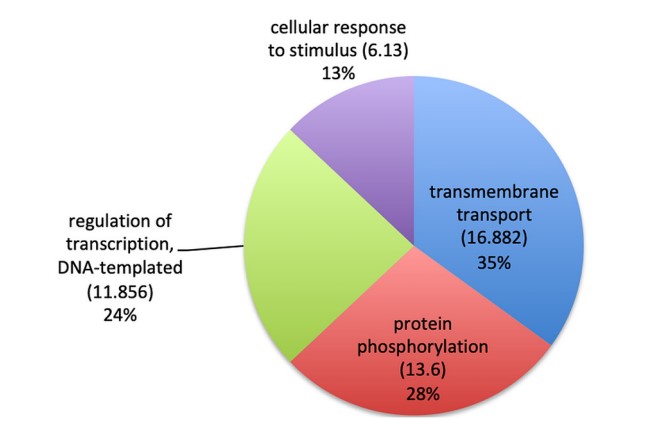 Fig.1 Gene ontology analysis of Histoplasma capsulatum-derived exosomes.1
Distinctive Biological Features of Histoplasma capsulatum-derived Exosomes
Recent studies have revealed several unique molecular and functional characteristics of H. capsulatum-derived exosomes. Below is a summary of selected scientific findings that provide insight into their biological implications.
|
Research Focus
|
Summary of Findings
|
|
Strain-specific RNA Cargo
|
Different H. capsulatum strains exhibit distinct exosomal RNA compositions, suggesting strain-dependent RNA sorting mechanisms.
|
|
Short RNA and miRNA Profiles
|
Exosomes contain numerous short mRNAs and predicted miRNAs involved in translation, stress response, and lipid metabolism.
|
|
ncRNA and Protein Co-localization
|
High abundance of tRNAs and RNA-associated proteins (Nrd1, QDE2) indicates active RNA processing in exosomal cargo.
|
|
Parental RNA vs. Exosomal RNA Comparison
|
Weak correlation between fungal cellular RNA and exosomal RNA suggests selective packaging rather than passive leakage.
|
|
Enzymatic Activity (Chitinase)
|
Exosomes display intrinsic chitinase activity; inhibition of this enzyme reduces vesicle secretion and fungal proliferation.
|
|
Functional Modulation by Inhibitors
|
Methylxanthine treatment suppresses vesicle release and diminishes virulence-related processes, confirming the regulatory role of exosomal chitinase.
|
Reach out to Creative Biolabs for integrated RNA–protein co-profiling strategies in fungal exosome research.
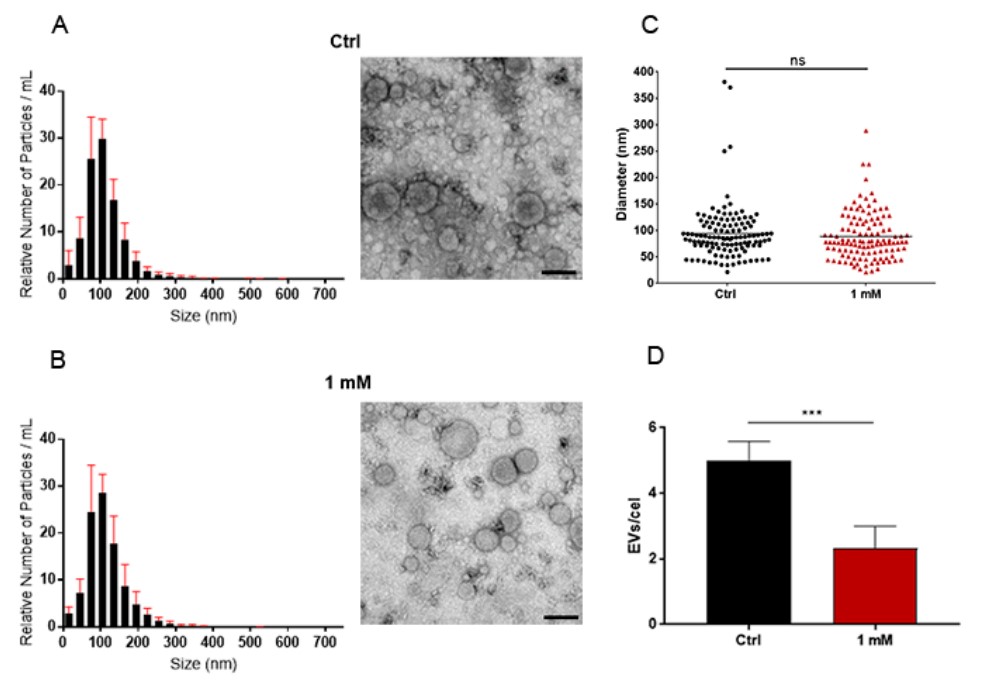 Fig.2 Inhibition of chitinase significantly reduced the release of Histoplasma capsulatum-derived exosomes.2
Beyond Isolation: Optional Analytical Services
To complement exosome generation, Creative Biolabs also provides extended analytical services, depending on project goals and strain data availability:
-
Morphological characterization: Transmission electron microscopy (TEM) and nanoparticle tracking analysis (NTA) (optional).
-
Functional assays: RNA binding, enzymatic activity, and protein secretion profiling (optional).
-
Cargo profiling: Next-generation sequencing for RNA species and mass spectrometry-based protein identification (optional).
-
Comparative strain studies: Evaluate vesicular variations across isolates or environmental conditions (optional).
Explore Creative Biolabs' extended analytical solutions for in-depth characterization of fungal vesicles.
Highlights and Technical Advantages of Creative Biolabs' Exosome Platform
Creative Biolabs offers an integrated service suite designed to deliver high-quality fungal exosome data and reproducible experimental outcomes. Our platform stands out due to:

Customizable workflow
Flexible exosome isolation and quantification protocols tailored to diverse fungal strains.

Multi-omics compatibility
Integration of proteomics, transcriptomics, and metabolomics for comprehensive vesicle characterization.

Data-driven approach
Application of advanced bioinformatics tools for accurate exosome composition and pathway mapping.

Scalable project design
Suitable for pilot studies and larger research-scale projects with consistent quality control.
Connect with Creative Biolabs to discuss how our platform can strengthen your fungal exosome discoveries.
Client Impressions and Collaborative Experiences
"Working with Creative Biolabs on fungal exosome profiling gave us unparalleled insight into vesicle-mediated signaling. Their team's expertise in RNA and proteomic analysis exceeded our expectations."
— Senior Investigator, Mycology Research Institute
"Creative Biolabs' modular workflow allowed us to explore exosomal cargo variations between multiple Histoplasma strains with high precision and reproducibility."
— Principal Scientist, University of Microbial Sciences
"The bioinformatics team at Creative Biolabs provided excellent post-analysis support, making complex RNA data remarkably accessible and publication-ready."
— Postdoctoral Researcher, Fungal Pathogenesis Laboratory
Submit your inquiry to Creative Biolabs and join our global network of fungal exosome collaborators.
From initial isolation to functional assessment, Creative Biolabs delivers end-to-end support for Histoplasma capsulatum-derived exosome research. Our expertise enables deeper exploration into fungal communication systems and their impact on host–pathogen dynamics. Contact us today to accelerate your next fungal exosome research project.
FAQs
Q: How do Histoplasma capsulatum-derived exosomes differ from exosomes derived from non-pathogenic fungi?
A: Histoplasma capsulatum-derived exosomes contain unique molecular signatures influenced by the pathogen's virulence factors and adaptation mechanisms. These exosomes exhibit specific cargoes that may play roles in modulating host immune responses differently than exosomes from non-pathogenic fungi.
Q: In what ways can exosomes from Histoplasma capsulatum be utilized in vaccine development?
A: Exosomes can be used as vaccine vehicles to present specific antigens that elicit strong immune responses. Their lipid bilayer can protect antigens from degradation and enhance antigen delivery to immune cells. Additionally, adjuvant properties of exosomes could be exploited to boost overall vaccine efficacy against Histoplasmosis.
Q: How might research on Histoplasma capsulatum-derived exosomes contribute to understanding fungal pathogenesis?
A: Studying these exosomes can elucidate the mechanisms by which Histoplasma capsulatum interacts with host cells, including immune evasion strategies. Insights gained could reveal how exosome-mediated signaling affects host-pathogen interactions and contribute to the development of targeted therapeutics or preventive measures against fungal infections.
Q: Are there potential biotechnological applications for Histoplasma capsulatum-derived exosomes outside of immunology?
A: Yes, the unique properties of these exosomes may lend themselves to applications in biomarker discovery, environmental monitoring of fungal pathogens, or even drug delivery systems. Their ability to carry specific molecular signals could provide a non-invasive means to detect Histoplasma capsulatum in clinical or environmental samples.
Q: What techniques are being employed to analyze the cargo of Histoplasma capsulatum-derived exosomes?
A: Researchers use a combination of proteomics, lipidomics, and RNA sequencing to characterize the molecular content of these exosomes. Advanced techniques such as mass spectrometry and next-generation sequencing facilitate comprehensive analysis, allowing for a detailed understanding of the roles these components may play in host interaction and pathogenesis.
Q: How does the study of Histoplasma capsulatum-derived exosomes intersect with the field of nanomedicine?
A: The biocompatibility and natural capability of exosomes to mediate multi-cellular communication make them attractive vectors in nanomedicine. Research into Histoplasma capsulatum-derived exosomes could lead to innovative approaches in targeted drug delivery systems, enhancing the specificity of treatments for fungal infections through engineered exosomes that home in on specific immune or fungal cells.
References
-
Alves, Lysangela R., et al. "Extracellular vesicle-mediated RNA release in Histoplasma capsulatum." Msphere 4.2 (2019): 10-1128. Distributed under Open Access license CC BY 4.0. The image was modified by extracting and using only Part B of the original image and revising the title. https://doi.org/10.1128/msphere.00176-19.
-
Valdez, Alessandro F., et al. "Traversing the Cell Wall: The Chitinolytic Activity of Histoplasma capsulatum Extracellular Vesicles Facilitates Their Release." Journal of Fungi 9.11 (2023): 1052. Distributed under Open Access license CC BY 4.0. The image was modified by revising the title. https://doi.org/10.3390/jof9111052.
For Research Use Only. Cannot be used by patients.
Related Services: