Malassezia-derived Exosome Research & Application
Overview Workflow Research Highlights Key Advantages Testimonials FAQs
The genus Malassezia represents a group of lipid-dependent fungi that inhabit human and animal skin. Among them, Malassezia sympodialis is a dominant commensal species known for its dynamic interaction with the host's epidermal barrier and immune system. In recent years, Malassezia-derived exosomes have gained attention for their roles in fungal–host communication, immune modulation, and skin microenvironment regulation.
Creative Biolabs, with years of expertise in microbial exosome research, provides high-quality customized production and analytical services for Malassezia-derived exosomes. Our platform supports researchers exploring fungal exosome biogenesis, protein and lipid cargo profiling, and host–microbe signaling.
Scientific Overview
|
FUNGAL CHARACTERISTICS
|
RESEARCH INSIGHTS ON MALASSEZIA EXOSOMES
|
|
• Lipid-dependent commensal yeast is widely present on human skin.
|
• Exosomes serve as messengers facilitating fungal–host crosstalk.
|
|
• Plays dual roles: maintaining skin homeostasis and contributing to inflammation under dysbiosis.
|
• Fungal exosomes regulate immune and barrier functions in keratinocytes.
|
|
• Shares surface lipids and antigens with other skin microbiota, influencing interkingdom interactions.
|
• Emerging research suggests fungal exosomes act as nanocarriers of virulence or tolerance signals.
|
Reach out to Creative Biolabs to explore how fungal exosomes can advance your host–microbe interaction research.
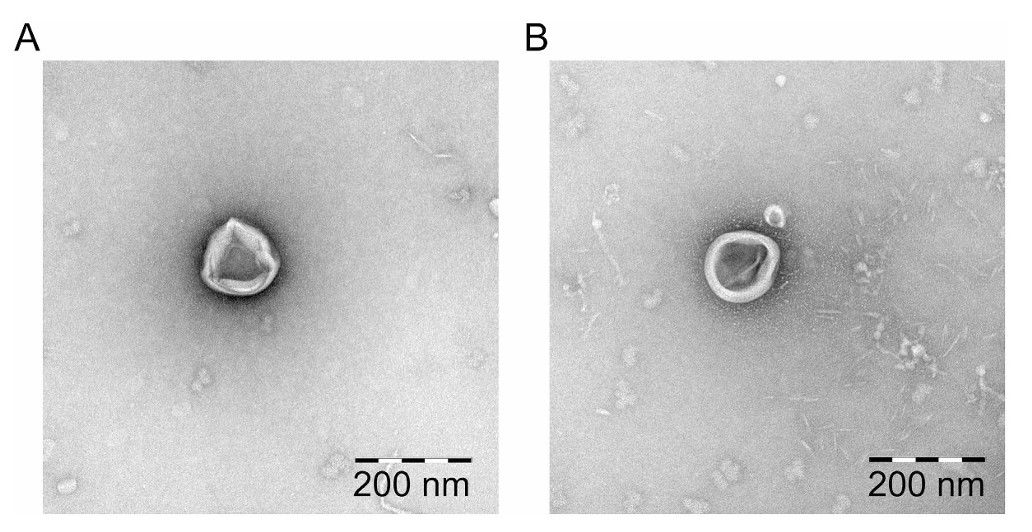 Fig. 1 Malassezia exosomes visualized by TEM analyses.1, 3
Standard Workflow for Malassezia-Derived Exosome Preparation
Creative Biolabs' standardized Malassezia exosome development workflow focuses on reproducibility and high-quality vesicle yield. While our standard workflow includes customized production and basic purification, advanced characterization and component profiling are offered as optional services depending on the available strain library and research scope.
Stepwise Workflow
-
Fungal Cultivation
Inoculate Malassezia sympodialis on modified Dixon agar and incubate at 30 °C for 48–72 h.
After 3–4 passages, transfer selected colonies into liquid modified Dixon medium.
Incubate overnight with gentle agitation to promote vesicle release.
-
Pre-Isolation Purification
Remove fungal cells, debris, and large vesicular aggregates through sequential differential centrifugation.
Ensure each centrifugation step is optimized for size-based separation to maintain vesicle integrity.
Collect clarified supernatant containing extracellular vesicles.
-
Concentration and Filtration
Use ultrafiltration to concentrate the supernatant and minimize soluble impurities.
Perform membrane filtration to exclude particles above the exosome size range.
Retain concentrated filtrate for ultracentrifugation.
-
Ultracentrifugation and Exosome Recovery
Perform successive ultracentrifugation cycles to pellet Malassezia-derived exosomes.
Carefully resuspend the exosome pellet in sterile cold PBS buffer to maintain structural integrity.
Store the final product under controlled conditions to prevent degradation.
Optional Characterization and Analytical Services
(availability depends on Malassezia strain library and project scope)
-
Structural Characterization (optional)
Transmission Electron Microscopy (TEM) and Nanoparticle Tracking Analysis (NTA) for vesicle visualization and size profiling.
Morphology validation ensuring uniformity and membrane bilayer integrity.
-
Proteomic and Lipidomic Profiling (optional)
Comprehensive mass spectrometry-based analysis of protein and lipid cargo.
Comparative profiling across fungal strains or host-induced states.
-
Functional and Immunological Assays (optional)
Cytokine expression assays (e.g., IL-6, TNF-α) in keratinocytes after exosome exposure.
Assessment of cellular adhesion molecule regulation (e.g., ICAM-1).
Contact Creative Biolabs to customize your fungal exosome workflow or integrate optional analytical modules for deeper insights.
Highlights from Recent Research on Malassezia-Derived Exosomes
Research into Malassezia exosomes has revealed their pivotal roles in intercellular signaling, inflammation, and host defense modulation. These vesicles represent a sophisticated communication system that mediates fungal influence on epidermal cells through molecular delivery.
|
RESEARCH FOCUS
|
KEY FINDINGS AND OUTCOMES
|
|
Cellular uptake and distribution
|
Confocal imaging demonstrated that Malassezia-derived exosomes were internalized by keratinocytes and accumulated near perinuclear regions over time, without inducing cell toxicity.
|
|
Regulation of pro-inflammatory cytokines
|
qPCR and ELISA data indicated strong induction of IL-6 in keratinocytes following exosome exposure, consistent with enhanced signaling in epithelial immune response.
|
|
In vivo cytokine response validation
|
Immunohistochemical staining in mouse models confirmed IL-6 upregulation in epidermal layers exposed to Malassezia-derived exosomes, suggesting their role in skin inflammation.
|
|
Activation of NF-κB pathway
|
Western blot analysis revealed increased phosphorylation of p65 subunit after treatment, confirming NF-κB pathway activation; this effect was reduced by NF-κB inhibition.
|
|
ICAM-1 expression modulation
|
Confocal microscopy of primary keratinocytes showed markedly higher ICAM-1 expression after Malassezia exosome treatment compared with control samples.
|
Discuss your research goals with Creative Biolabs and explore advanced assays for fungal exosome functional analysis.
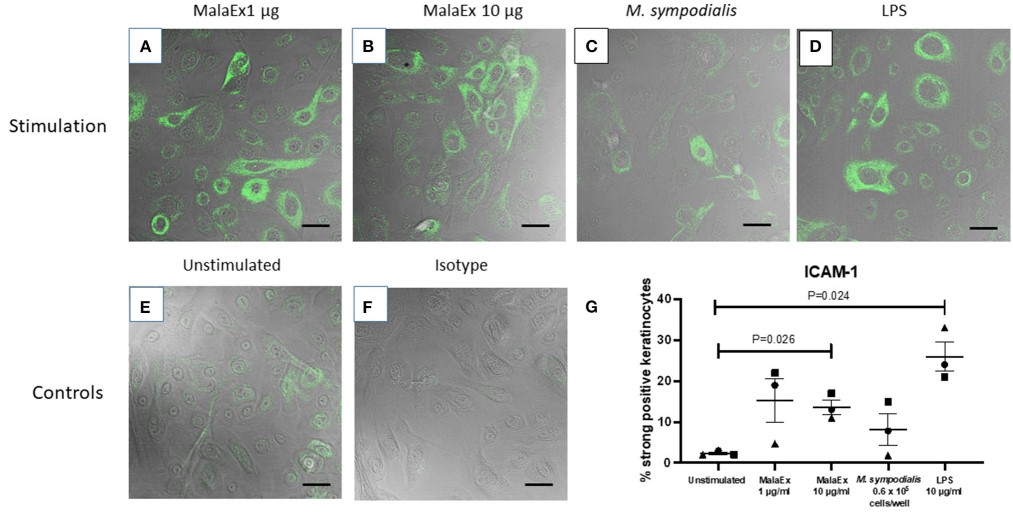 Fig.2 Malassezia-derived exosomes enhanced ICAM-1 expression.2, 3
Scientific and Technical Advantages of Working with Creative Biolabs
 Comprehensive Expertise in Fungal Vesicles
Creative Biolabs has established extensive protocols for yeast- and fungus-derived extracellular vesicle studies.
Expertise spans from vesicle biogenesis research to molecular component identification.
Safe and Reliable Workflow
Standardized fungal handling ensures biosafety while maintaining vesicle functionality.
All procedures adhere to quality and contamination control standards for reproducibility.
Flexible Customization Options (optional)
Modular add-on services include proteomic, RNA, and lipidomic profiling.
Optional engineering for fluorescence labeling or surface antigen coupling.
Cross-Disciplinary Support
Integration of microbiology, immunology, and molecular biology expertise within one platform.
Collaboration-friendly project management from proposal to final report.
Reach out to Creative Biolabs today to explore our end-to-end fungal exosome research support.
Testimonials from Researchers
"Working with Creative Biolabs on Malassezia sympodialis-derived exosome projects was seamless. The quality and reproducibility of the vesicles were excellent, which allowed us to focus on mechanistic studies."
— Postdoctoral Researcher, Department of Microbial Interactions, Europe
"Creative Biolabs' optional proteomic analysis provided detailed insights into fungal exosome cargo. The collaborative approach made data interpretation straightforward."
— Senior Scientist, Institute for Skin Microbiology, USA
"We appreciated Creative Biolabs' attention to biosafety and workflow transparency. Their team quickly adapted our requirements for vesicle labeling and functional assays."
— Research Associate, Fungal Systems Biology Laboratory, Asia
Experience the same research reliability - contact Creative Biolabs today to begin your Malassezia exosome project.
Ongoing research into Malassezia-derived exosomes promises to deepen our understanding of fungal communication networks, skin microbiota balance, and host immune signaling. With continuing technological advancements, these vesicles are poised to become vital tools in molecular and cellular biology research. Creative Biolabs remains committed to enabling the global scientific community with reliable fungal exosome services, ensuring every project benefits from reproducibility, precision, and professional scientific support. Start your next Malassezia exosome project with Creative Biolabs.
FAQs
Q: What is the significance of studying exosomes derived from Malassezia species?
A: Exosomes generated from Malassezia are essential for intercellular communication in the subcutaneous milieu. Understanding these vesicles can reveal insights into the pathogenic mechanisms of Malassezia-related skin conditions, including their potential roles in inflammation, immune modulation, and biofilm formation.
Q: How do Malassezia-derived exosomes affect host immune responses?
A: Research has shown that Malassezia-derived exosomes can influence host immune responses by delivering various molecules. These components may modulate cytokine production, alter T-cell responses, and potentially trigger allergic reactions or sensitization in susceptible individuals.
Q: What potential biotechnological applications could arise from understanding Malassezia-derived exosomes?
A: Insights from Malassezia-derived exosomes may lead to novel biomarker discoveries for skin conditions, the development of targeted diagnostics, or even the formulation of probiotic or therapeutic products aimed at modulating skin microbiota and enhancing skin barrier function.
Q: Are there specific challenges associated with researching Malassezia-derived exosomes?
A: Yes, challenges include the fastidious growth requirements of Malassezia species, the complexity of isolating exosomes in a mixed microbial community, and the need for advanced techniques to study their functional roles and interactions with host cells effectively.
Q: How do Malassezia-derived exosomes contribute to biofilm formation on the skin?
A: Malassezia-derived exosomes may facilitate biofilm formation by delivering factors that enhance cell adhesion, promote nutrient acquisition, and protect the microbial community from host defenses. Understanding this process could provide insights into chronic skin conditions characterized by biofilms.
Q: Does research on exosomes obtained from Malassezia shed light on the skin's microbial ecology?
A: Absolutely. By examining the composition and function of Malassezia-derived exosomes, researchers can gain a better understanding of how Malassezia interacts with other skin microbiota, influences the skin's ecosystem, and alters the overall health of the skin.
Q: What future research directions are being considered for Malassezia-derived exosomes?
A: Future research may focus on elucidating the specific molecular mechanisms through which Malassezia-derived exosomes affect skin physiology, exploring their role in skin diseases, and investigating their potential therapeutic applications in dermatology.
References
-
Rayner, Simon, et al. "Identification of small RNAs in extracellular vesicles from the commensal yeast Malassezia sympodialis." Scientific reports 7.1 (2017): 39742. https://doi.org/10.1038/srep39742.
-
Vallhov, Helen, et al. "Extracellular vesicles released from the skin commensal yeast Malassezia sympodialis activate human primary keratinocytes." Frontiers in Cellular and Infection Microbiology 10 (2020): 6. https://doi.org/10.3389/fcimb.2020.00006.
-
Distributed under Open Access license CC BY 4.0. The image was modified by revising the title.
For Research Use Only. Cannot be used by patients.
Related Services: