Stem Cell-derived Exosome Application
- Ultraviolet Injury Repair
Introduction Properties Applications Services FAQs
Stem Cell-derived Exosomes and Repair of Ultraviolet Injury
Ultraviolet (UV) radiation, an omnipresent environmental factor, is a primary contributor to a spectrum of skin damages, ranging from acute erythema and blistering characteristic of sunburn to the insidious progression of chronic photoaging and an elevated risk of dermatological malignancies. While conventional therapeutic strategies often focus on symptomatic relief or broad-spectrum anti-inflammatory interventions, a substantial unmet need persists for targeted, regenerative repair mechanisms that operate at the fundamental cellular and tissue levels. The complexity of UV-induced damage, involving DNA lesions, oxidative stress, and inflammatory cascades, necessitates an advanced approach to truly restore skin integrity and function.
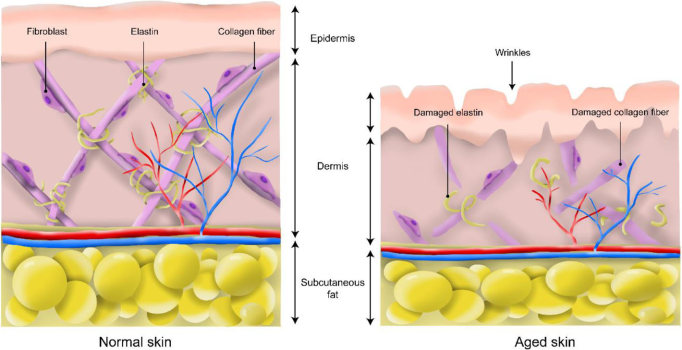 Fig.1 The structures of the skin before and after aging.1
In the rapidly evolving landscape of regenerative medicine, exosomes, have emerged as transformative biological nanocarriers. These diminutive vesicles, secreted by virtually all eukaryotic cell types, represent a sophisticated and highly conserved mode of intercellular communication. Their ability to transport a diverse and potent payload of bioactive molecules enables them to profoundly influence the behavior and physiological state of recipient cells. Within this burgeoning field, stem cell-derived exosomes have garnered significant attention. These specific exosomes intrinsically inherit many of the powerful regenerative and immunomodulatory properties characteristic of their parent stem cells, positioning them as exceptionally promising candidates for tissue repair and regeneration, including the intricate challenge of UV-induced skin injury. The increasing recognition of exosomes' critical role in intercellular communication and molecular transport underscores their potential as a promising tool in regenerative medicine, drug delivery, and disease diagnostics, driving rapid growth and investment in this area.
To better understand and address ultraviolet-induced skin injury, Creative Biolabs offers exosome isolation services by various extraction technologies. These exosomes can serve as critical components in developing potential therapies for ultraviolet-induced skin damage.
Intrinsic Properties of Stem Cell-Derived Exosomes
For therapeutic applications, exosomes present several compelling advantages, often referred to as their "natural nanocarrier" edge. Key properties include:
 Nanosized Dimensions
Typically ranging from 30 to 150 nm in diameter, allowing for efficient cellular uptake and penetration across biological barriers.
Lipid Bilayer Membrane
Provides inherent stability, protecting encapsulated cargo from enzymatic degradation in biological fluids.
Diverse Bioactive Cargo
Encapsulate and deliver a rich array of proteins, nucleic acids (mRNAs, miRNAs, lncRNAs), and lipids, enabling sophisticated intercellular communication.
High Biocompatibility
Minimizes the likelihood of adverse immune reactions within the host.
Low Immunogenicity
Particularly when sourced from allogeneic mesenchymal stem cells, reducing the risk of significant immune responses compared to cell-based therapies.
Acellular Nature
Lacking replicative capacity, which significantly mitigates the risks of uncontrolled proliferation or tumorigenicity, a paramount safety advantage for translation.
Efficient Biomembrane Penetration
Their nanoscale size and lipid composition facilitate superior uptake by target cells, ensuring effective delivery of their therapeutic cargo.
These inherent characteristics, combined with their ability to mediate many of the beneficial effects traditionally associated with cells without the same risks of immune rejection or uncontrolled proliferation, are key factors driving increasing attention and investment in exosome research and development.
Applications in Ultraviolet Injury Repair: A Regenerative Paradigm Shift
Stem cell-derived exosomes exert their regenerative effects by actively influencing fundamental healing processes at multiple levels. Their bioactive cargo can stimulate cellular proliferation, promote directional cell migration, induce vascular development (angiogenesis), and facilitate the organized reorganization of the extracellular matrix. These concerted actions collectively contribute to accelerated and higher-quality tissue repair outcomes.
For the complex challenge of UV-induced skin damage, these multifaceted mechanisms are profoundly beneficial. Exosomes can effectively:
Reduce Inflammation
By delivering a spectrum of anti-inflammatory molecules, exosomes can significantly mitigate the acute inflammatory response characteristic of sunburn, thereby preventing cascading damage to skin cells and tissues.
Promote Epithelial Development
The exosomal cargo can specifically stimulate the proliferation and migration of keratinocytes, accelerating the crucial process of re-epithelialization and wound closure. This is analogous to the superior epithelial development and accelerated closure rates observed in studies of oral mucosal regeneration, a highly relevant model for skin repair.
Enhance Collagen Synthesis and Organization
Exosomes can modulate the activity of fibroblasts, the primary cells responsible for producing connective tissue, to enhance collagen production and promote its proper architectural organization. This directly addresses the structural damage caused by UV radiation, leading to improved skin elasticity, strength, and overall dermal integrity.
Accelerate Wound Closure
The combined effects of reduced inflammation, enhanced cellular proliferation, and improved extracellular matrix remodeling synergistically lead to significantly accelerated wound closure rates, facilitating faster recovery and minimizing long-term scarring.
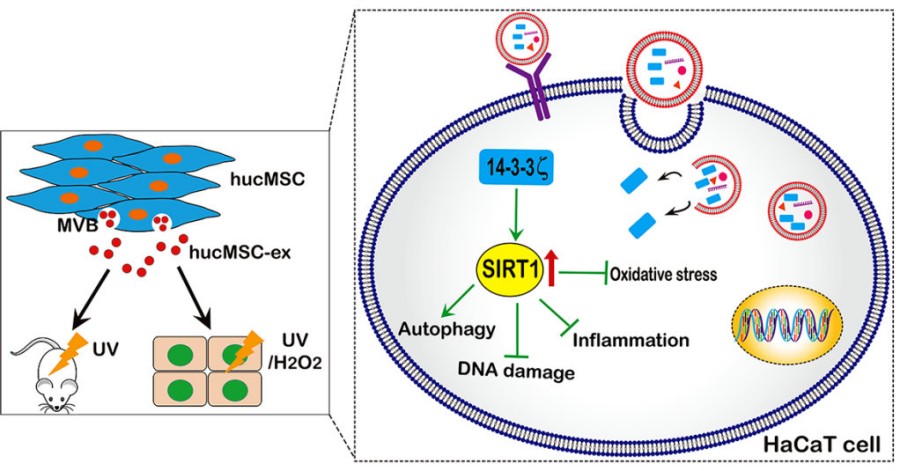 Fig.2 A proposed model for 14-3-3ζ in hucMSC-derived exosomes confer protection against ultraviolet-induced acute photodamage.2
Creative Biolabs' Comprehensive Exosome Services: Your Partner in Innovation
Creative Biolabs offers an exceptionally comprehensive suite of exosome-related research and manufacturing services, designed to support every aspect of an exosome project, from initial concept through to translation. The vertically integrated ecosystem encompasses state-of-the-art laboratories and cGMP (current Good Manufacturing Practice) facilities, ensuring both scientific rigor and operational excellence at every stage. This end-to-end capability significantly streamlines the research and development process for clients, reducing complexity and accelerating timelines for bringing exosome therapies to market. The explicit focus on "Premium Stem Cell-Derived Exosome Production Services" underscores a specialized expertise in generating high-quality exosomes from validated stem cell sources, which are crucial for studies. Adherence to cGMP-compliant bioprocessing further ensures that manufactured exosomes meet the stringent quality standards required for human therapeutic applications.
Creative Biolabs' key service offerings for exosome research and development include:
|
Service Category
|
Key Offerings
|
Description & Value Proposition
|
|
Exosome Isolation
|
|
Efficient and high-yield isolation of exosomes from various biological sources, including premium stem cell lines, ensuring high purity for downstream applications. This foundational step is critical for obtaining consistent and reliable therapeutic material.
|
|
Exosome Analysis & Characterization
|
|
Comprehensive analysis of exosome identity, purity, and bioactive cargo. Detailed profiling of proteins, lipids, and nucleic acids (miRNAs, mRNAs) is vital for understanding mechanisms of action, ensuring consistency, and meeting requirements for therapeutic development.
|
|
Exosome Engineering & Manufacturing
|
|
Tailoring exosomes for enhanced targeting or specific cargo loading to optimize therapeutic efficacy. Large-scale, high-quality production of exosomes from stem cell sources under cGMP-compliant conditions, essential for studies and commercialization.
|
|
Exosome-Based Application Support
|
|
Comprehensive studies to evaluate biological activity and therapeutic potential in relevant models.
|
Contact us, you gain more than just a service provider; Creative Biolabs access a strategic partner dedicated to turning visionary ideas into tangible solutions.
FAQs
Q: What makes stem cell-derived exosomes particularly effective for UV injury repair?
A: Stem cell-derived exosomes carry a specific payload of regenerative and anti-inflammatory molecules from their parent stem cells. These molecules can directly stimulate skin cell proliferation, reduce inflammation, promote collagen synthesis, and accelerate wound healing, addressing multiple facets of UV-induced damage more comprehensively than many traditional treatments. Their natural origin also contributes to their high biocompatibility.
Q: How does Creative Biolabs ensure the quality and consistency of its exosome preparations?
A: Creative Biolabs employs state-of-the-art isolation and purification techniques, followed by rigorous characterization services including proteomic, lipidomic, and next-generation sequencing analysis of exosomal cargo. Furthermore, for therapeutic applications, exosomes are manufactured in cGMP-compliant facilities, adhering to strict quality control standards to ensure consistency, purity, and potency for studies.
Q: Can exosomes be engineered for specific therapeutic outcomes?
A: Absolutely. Exosome engineering is a cutting-edge area where exosomes can be modified to enhance their targeting capabilities or to encapsulate specific therapeutic molecules. Creative Biolabs offers exosome engineering services, leveraging expertise in advanced molecular biology and conjugation techniques to tailor exosomes for optimized efficacy in specific applications.
References
-
Yang, Gi Hoon et al. "Overcome the barriers of the skin: exosome therapy." Biomaterials research vol. 25,1 22. 3 Jul. 2021, doi:10.1186/s40824-021-00224-8. Distributed under Open Access license CC BY 4.0, without modification.
-
Wu, Peipei et al. "HucMSC exosome-delivered 14-3-3ζ alleviates ultraviolet radiation-induced photodamage via SIRT1 pathway modulation." Aging vol. 13,8 (2021): 11542-11563. doi:10.18632/aging.202851. Distributed under Open Access license CC BY 3.0, without modification.
For Research Use Only. Cannot be used by patients.
Related Services: