Stem Cell-derived Exosome Application
- Wound Healing
Introduction Properties Applications Services FAQs
Stem Cell-derived Exosome-Mediated Wound Healing
The field of exosome research is experiencing exponential growth, fueled by the compelling evidence of their therapeutic potential. They are rapidly emerging as a highly promising avenue in regenerative medicine, drug delivery, and disease diagnostics. A significant factor propelling this surge in interest and investment is the inherent advantage exosomes possess over traditional cell-based therapies. While whole-cell therapies have shown promise in tissue repair and regeneration, they often present formidable challenges such as the risk of immune rejection, uncontrolled cellular proliferation, and potential tumorigenesis. Exosomes, by contrast, can mediate many of the beneficial effects traditionally associated with cells without these inherent risks. This superior safety profile, coupled with their acellular nature, positions exosomes as a more controllable, scalable, and potentially safer alternative, marking a strategic shift in regenerative medicine towards cell-free therapeutic strategies.
Creative Biolabs, a global leader in custom research and manufacturing solutions, stands at the forefront of this exciting domain. With decades of experience, the company is committed to empowering breakthroughs and bridging the gap between scientific discovery and commercialization in exosome therapeutics. Creative Biolabs will specifically focus on the application of stem cell-derived exosomes as a cutting-edge approach to accelerate wound healing and enhance tissue regeneration. We will discuss their unique properties and the intricate mechanisms by which they promote efficient repair.
Properties of Stem Cell-Derived Exosomes: Nature's Nanocarriers
The remarkable therapeutic efficacy of exosomes in regenerative applications, particularly wound healing, is intrinsically linked to their unique biological characteristics. Understanding these fundamental properties is crucial for appreciating their potential as advanced therapeutic agents. Stem cell-derived exosomes offer several compelling advantages that position them as highly promising natural nanocarriers for therapeutic applications, particularly when compared to traditional cell-based approaches:
Low Immunogenicity
Their acellular nature significantly reduces the risk of triggering an adverse immune response or rejection, a major hurdle for direct cell transplantation therapies.
Innate Biocompatibility and Stability
The natural lipid bilayer and inherent composition ensure excellent compatibility with biological systems and remarkable stability in various physiological environments, facilitating their systemic or localized delivery.
Efficient Biomembrane Penetration
Their nanoscale size and specific surface molecules facilitate efficient uptake by target cells and penetration across biological barriers, enabling targeted therapeutic effects.
Non-replicative and Non-tumorigenic
Crucially, exosomes lack replicative capacity, completely eliminating concerns about uncontrolled proliferation or the potential for tumorigenesis often associated with live cell therapies.
Enhanced Scalability and Storage
Compared to living cells, exosomes are generally easier to produce at large scales, purify, and store, which is a significant practical advantage for pharmaceutical development and commercialization.
Applications in Wound Healing: Accelerating Regeneration
The promise of stem cell-derived exosomes in wound healing lies in their capacity to orchestrate a comprehensive and synergistic regenerative response, influencing multiple physiological processes critical for effective tissue repair. Exosomes act as sophisticated biological messengers, delivering a potent cocktail of molecules that directly stimulate healing pathways:
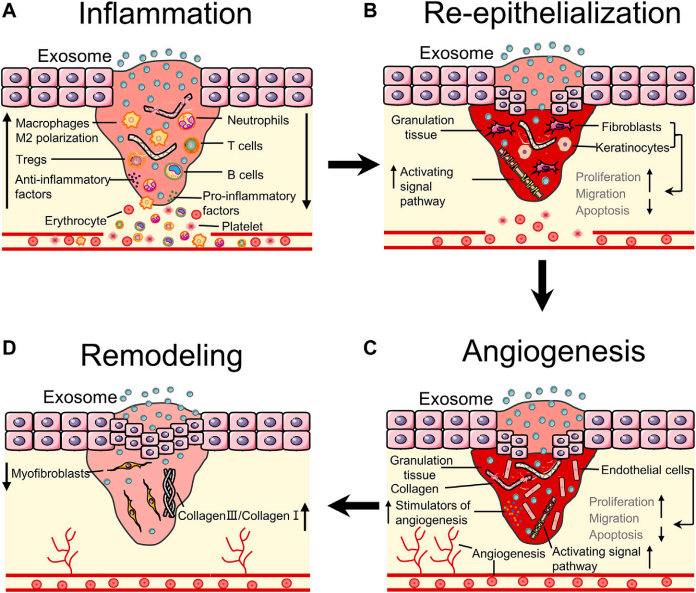 Fig.1 Bioeffects of stem cells derived exosomes on wound healing.1
Table.1 Possible Mechanism of Stem Cell-derived Exosome (SC-Exos) Promoting Skin Wound Healing
|
Period
|
Role of SC-Exos
|
Applications
|
|
Source of SC-Exos
|
Possible mechanism
|
|
Inflammation phase
|
In the early stage of trauma, SC-Exos mainly releases anti-inflammatory factors and regulates the phenotype of macrophages to reduce the inflammatory response, which helps hemostasis and provides a favorable microenvironment for wound healing.
|
Bone marrow mesenchymal stem cells
|
Release miR-223 targeting pknox1 to promote macrophage polarization and IL -10 secretion.
|
|
Melatonin-stimulated bone marrow mesenchymal stem cells
|
Regulate macrophage polarization by targeting the PTEN/Akt pathway.
|
|
Lipopolysaccharide-stimulated umbilical cord mesenchymal stem cells
|
Release miR-let-7d and activate TLR4/NF-κB signaling pathway and ATF3/Akt signaling pathway in macrophages.
|
|
Proliferation phase
|
SC-Exos secretes abundant growth factors and nucleic acids, stimulates the proliferation, migration, and development of fibroblasts, epidermal cells, dermal cells, and vascular endothelial cells, and promotes new blood vessel formation and skin regeneration
|
Rivastatin-stimulated bone marrow mesenchymal stem cells
|
Upregulate miR-211-3p in vascular endothelial cells through Akt/eNOS signaling pathway.
|
|
Bone marrow mesenchymal stem cells overexpressing miR-126
|
Release excessive miR-126 to downregulate PI3K/Akt signaling pathway, ultimately promoting the function of vascular endothelial cells.
|
|
Adipose tissue-derived stem cells
|
Promote migration of keratinocytes by activating the Wnt/β-catenin signaling pathway and Akt/HIF-1α signaling pathway.
|
|
Amniotic mesenchymal stem cells overexpressing miR-135a
|
Release excessive miR-135a to downregulate large tumor suppressor 2, ultimately promoting proliferation and migration of dermal fibroblasts.
|
|
Bone marrow mesenchymal stem cells overexpressing lncRNA H19
|
Deliver lncRNA H19 to skin fibroblasts to suppress the miR-152-3p/PTEN signaling pathway and activate ATF3/Akt signaling pathway, ultimately promoting cell proliferation and migration.
|
|
Remodeling period
|
Finally, SC-Exos can inhibit the formation of granulation tissue by regulating the ratio of collagen on the one hand, and inhibit the apoptosis of cells on the other hand, thus contributing to the reconstruction of wound tissue.
|
Umbilical cord mesenchymal stem cells
|
Deliver miR-23a, miR-21, and other miRNAs to skin fibroblasts to inhibit TGF-β/Smad2 signaling, ultimately reducing collagen deposition.
|
|
Adipose tissue-derived stem cells
|
Release miR-192-5p to inhibit the IL-17RA/Smad signaling pathway, thereby downregulating the expression levels of α-smooth muscle actin, collagen type I, and collagen type III.
|
|
Adipose tissue-derived stem cells
|
Upregulate matrix metalloproteinase 3 through activation of the ERK/MAPK signaling pathway, ultimately altering the composition ratio of collagen.
|
Creative Biolabs' Comprehensive Exosome Services: Your Partner in Innovation
The application of stem cell-derived exosomes represents a paradigm shift in regenerative medicine, offering a sophisticated and highly effective approach to wound healing. Their inherent biological properties – including nanoscale size, stable lipid bilayer, and rich bioactive cargo – position them as superior natural nanocarriers capable of orchestrating a holistic regenerative response. Evidence consistently demonstrates their ability to accelerate wound closure, promote angiogenesis, modulate inflammation, and facilitate organized tissue remodeling, all while offering a compelling safety profile free from the risks of immunogenicity or tumorigenicity associated with traditional cell therapies. Creative Biolabs is a professional company providing comprehensive one-stop exosome research services to meet the diverse needs of researchers and offering customized solutions to optimize stem cell-derived exosomes for applications.
Extraction & Purification
Characterization & Analysis
Engineering & Manufacturing
Applications & Functional
- High-Quality Exosome Isolation
- Fine Purification
4. Exosome-Based Applications & Functional Studies
- In Vitro Functional Studies
- In Vivo Functional Studies
If you are interested in exploring the role and potential applications of stem cell-derived exosomes in wound healing, please contact us for expert support and cutting-edge technical solutions.
FAQs
Q: How do stem cell-derived exosomes actually promote wound healing at a biological level?
A: Stem cell-derived exosomes promote wound healing by delivering a complex and potent cargo of bioactive molecules, including various proteins, growth factors, and specific nucleic acids like microRNAs, directly to the cells involved in the repair process. These molecules stimulate critical regenerative pathways: they enhance the proliferation and migration of essential skin cells (keratinocytes and fibroblasts), induce the formation of new blood vessels (angiogenesis) to supply nutrients, modulate inflammatory responses to reduce scarring, and facilitate the organized remodeling of the extracellular matrix, ultimately leading to stronger and more functional tissue repair
Q: Do exosome-based approaches offer a safer option than conventional cell therapies in wound healing applications?
A: Absolutely. A significant advantage of exosomes is their superior safety profile compared to direct cellular transplantation. Unlike whole cells, exosomes are acellular and non-replicative, which completely eliminates concerns about uncontrolled proliferation or potential tumor formation. Furthermore, their inherent biological composition leads to significantly reduced immunogenicity, minimizing the risk of adverse immune reactions or rejection. This makes them a highly biocompatible, well-tolerated, and generally safer therapeutic research option for regenerative applications.
Q: What is the present progress or clinical maturity level of exosome-driven treatments for wound repair?
A: Exosome-based wound healing is a rapidly advancing and highly promising field. Currently, it is primarily in robust preclinical and early-stage clinical development. Extensive preclinical studies, such as those demonstrating significant acceleration in skin regeneration in animal models, have provided compelling evidence of efficacy. The escalating global interest and investment in exosome research strongly indicate a clear and accelerated trajectory towards broader clinical translation, with ongoing efforts focused on optimizing production, purification, and delivery for human therapeutic applications.
Q: In what ways can Creative Biolabs provide targeted support for my wound healing project involving exosomes?
A: Creative Biolabs is uniquely positioned to be your comprehensive partner in exosome research and development. We offer an end-to-end suite of services tailored to your needs, from premium stem cell-derived exosome production and advanced characterization (including detailed cargo profiling and Next-Generation Sequencing) to sophisticated exosome engineering for enhanced targeting and efficacy. We also provide robust in vitro and in vivo functional studies to validate your exosome candidates. With our cGMP-compliant facilities and a multidisciplinary team of experts, we ensure high-quality, reliable results that will accelerate your project from initial concept to potential application.
Reference
-
Lv, Hui et al. "Exosome derived from stem cell: A promising therapeutics for wound healing." Frontiers in pharmacology vol. 13 957771. 8 Aug. 2022, doi:10.3389/fphar.2022.957771. Distributed under Open Access license CC BY 4.0, without modification.
For Research Use Only. Cannot be used by patients.
Related Services: