Stem Cell-derived Exosome Application
- Scar Repair
Introduction Properties Applications Services FAQs
New Solutions for Scar Repair Research
The field of regenerative medicine is continuously evolving, seeking innovative solutions for complex biological challenges. Among these, the repair of skin injuries and the management of scar formation remain critical areas of focus. The skin, as the body's largest organ and primary protective barrier, is frequently subjected to various forms of trauma, from minor abrasions to severe burns and chronic wounds. Impaired healing processes can lead to significant health complications and disfiguring scars, profoundly impacting an individual's quality of life.

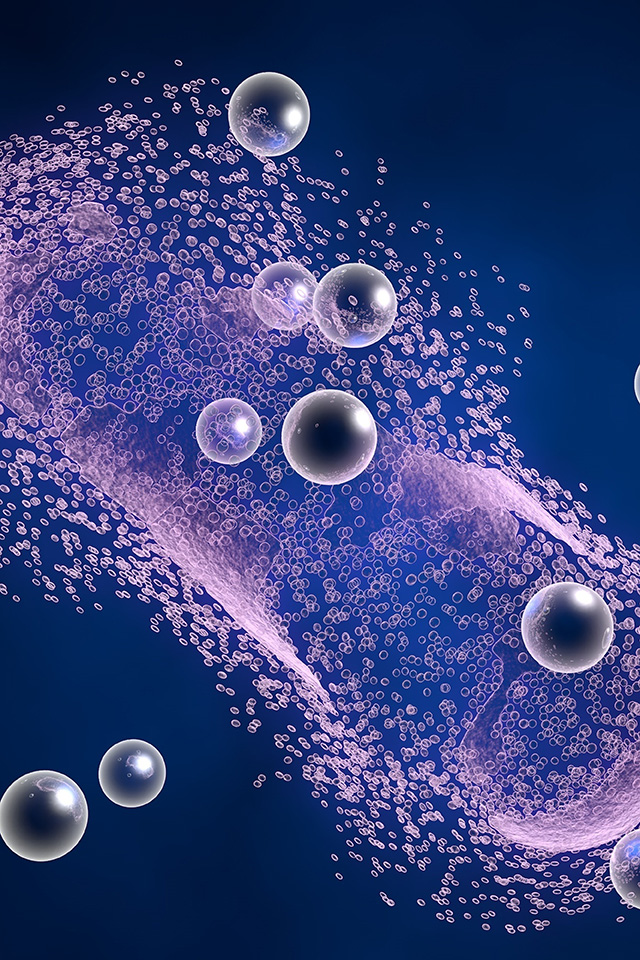
In response to these persistent challenges, a new frontier in therapeutic intervention has emerged: stem cell-derived exosomes. These nano-sized exosomes, typically ranging from 30 to 150 nm in diameter, are revolutionizing the approach to regenerative medicine. Exosomes function as sophisticated biological messengers, facilitating intercellular communication by precisely delivering a diverse array of bioactive payloads, including microRNAs, proteins, and lipids, to recipient cells. This unique capability positions them as a highly promising cell-free therapeutic platform, capable of harnessing the potent regenerative capacities of stem cells without the inherent complexities and potential risks associated with live cell therapies.
The ability of exosomes to promote optimal skin regeneration and minimize scar formation has garnered substantial attention from the scientific community. By synthesizing the research and practical applications of stem cell-derived exosomes in scar repair, Creative Biolabs aspires to offer clients expert guidance and invaluable support. We offer comprehensive stem cell-derived exosomes isolation services and purification services to help clients access the right exosomes for their needs, thus catalyzing the advancement of this promising treatment strategy.
Understanding Stem Cell-derived Exosomes
What truly distinguishes exosomes is their diverse and biologically active cargo. They carry a specific repertoire of molecular constituents, including proteins, lipids, DNA, messenger RNA (mRNA), and various non-coding RNAs such such as microRNA (miRNA), long non-coding RNA (lncRNA), and circular RNA (circRNA). This cargo is highly reflective of their parent cells, providing a molecular snapshot of the cell of origin's physiological state. This inherent biological design allows exosomes to function as sophisticated natural nanocarriers, capable of precisely delivering therapeutic molecules and influencing cellular behavior. This fundamental understanding underscores the long-term viability and safety profile of exosome-based therapies, making them an attractive avenue for pharmaceutical development.
|
Feature
|
Description
|
|
Safety/Immunogenicity
|
Low immunogenicity (do not express MHC class I or II antigens), non-self-replicating, reduced tumor risk
|
|
Storage/Transport
|
Stable at -80°C for long periods, easier transport, lipid bilayer protects contents from degradation; Lyophilized exosomes can be stored at 4°C, which is more conducive to transportation and preservation.
|
|
Efficiency/Delivery
|
Nano-size (30-150nm) facilitates direct cellular uptake, improving efficiency of action
|
|
Ethical Concerns
|
Generally no ethical restrictions (subcellular structures)
|
|
Mechanism of Action
|
Primarily paracrine effects via bioactive cargo transfer, influencing existing cells to self-repair
|
These combined benefits underscore why exosomes are increasingly viewed as a safer, more stable, and highly efficient alternative in regenerative medicine.
Targeting Scar Formation: Towards Scarless Healing
Scar formation is a common, often undesirable, outcome of wound healing, arising from a dysregulated repair process. Pathological scars, such as hypertrophic scars and keloids, are characterized by persistent inflammation, aberrant collagen deposition, and impaired extracellular matrix remodeling. Fibroblasts, particularly when activated into myofibroblasts, are central to this pathology, as their excessive and prolonged production of collagen leads to the formation of raised, fibrotic lesions. Exosomes have demonstrated significant potential in mitigating scar formation by precisely intervening in these key pathological processes.
Inhibiting Fibroblast Activity
Exosomes can directly inhibit the proliferation, migration, and excessive protein expression of fibroblasts, which are the primary cellular drivers of scar tissue formation. For instance, mesenchymal stem cell-derived exosomes (MSC-Exo) have been shown to alleviate hypertrophic scars by specifically inhibiting fibroblasts via the TNFSF-13/HSPG2 signaling pathway. Further molecular precision is observed with exosomal miR-138-5p, also derived from MSCs. This miRNA can downregulate Silent Information Regulator 1 (SIRT1), which in turn inhibits the proliferation, migration, and expression of pro-fibrotic markers like NF-κB, alpha-smooth muscle actin (α-SMA), and Transforming Growth Factor-beta 1 (TGF-β1) in human skin fibroblasts, thereby significantly attenuating pathological scars. This level of detailed molecular intervention highlights how exosomes act as precise genetic regulators, delivering specific microRNAs that modulate key signaling pathways involved in fibrosis.
Regulating Collagen Deposition and ECM Remodeling
Exosomes influence the delicate balance of collagen synthesis and degradation, which is critical for healthy tissue repair versus fibrotic scarring. They can promote the production of beneficial collagen types (e.g., type I and III) during the early stages of healing, while simultaneously inhibiting excessive collagen expression in later stages to reduce the formation of keloid scars. This targeted regulation helps to ensure proper remodeling of collagen fibers, leading to a more organized and less conspicuous scar.
Anti-Fibrotic Effects
Beyond direct fibroblast modulation, exosomes contribute to anti-fibrotic outcomes by inhibiting myofibroblast-mediated fibrosis, a key pathological event in scar development.
Anti-inflammatory Effects
By effectively reducing chronic inflammation at the wound site, exosomes indirectly limit the persistent stimuli that drive excessive fibrosis and contribute to pathological scarring.
Creative Biolabs' Expertise in Exosome Solutions
At Creative Biolabs, a pioneering biotechnology company with over two decades of experience in molecular and cell biology research, there is a profound dedication to harnessing the extraordinary regenerative potential of stem cell-derived exosomes. Creative Biolabs offers a comprehensive spectrum of exosome-related research services, designed to support every aspect of exosome research, from initial discovery to preclinical and therapeutic development.
If you are keen on exploring this domain of research and development, please do not hesitate to contact us.
FAQs
Q: What are stem cell-derived exosomes?
A: Stem cell-derived exosomes are tiny, naturally occurring vesicles released by stem cells. They act as vital messengers, transferring beneficial molecules such as proteins, RNAs, and lipids from their parent stem cells to other cells. This transfer stimulates cellular repair and regeneration in recipient cells, effectively delivering the therapeutic benefits of stem cells without being living cells themselves.
Q: How do exosomes help with scar repair?
A: Exosomes contribute to scar repair through multiple mechanisms. They promote scarless healing by significantly reducing inflammation, which is a key driver of excessive fibrosis. They also stimulate the production of healthy collagen and other extracellular matrix components, while simultaneously inhibiting the excessive activity and differentiation of myofibroblasts, which are responsible for pathological scar formation. Furthermore, exosomes enhance overall tissue remodeling, leading to a more aesthetically pleasing and functionally improved outcome.
Q: Are stem cell-derived exosomes safe?
A: Yes, stem cell-derived exosomes possess an excellent safety profile. Their acellular nature means they do not contain living cells, which significantly reduces the risks associated with traditional cell therapies, such as immune rejection, vascular obstruction, mutation, or tumorigenesis. They also exhibit low immunogenicity, meaning they are less likely to provoke an adverse immune response in the recipient.
Q: How long does exosome characterization typically take?
A: The turnaround time for exosome characterization services varies depending on the complexity of the analysis. For instance, Mass Spectrometry (MS)-based characterization typically takes approximately 8-10 weeks from sample receipt to final report delivery. Creative Biolabs prioritizes both data quality and efficiency to deliver timely and precise results.
For Research Use Only. Cannot be used by patients.
Related Services: