Immunoassay kits play a crucial role in identifying and validating biomarkers for various diseases. Researchers use ELISAs to quantify potential biomarkers in biological fluids, tissues, and cell cultures.
Immunoassay Kits
Introduction to Immunoassay Kits
Immunoassay kits, particularly the versatile enzyme-linked immunosorbent assay (ELISA) kits, have revolutionized diagnostic testing across various fields. These kits utilize the specificity of antibodies to detect and quantify substances such as proteins, hormones, and antibodies in biological samples. Renowned for their accuracy, sensitivity, and ease of use, immunoassay kits are indispensable tools in environmental monitoring, food safety, and biopharmaceutical research.
Principles of Immunoassay Kits
Immunoassays operate on the fundamental principle of antigen-antibody interaction. In an ELISA, an antigen or antibody is immobilized on a solid surface, typically a microplate well. When a sample containing the target analyte is added, it binds to the immobilized reagent. Subsequent steps involve the addition of an enzyme-linked secondary antibody, which generates a detectable signal, usually a color change, proportional to the amount of analyte present.
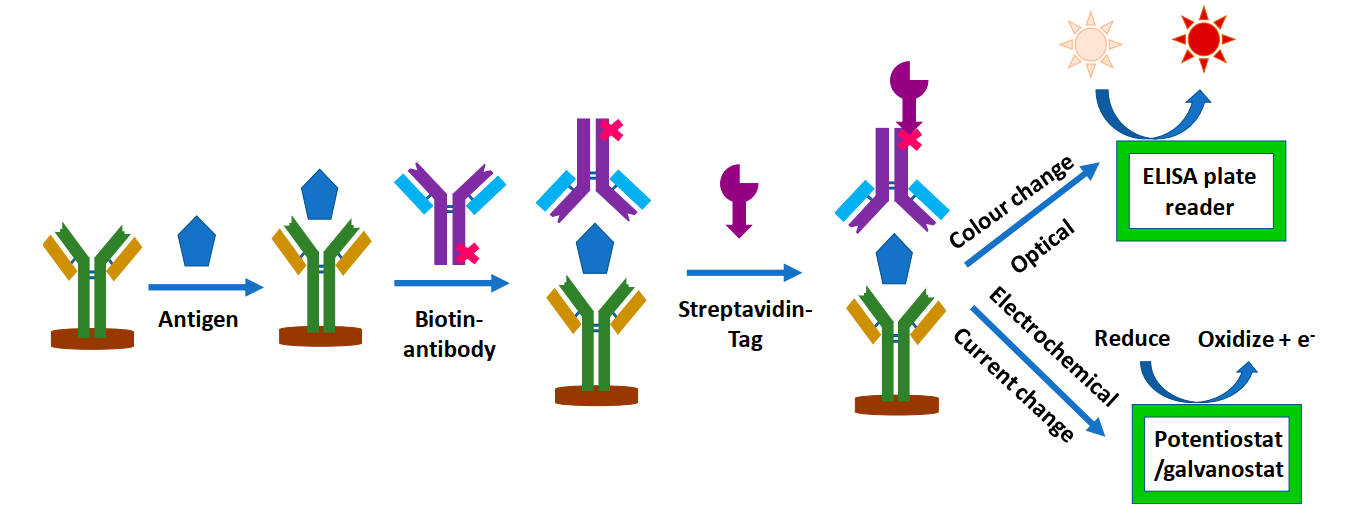 Fig.1 General schematic for immunosensor functioning and detection.1
Types of ELISA Methods
Sandwich ELISA
The Sandwich ELISA stands as a highly sophisticated and widely utilized technique within the realm of immunoassays. Its core principle hinges on the strategic use of two distinct antibodies, each engineered to recognize and bind to different epitopes present on the target antigen. This ingenious design gives rise to a "sandwich" - like structure, where the target antigen is effectively trapped between the two antibodies.
Direct ELISA
Direct ELISA offers a streamlined and efficient alternative to the more complex Sandwich ELISA. In this method, a single antibody, which is directly conjugated to an enzyme, is employed for antigen detection. The process begins with the immobilization of the target antigen onto the surface of a microplate well. Once the antigen is firmly attached, the enzyme-conjugated antibody is added. This antibody specifically binds to the immobilized antigen, forming an antigen-antibody complex.
Competitive ELISA
Competitive ELISA is a specialized technique particularly well-suited for the detection of small molecules that may not be effectively captured by the dual-antibody approach of Sandwich ELISA. In this method, a known amount of labeled analyte, typically conjugated with an enzyme, competes with the sample analyte for binding sites on the immobilized antibody.
Applications
Biomarker Discovery and Validation
Cytokine and Chemokine Profiling
Cytokines and chemokines are signaling molecules that regulate immune responses, inflammation, and cell migration. ELISAs enable researchers to profile these molecules in various experimental settings, such as cell culture studies, animal models, and clinical samples.
Hormone and Neurotransmitter Analysis
ELISAs are widely used to measure hormones and neurotransmitters in basic research. These assays help elucidate the roles of these molecules in physiological processes, such as metabolism, reproduction, and neural function.
Environmental Monitoring
Assess water and air quality by detecting contaminants, toxins, and pathogens. Immunoassays can identify harmful algal blooms, pesticides, and industrial pollutants.
Key Strengths
High Sensitivity and Specificity
Detect low concentrations of analytes with minimal cross-reactivity, ensuring accurate results.
Ease of Use
Streamlined protocols and user-friendly instructions make immunoassays accessible even to non-specialized personnel.
Rapid Results
Obtain quantitative data within hours, or even minutes, with rapid formats, facilitating timely decision-making.
Cost-Effective
Lower costs per test compared to traditional methods, especially in high-throughput settings, make immunoassays economically viable.
Flexibility
Adaptable to various sample types and volumes, including whole blood options, and compatible with automated platforms for increased efficiency.
FAQs
-
What types of samples can be used with immunoassay kits?
Immunoassay kits are compatible with a wide range of biological samples, including serum, plasma, urine, saliva, and whole blood. Some kits even offer lysate or cell culture supernatant compatibility for specific applications.
-
How long does it take to perform an immunoassay?
The time required for an immunoassay varies depending on the kit format and assay type. Most conventional ELISAs can be completed within a few hours, while rapid formats, such as lateral flow tests, provide results in as little as 3 to 30 minutes.
-
Are immunoassay kits suitable for high-throughput screening?
Yes, many immunoassay kits, particularly those in a 96-well or 384-well format, are designed for high-throughput screening. These kits enable the simultaneous testing of multiple samples, making them ideal for large-scale studies and clinical trials.
-
What is the shelf life of immunoassay reagents?
The shelf life of immunoassay reagents varies by manufacturer and reagent type, but generally ranges from several months to a year when stored appropriately. Proper storage conditions, such as refrigeration or room temperature, are crucial for maintaining reagent stability.
Immunoassay kits represent a cornerstone of modern diagnostic and research capabilities. With their robust performance, versatility, and user-friendly design, these kits continue to drive advancements in healthcare, environmental science, and biotechnology. By leveraging the power of antigen-antibody interactions, immunoassays provide accurate, sensitive, and cost-effective solutions for a wide range of analytical needs. Contact us for more details on our immunoassay kits.
Reference
- Arya, Sunil K., and Pedro Estrela. "Recent advances in enhancement strategies for electrochemical ELISA-based immunoassays for cancer biomarker detection." Sensors 18.7 (2018): 2010. Distributed under Open Access license CC BY 4.0, without modification. https://doi.org/10.3390/s18072010
Product list
Filter By Clear All
-
-
Immunoassay Kit
Human TNF-α ELISA Kit (CAT#: Z01MM-1025-JL1)
- Tag: Immunoassay Kit
- Subcategory: ELISA Kit
- Analyte: TNF-α
- Target Source: Human
- Species Reactivity: Human
-
Immunoassay Kit
Human TNF-α ELISA Kit (CAT#: Z01MM-1025-JL1)
-
-
Immunoassay Kit
Human Connective Tissue Growth Factor(CTGF) ELISA Kit (CAT#: Z01MM-1025-JL2)
- Tag: Immunoassay Kit
- Subcategory: ELISA Kit
- Analyte: CTGF
- Target Source: Human
- Species Reactivity: Human
-
Immunoassay Kit
Human Connective Tissue Growth Factor(CTGF) ELISA Kit (CAT#: Z01MM-1025-JL2)
-
-
Immunoassay Kit
Human IL18 ELISA Kit (CAT#: Z01MM-1025-JL3)
- Tag: Immunoassay Kit
- Subcategory: ELISA Kit
- Analyte: IL-18
- Target Source: Human
- Species Reactivity: Human
-
Immunoassay Kit
Human IL18 ELISA Kit (CAT#: Z01MM-1025-JL3)
-
-
Immunoassay Kit
Human IL-1β ELISA Kit (CAT#: Z01MM-1025-JL4)
- Tag: Immunoassay Kit
- Subcategory: ELISA Kit
- Analyte: IL-1β
- Target Source: Human
- Species Reactivity: Human
-
Immunoassay Kit
Human IL-1β ELISA Kit (CAT#: Z01MM-1025-JL4)
-
-
Immunoassay Kit
Human CRP ELISA Kit (CAT#: Z01MM-1025-JL5)
- Tag: Immunoassay Kit
- Subcategory: ELISA Kit
- Analyte: CRP
- Target Source: Human
- Species Reactivity: Human
-
Immunoassay Kit
Human CRP ELISA Kit (CAT#: Z01MM-1025-JL5)
-
-
Immunoassay Kit
Mouse Complement Component 1R ELISA Kit (CAT#: Z01MM-1025-JL6)
- Tag: Immunoassay Kit
- Subcategory: ELISA Kit
- Analyte: C1r
- Target Source: Mouse
- Species Reactivity: Mouse
-
Immunoassay Kit
Mouse Complement Component 1R ELISA Kit (CAT#: Z01MM-1025-JL6)
-
-
Immunoassay Kit
Mouse Lipoxin A4 ELISA Kit (CAT#: Z01MM-1025-JL7)
- Tag: Immunoassay Kit
- Subcategory: ELISA Kit
- Analyte: LXA4
- Target Source: Mouse
- Species Reactivity: Mouse
-
Immunoassay Kit
Mouse Lipoxin A4 ELISA Kit (CAT#: Z01MM-1025-JL7)
-
-
Immunoassay Kit
Mouse Complement Component 5 ELISA Kit (CAT#: Z01MM-1025-JL8)
- Tag: Immunoassay Kit
- Subcategory: ELISA Kit
- Analyte: C5
- Target Source: Mouse
- Species Reactivity: Mouse
-
Immunoassay Kit
Mouse Complement Component 5 ELISA Kit (CAT#: Z01MM-1025-JL8)
-
-
Immunoassay Kit
Mouse Cyclosporine A ELISA Kit (CAT#: Z01MM-1025-JL9)
- Tag: Immunoassay Kit
- Subcategory: ELISA Kit
- Analyte: CsA
- Target Source: Mouse
- Species Reactivity: Mouse
-
Immunoassay Kit
Mouse Cyclosporine A ELISA Kit (CAT#: Z01MM-1025-JL9)
-
-
Immunoassay Kit
Mouse Eosinophil Cationic Protein ELISA Kit (CAT#: Z01MM-1025-JL10)
- Tag: Immunoassay Kit
- Subcategory: ELISA Kit
- Analyte: ECP
- Target Source: Mouse
- Species Reactivity: Mouse
-
Immunoassay Kit
Mouse Eosinophil Cationic Protein ELISA Kit (CAT#: Z01MM-1025-JL10)
-
-
Immunoassay Kit
Mouse Thymus Activation Regulated Chemokine ELISA Kit (CAT#: Z01MM-1025-JL11)
- Tag: Immunoassay Kit
- Subcategory: ELISA Kit
- Analyte: TARC
- Target Source: Mouse
- Species Reactivity: Mouse
-
Immunoassay Kit
Mouse Thymus Activation Regulated Chemokine ELISA Kit (CAT#: Z01MM-1025-JL11)
-
-
Immunoassay Kit
Mouse Complement Component 4B ELISA Kit (CAT#: Z01MM-1025-JL12)
- Tag: Immunoassay Kit
- Subcategory: ELISA Kit
- Analyte: C4B
- Target Source: Mouse
- Species Reactivity: Mouse
-
Immunoassay Kit
Mouse Complement Component 4B ELISA Kit (CAT#: Z01MM-1025-JL12)
-
-
Immunoassay Kit
Mouse Complement 4 ELISA Kit (CAT#: Z01MM-1025-JL13)
- Tag: Immunoassay Kit
- Subcategory: ELISA Kit
- Analyte: C4
- Target Source: Mouse
- Species Reactivity: Mouse
-
Immunoassay Kit
Mouse Complement 4 ELISA Kit (CAT#: Z01MM-1025-JL13)
-
-
Immunoassay Kit
Mouse Thymus Hemoglobin Chemokine ELISA Kit (CAT#: Z01MM-1025-JL14)
- Tag: Immunoassay Kit
- Subcategory: ELISA Kit
- Analyte: TECK
- Target Source: Mouse
- Species Reactivity: Mouse
-
Immunoassay Kit
Mouse Thymus Hemoglobin Chemokine ELISA Kit (CAT#: Z01MM-1025-JL14)
-
-
Immunoassay Kit
Mouse Immunoglobulin M ELISA Kit (CAT#: Z01MM-1025-JL15)
- Tag: Immunoassay Kit
- Subcategory: ELISA Kit
- Analyte: IgM
- Target Source: Mouse
- Species Reactivity: Mouse
-
Immunoassay Kit
Mouse Immunoglobulin M ELISA Kit (CAT#: Z01MM-1025-JL15)
-
-
Immunoassay Kit
Mouse Aminoacyl tRNA Synthase Complex Interacting Multifunctional Protein 1 ELISA Kit (CAT#: Z01MM-1025-JL16)
- Tag: Immunoassay Kit
- Subcategory: ELISA Kit
- Analyte: SCYE1
- Target Source: Mouse
- Species Reactivity: Mouse
-
Immunoassay Kit
Mouse Aminoacyl tRNA Synthase Complex Interacting Multifunctional Protein 1 ELISA Kit (CAT#: Z01MM-1025-JL16)
-
-
Immunoassay Kit
Mouse MICA ELISA Kit (CAT#: Z01MM-1025-JL17)
- Tag: Immunoassay Kit
- Subcategory: ELISA Kit
- Analyte: MICA
- Target Source: Mouse
- Species Reactivity: Mouse
-
Immunoassay Kit
Mouse MICA ELISA Kit (CAT#: Z01MM-1025-JL17)
-
-
Immunoassay Kit
Mouse Plasma Levels of Terminal Complement Complex ELISA Kit (CAT#: Z01MM-1025-JL18)
- Tag: Immunoassay Kit
- Subcategory: ELISA Kit
- Analyte: C5B 9
- Target Source: Mouse
- Species Reactivity: Mouse
-
Immunoassay Kit
Mouse Plasma Levels of Terminal Complement Complex ELISA Kit (CAT#: Z01MM-1025-JL18)
-
-
Immunoassay Kit
Mouse Anti Thyroid Globulin Antibody ELISA Kit (CAT#: Z01MM-1025-JL19)
- Tag: Immunoassay Kit
- Subcategory: ELISA Kit
- Analyte: ATGA
- Target Source: Mouse
- Species Reactivity: Mouse
-
Immunoassay Kit
Mouse Anti Thyroid Globulin Antibody ELISA Kit (CAT#: Z01MM-1025-JL19)
-
-
Immunoassay Kit
Mouse Complement Factor B ELISA Kit (CAT#: Z01MM-1025-JL20)
- Tag: Immunoassay Kit
- Subcategory: ELISA Kit
- Analyte: CFB
- Target Source: Mouse
- Species Reactivity: Mouse
-
Immunoassay Kit
Mouse Complement Factor B ELISA Kit (CAT#: Z01MM-1025-JL20)
For Research Use Only.