Aloe-derived Exosome Research and Application
Overview Highlights Services Workflow Platform Advantages Deliverables Reviews FAQs
Insight: Understanding the Power of Aloe-Derived Vesicles
Aloe vera has been treasured for centuries for its soothing, hydrating, and bioactive properties. Now, in the era of nanoscale biology, its extracellular vesicles—specifically exosomes—are emerging as a compelling new field of botanical research. At Creative Biolabs, we deliver targeted scientific support for researchers investigating the structure, function, and scalability of Aloe vera-derived exosomes (AVDEs), providing insight into their unique characteristics and versatile potential.
AVDEs demonstrate high vesicle stability, distinctive lipid compositions, and antioxidant profiles that position them as intriguing candidates for fundamental research in nanovesicle systems. From plant-based drug delivery to regenerative biology, Creative Biolabs' commitment to methodical study and optimization of AVDEs allows academic and industrial clients to explore this powerful natural vesicle with confidence.
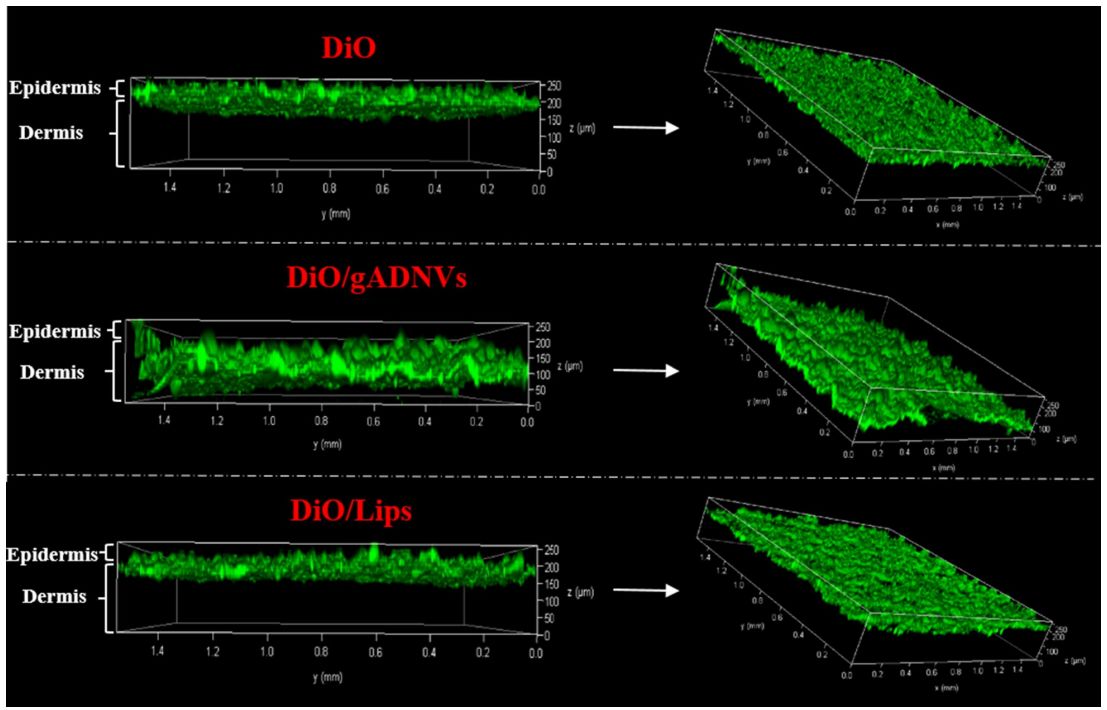 Fig.1 Aloe-derived exosomes excel in skin permeation.1, 3
Key Attributes: What Sets Aloe-Derived Exosomes Apart
AVDEs have been shown to display several unique properties:
-
Lipid Structure and Curvature Function: Lipidomics reveals a rich presence of glucose ceramides and phosphatidic acid, implicated in vesicle curvature and uptake.
-
Natural Antioxidant Cargo: Compounds such as aloe-emodin, aloesin, and β-sitosterol are detected in AVDEs and contribute to their free-radical scavenging potential.
-
Superior Stability: Compared to traditional liposomes, AVDEs show remarkable resilience in harsh oxidative environments.
-
Low Cytotoxicity and High Biocompatibility: Safety evaluations reveal no significant hemolysis or immune stimulation, supporting broader exploratory applications.
-
Skin Penetration Efficiency: AVDEs have demonstrated superior dermal diffusion in preclinical models, broadening their relevance for delivery science.
Creative Biolabs leverages these distinctive qualities of AVDEs to support clients in building well-characterized, scalable, and data-driven projects in the plant vesicle space.
Expertise in Action: How Creative Biolabs Supports Your AVDE Projects
Our suite of services for Aloe-derived vesicle research includes:
-
Plant Tissue Selection: Use of verified Aloe vera gel or peel tissue with defined moisture content and metabolic profiles.
-
Customized Isolation Workflows: Tangential flow filtration, differential centrifugation, and debris-clearing techniques tuned for viscous plant extracts.
-
Bioactive Profiling: High-performance LC-MS, targeted antioxidant marker detection, and lipidomic mapping.
-
Cytocompatibility & Stability Testing: Standardized safety assays and oxidative stability evaluations under storage and processing conditions.
-
Optimization Guidance: Protocol enhancements based on yield-purity analysis, vesicle size calibration, and storage resistance.
Creative Biolabs tailors every project around the client's experimental goals, emphasizing transparency, reproducibility, and scientific rigor.
Step by Step: Creative Biolabs' Project Framework
Creative Biolabs follows a carefully designed process for Aloe-derived exosome research:
-
Raw Material Preparation: Washed Aloe vera leaves are processed for gel or peel collection.
-
PBS Blending & Homogenization: Maintains vesicle integrity during juice preparation.
-
Filtration & Centrifugation: Sequential removal of debris and tissue fragments.
-
Vesicle Recovery & Concentration: Exosomes are enriched and purified using ultrafiltration or tangential flow systems.
-
Characterization & Validation: Vesicle integrity, size, charge, and bioactivity are analyzed using NTA, TEM, and zeta potential profiling (Optional).
-
Data Reporting: Comprehensive output reports include optional stability indices, omics summaries, and comparison to synthetic vesicle systems.
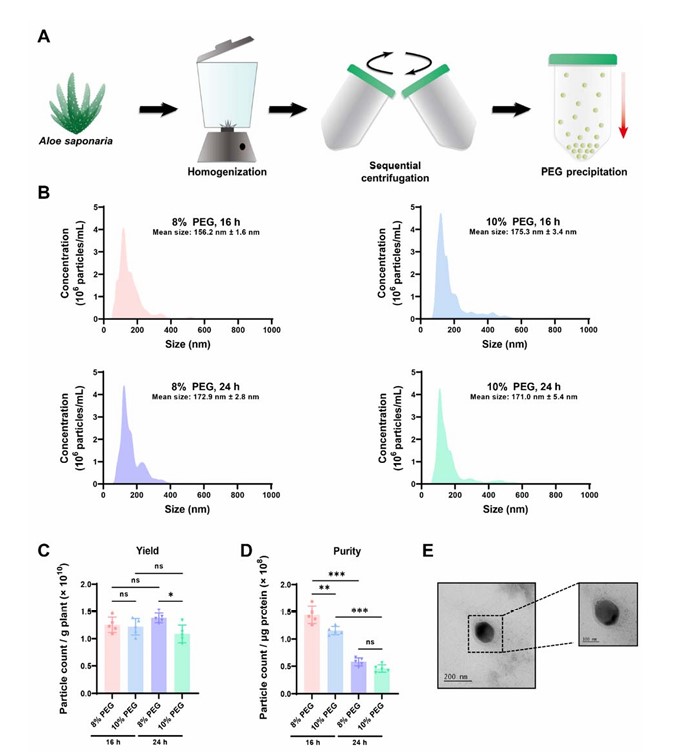 Fig.2 EV isolation and characterization from Aloe saponaria peels.2, 3
Precision Toolkit: Creative Biolabs' Analytical Instruments
Our AVDE research platform integrates top-tier tools:
-
UPLC-MS/MS for lipid, phytochemical, and antioxidant mapping
-
TEM and Zeta Potential Analysis for nanoscale characterization
-
High-throughput NTA and Dynamic Light Scattering for size and concentration
-
Multiplex Enzyme Assays for antioxidant enzyme induction (e.g., SOD, HO-1, CAT)
-
Custom Endocytosis Assays to monitor vesicle uptake mechanisms
Scientific Leadership: Why Creative Biolabs Is the Partner of Choice
-
Botanical Origin Expertise: Our background in plant-based nanovesicle systems is unmatched.
-
Validated Isolation Protocols: Continuously refined for different Aloe species and tissue types.
-
Data Integrity: All results are traceable, reproducible, and suitable for peer-reviewed submission.
-
Safety Emphasis: From cytotoxicity screening to red blood cell compatibility, all safety endpoints are covered.
-
Scalability Consulting: Support for small-batch discovery and high-volume preparation workflows.
What You Get with Creative Biolabs
Every project focused on Aloe-derived exosomes includes:
-
TEM/NTA characterization reports
-
Lipidomics and phytochemical composition summaries (Optional)
-
Antioxidant and enzyme activity evaluation (optional)
-
Isolation SOPs and technical protocols
-
Safety and biocompatibility data (Optional)
-
Batch control records and process documentation (Optional)
What Our Clients Say
"Creative Biolabs' Aloe vesicle data helped us clearly distinguish the oxidative buffering power of AVDEs. Their lipidomic output was more detailed than anything we've seen in prior plant exosome projects."
— Dr. LinXXXX
"We appreciated the focus Creative Biolabs placed on isolation method refinement—especially helpful given Aloe's gel viscosity. The team delivered high-purity vesicles that met all of our analytical criteria."
— Dr. RajXXXX
Creative Biolabs invites you to explore the possibilities of Aloe-derived exosomes. With our plant vesicle specialization, precision isolation platforms, and cross-functional analytical services, we're equipped to help you define the next breakthrough in nanovesicle research. Get in touch with Creative Biolabs to initiate your Aloe exosome project.
FAQs
Q: Are AVDEs stable in storage?
A: Yes. With cryoprotectants and optimized buffer, AVDEs maintain stability up to 6 months at –80°C.
Q: Can I use Aloe exosomes from different plant parts?
A: Absolutely. We work with both Aloe gel and peel; each may have distinct vesicle profiles depending on the application.
Q: How much raw material is needed to start a project?
A: Pilot-scale studies can begin with ~300 mL Aloe juice or ~50 g dry weight tissue equivalent.
Q: Can Creative Biolabs assist with the downstream use of AVDEs?
A: Yes, we provide guidance and optional services for antioxidant assays, cellular uptake testing, and formulation compatibility.
Q: How are Aloe vera-derived exosomes isolated?
A: Exosomes are typically isolated through methods like ultracentrifugation, filtration, or precipitation from Aloe vera plant tissues to ensure their purity and functionality.
Q: What are the potential applications of Aloe vera-derived exosomes?
A: Potential applications include use in cosmetics for skin health, as natural biostimulants in agriculture, and as functional additives in the food industry.
Q: Are Aloe vera-derived exosomes safe for use?
A: Yes, exosomes derived from Aloe vera are generally considered safe due to their plant origin, low toxicity, and biodegradability, making them suitable for various applications.
Q: How do Aloe vera-derived exosomes contribute to plant resilience?
A: The bioactive compounds present in Aloe vera-derived exosomes may help enhance stress responses in plants, promoting their growth and resilience to environmental challenges.
References
-
Zeng, Lupeng, et al. "Aloe derived nanovesicle as a functional carrier for indocyanine green encapsulation and phototherapy." Journal of Nanobiotechnology 19 (2021): 1-24.
-
Kim, Manho, and Ju Hyun Park. "Isolation of aloe saponaria-derived extracellular vesicles and investigation of their potential for chronic wound healing." Pharmaceutics 14.9 (2022): 1905.
-
Distributed under Open Access license CC BY 4.0. The image was modified by revising the title.
For Research Use Only. Cannot be used by patients.
Related Services: