Creative Biolabs is a dedicated IVD provider that strives to offer our global customers the highest quality services. We have developed a sensitive platform for multiplexed protein and DNA analysis based on integrating Microfluidics to achieve your specific project demands.
Microfluidics, featuring microfabricated structures, is a technology for manipulating fluids at the micrometer scale. The small dimension and flexibility of Microfluidic systems are ideal for multiplexed protein and DNA analysis and show great potential in research and diagnosis. Researchers have recently reported highly-integrated and parallelized Microfluidic-based tests, allowing the simultaneous detection and analysis of both protein and DNA samples in a single test. The target DNA sequence encodes the outer membrane protein P6 of Haemophilus influenzae, and the pro-inflammatory mediators IL-6 and IL-8 are selected as target proteins. In this system, rolling circle amplification (RCA) is used as a signal amplification method. A two-layer sandwich assay designs the microsphere sensors for multiplexed analysis of combined protein and DNA. With this assay, detection limits down to 10 fM and 1 pM are achieved for proteins and target DNA, respectively.
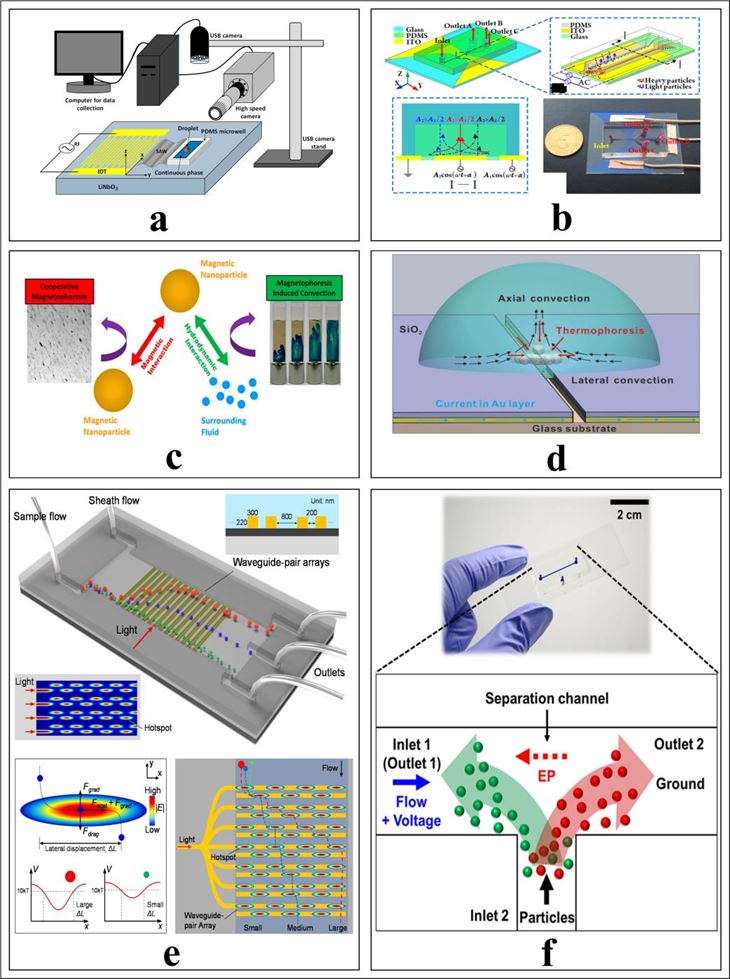 Fig.1 Microfluid techniques.1, 2
Multiplexed Protein and DNA Analysis at Creative Biolabs
Creative Biolabs has been a long-term expert in the field of IVD. We have won a good reputation for accomplishing numerous challenging projects based on our advanced Microfluidic technology and extensive experience. Our seasoned scientists have currently set up one-stop procedures that can assist your project with the highest efficiency and the best quality. We provide universal Microfluidic-based integrated approaches for our customers, which combine the rapid diagnostic assay and the efficient liquid handling capability of Microfluidics for sensitive, quantitative, and high-throughput protein and DNA analysis.
Advantages of Our Integrated Approaches
The combinations of multiplexed assays with Microfluidic systems have recently attracted increasing attention due to the high-throughput of the Microfluidic systems and the multiplexing capability to detect both genomic and proteomic information for different biological targets. Our integrated approach offers several advantages, such as all fluid handling steps can be integrated and automated. Compared with conventional systems, the benefits of this Microfluidic-based platform include low reagent consumption, better reaction efficiency, higher sensitivity, and a more comprehensive linear detection range. With our integrated Microfluidic platform, both protein and DNA could be diagnosed by a single rapid analysis, rather than testing for different markers with specific tests.
Creative Biolabs now offers an integrated approach using Microfluidic technology to develop multiplexed assays for discrimination of DNA and parallel analysis of a panel of protein markers to meet our customers' specific requirements. If you are interested in our service, please feel free to contact us for more details.
Published Data
1. High-Throughput Microfluidic for Multiplexed Protein Quantification and Analysis
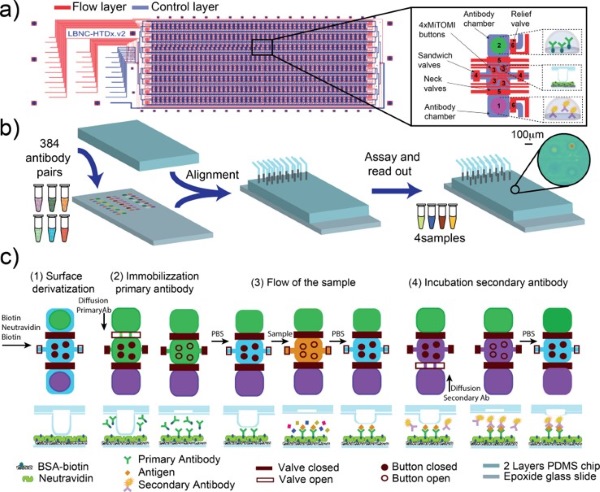 Fig.2 Schematic of the workflow.3,2
This work introduced a high-throughput microfluidic platform capable of conducting multiplexed analysis of up to 384 biomarkers from four distinct samples using immunoassays. The device featured 384 unit cells, each programmed with specific pairs of capture and detection antibodies. Each unit cell included four separate MITOMI detection zones, allowing for the parallel analysis of four samples, and resulting in up to 1,536 assays per device. Researchers demonstrated the platform’s stability by showing it could be pre-assembled and stored at elevated temperatures for weeks. Proof-of-concept experiments quantified IL-6, TNF-α, IL-1β, PSA, and GFP. Additionally, the platform was employed to screen 64 antibody combinations, necessitating up to 384 distinct assays per device.
2. Microfluidic Platform for Automated Multiplexed In Situ Sequencing
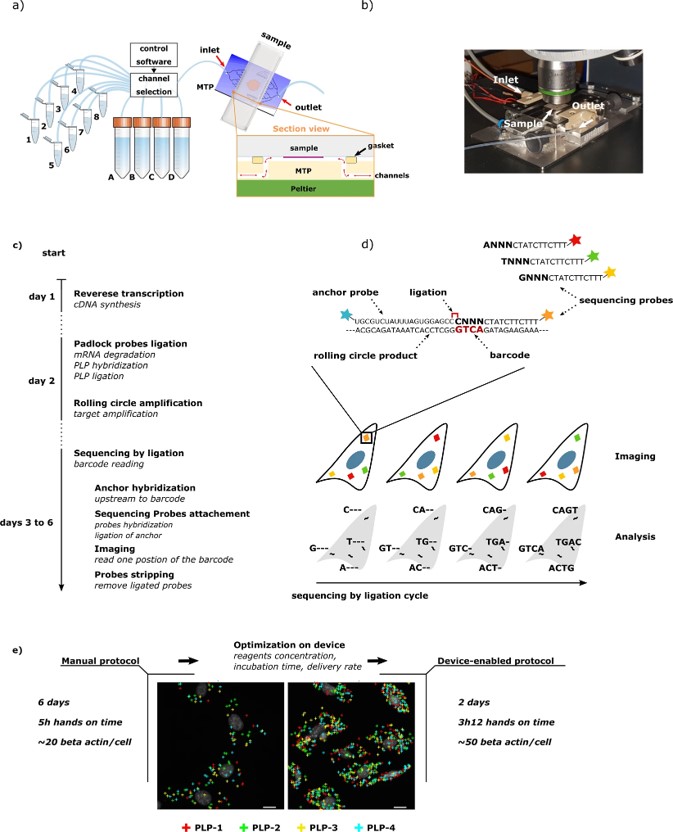 Fig.3 Assay scheme of the microfluidic tissue processor.4,2
In this study, researchers developed an automated method for generating and sequencing barcoded mRNA amplicons directly within fixed cells. This was accomplished by adapting a microfluidic device to be compatible with standard microscope slides and cover slips. The device integrated a programmable reagent delivery system, precise temperature control, and a dedicated flow cell to execute established in situ sequencing protocols, including padlock probe hybridization and ligation, rolling circle amplification, and barcode sequencing. By optimizing assay parameters such as enzyme concentration and temperature, the method achieved performance similar to the conventional manual protocol for detecting mouse beta-actin transcripts. This automated microfluidic platform for in situ sequencing holds significant potential for cancer diagnostics and rapid therapeutic applications.
References
- Gharib, Ghazaleh, et al. "Biomedical applications of microfluidic devices: a review." Biosensors 12.11 (2022): 1023.
- Distributed under Open Access license CC BY 4.0, without modification.
- Volpetti, Francesca, Jose Garcia-Cordero, and Sebastian J. Maerkl. "A microfluidic platform for high-throughput multiplexed protein quantitation." PLoS One 10.2 (2015): e0117744.
- Maïno, Nicolas, et al. "A microfluidic platform towards automated multiplexed in situ sequencing." Scientific reports 9.1 (2019): 3542.
For Research Use Only.