

In the development of exosome‑based scalp care products, empirical evidence regarding the modulation of sebum production is often a critical factor. An oily scalp is frequently associated with sebaceous gland hyperactivity, which can lead to follicular occlusion. Creative Biolabs provides a standardized efficacy testing service designed to evaluate how exosome candidates interact with the intracellular pathways of sebum production.
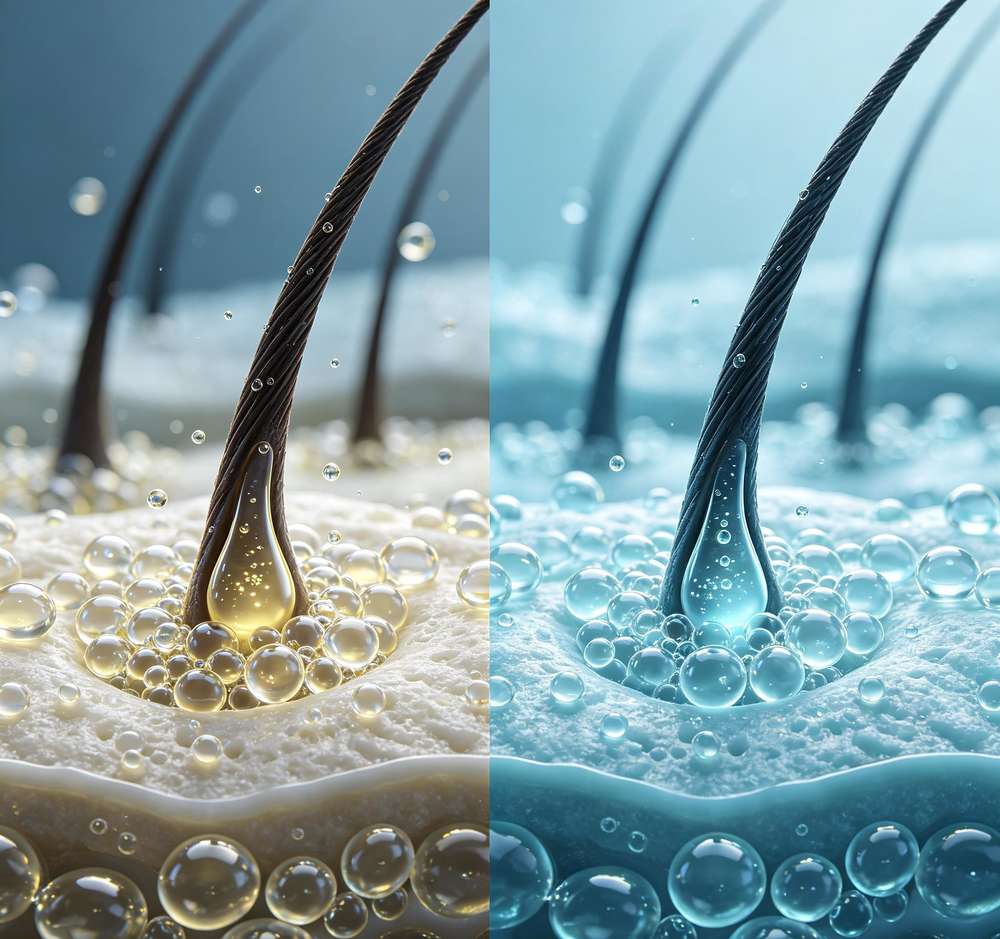
Our testing framework utilizes human sebocyte models to provide quantitative data on key oil control endpoints. We evaluate parameters such as lipid droplet accumulation, the activation of lipophagy (the autophagic degradation of lipids), and the expression of genes associated with lipogenesis.
Consult With Our Ph.D. Team to Design Your Scalp Oil‑Control Study
Our oil-control testing suite is organized around three recognized biological mechanisms that influence sebaceous gland function. Creative Biolabs provides quantitative readouts to assess how exosome preparations may influence these specific pathways.
Testing focuses on the potential to regulate sebum production at the cellular level. Lipid synthesis is a multi‑step process regulated by factors like Peroxisome Proliferator‑Activated Receptor gamma (PPAR‑γ) and Sterol Regulatory Element‑Binding Protein 1 (SREBP‑1). Some exosome preparations are observed to carry signals that may assist in the down‑regulation of these factors.
Current evidence indicates that the active degradation of existing lipid droplets within the cell, known as lipophagy, is a component of sebum regulation. Our platform tracks markers of lipid droplet‑associated proteins to determine if an exosome candidate is associated with the activation of internal lipid clearance.
Request Detailed Scientific Protocols from Our Team
Creative Biolabs' oil‑control service is distinguished by its use of sebocyte‑specific protocols, providing data that general skin‑care screening models, such as those using keratinocytes or fibroblasts, may not capture.
In contrast to general dermatological tests, our platform employs authenticated human sebocyte cell lines. These cells possess the specific metabolic machinery required for lipid droplet morphogenesis and sebum secretion, making them a relevant model for evaluating sebum related claims.
We utilize specialized imaging software designed to provide objective measurements of lipid droplet size, count, and density. This approach is intended to reduce the variability associated with manual grading and increase the statistical reliability of the data, providing a more rigorous assessment of efficacy.
Beyond evaluating total lipid volume, our platform is capable of tracking the expression of key lipogenic regulators. This allows for the identification of potential mechanisms of action, such as the modulation of the PPAR‑γ or SREBP‑1 pathways, which are central to the sebocyte's identity and function.
Contact Our Dedicated Technical Experts
Our laboratory adheres to standardized protocols and Standard Operating Procedures to support the reproducibility and accuracy of efficacy data.
| Step | Details |
|---|---|
| Physicochemical Verification |
The integrity of the exosome sample is verified upon receipt to establish a baseline for efficacy testing.
|
| Verification of Cellular Internalization | Confirmation of vesicle uptake by target sebocytes via fluorescent labeling and confocal microscopy. |
| Oil-Control Efficacy Assessment |
This phase involves the execution of the core experimental assays designed for assessing regulation of lipid metabolism within the cell.
|
| Deliverables and Reporting | Creative Biolabs performs metabolic activity assays to ensure that any observed reduction in lipid production is due to regulatory modulation rather than generalized cellular toxicity. |
Submit Your Testing Requirement List to Our Project Consultant
Our testing is centralized within a unified platform designed to eliminate experimental variance and provide cross-comparable data.
We utilize authenticated human sebocyte lines with established baseline responses to lipogenic stimuli.
Our platform utilizes automated data acquisition. Every stage, from initial sample receipt to final reporting, is documented to support audit readiness.
Each experimental cycle includes both positive controls, using recognized oil-control agents, and negative controls, using the vehicle only, to ensure assay validity.
The platform is designed to evaluate purified exosome preparations from a wide range of biological sources, including mesenchymal stem cells, botanical extracts, and microbial systems.
Discuss Platform Details with Our Specialists
Creative Biolabs' exosome capabilities extend beyond oil‑control evaluations. Researchers can access a full collection of hair and scalp efficacy assays, quality benchmarks, and complementary bioengineering methods, all structured to support laboratory research goals and biological performance assessments.
 Exosome extraction, purification and quantification
Retrieval and concentration of exosomal vesicles from culture media, biological fluids, or stem cell based systems using standardized procedures to ensure lot to lot uniformity and designated purity grades.
Exosome identification and quality analysis
Measurement of physical characteristics (particle size distribution and concentration) via NTA, morphological inspection using TEM, along with immunodetection of canonical exosomal markers including CD63, CD81, and TSG101.
Exosome profiling and proteomic detection
Characterization of protein compositions and nucleic acid payloads (e.g., miRNA, mRNA) to reveal molecular profiles and potential signaling routes relevant to hair follicle biology.
Exosome engineering (optional)
Surface tailoring or cargo encapsulation strategies designed to influence targeted delivery traits and modulate functional outcomes within follicular microenvironments.
Scalable exosome production
Generation of exosomes from adipose derived or alternative mesenchymal stem cell (MSC) sources at volumes adjustable to accommodate diverse research scales.
Exosome Anti-Hair Loss Efficacy Test
Assessment of follicular regeneration markers, anagen phase maintenance, and dermal papilla cell responsiveness.
Exosome Scalp Nourishment Efficacy Test
Evaluation of epidermal stability and hydration performance.
Exosome Scalp Repair Efficacy Test
Evaluation of hydration kinetics and moisture retention parameters in scalp models.
These services can be selected individually or as combined panels, forming a complete technical foundation for scalp oil control efficacy investigations.
Get a Tailored Proposal for Your Exosome Candidate
A: Keratinocytes primarily contribute to the physical barrier of the skin and scalp. Sebocytes are specialized cells characterized by their ability to synthesize and secrete lipids (sebum). Therefore, sebocyte models provide a more physiologically relevant system for evaluating sebum regulation and the metabolic pathways specifically involved in oil production.
A: SREBP 1 is a key transcription factor that regulates the expression of enzymes involved in fatty acid and triacylglycerol synthesis. Its modulation is a recognized mechanism for controlling the rate of lipid production in sebaceous cells.
A: We typically recommend testing purified exosome preparations to avoid interference from other formulation components such as surfactants or thickeners. If you wish to test a finished product, please contact our team to discuss potential sample preparation requirements and feasibility.
A: We utilize standardized metabolic stimulants, such as insulin or specific fatty acids like linoleic acid, to induce a hyper lipogenic state in the sebocytes. This creates a baseline against which the efficacy of the exosome candidate is measured.
Request A Scientific Consultation to Design Your Exosome Efficacy Study