
As we transition from conventional small molecules to programmable genetic medicines, the therapeutic landscape is undergoing a paradigm shift. Among these, small interfering RNA (siRNA) is notable for its exceptional specificity in silencing harmful genes. However, the severe difficulties of systemic delivery, such as quick enzymatic degradation, poor cellular uptake, and target-missing toxicities, have long impeded the translation of siRNA.
The basic delivery issue in RNA interference is resolved by combining siRNA technology with exosome (Exo) delivery. Exosomes provide a distinct biological profile that improves therapeutic efficacy, whereas synthetic vehicles frequently cause immunological reactions or accumulate disproportionately in the liver.
To close this gap, we at Creative Biolabs use our specialized knowledge of vesicular biology. We offer a sophisticated solution that gets around the drawbacks of synthetic lipid nanoparticles by using exosomes, nature's own advanced intercellular communication vehicles, as delivery scaffolds. Our exosome siRNA loading service is intended to provide researchers with highly effective, targeted, and biologically compatible gene silencing tools.
For Your siRNA Delivery Requirements, Speak with Our Scientists
We have successfully created and refined a technique that uses electroporation technology to load siRNA into exosomes. SiRNA molecules can enter the vesicle lumen by creating transient holes in the exosomal membrane through the application of regulated electrical pulses. We are able to incorporate synthetic siRNA into purified exosomes while maintaining the vesicles' structural integrity and biological functionality thanks to this streamlined process.
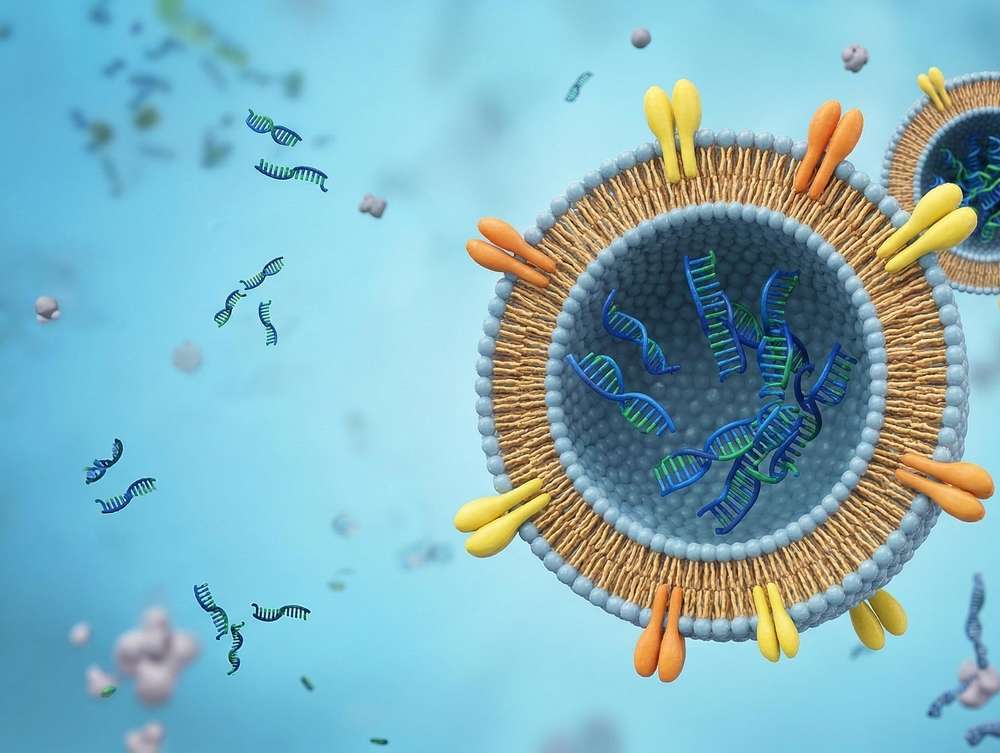
We are confident in offering dependable and tailored Exosome Engineering Services for siRNA Delivery to satisfy the requirements of numerous research and therapeutic development applications based on our experience and verified protocols. Research on gene silencing, functional genomics, intercellular communication, and RNA-based therapeutic delivery can all benefit from this service.
Our platform guarantees high loading efficiency, reproducibility, and compatibility with various exosome sources through precise control of electroporation parameters and optimized purification processes.
Speak With Our Experts About Your Exosome RNA Delivery Project
Exosome siRNA delivery is a powerful next-generation platform for RNA interference research. Exosomal delivery is particularly advantageous for complex in vivo investigations and translational applications, as it offers superior biocompatibility, stability, and targeting capabilities compared to conventional transfection reagents or viral vectors.
Naturally occurring extracellular vesicles called exosomes are produced by endogenous cells. They can circulate in vivo with little immune recognition due to their biological origin. The risk of inflammatory reactions can be decreased by choosing suitable donor cells, such as exosomes made from mesenchymal stem cells, which makes them ideal for long-term research and repeated administration.
Exosomes' lipid bilayer membrane shields siRNA cargo from being broken down by RNases in biological fluids. This natural encapsulation extends the half life of siRNA in systemic circulation compared with naked RNA molecules, improving bioavailability while potentially reducing dosing frequency and systemic toxicity.
Through effective endocytosis and intracellular delivery of siRNA to the cytoplasm, where the RNA-induced silencing complex operates, exosomes employ natural cellular communication pathways for internalization. Some exosome types have the innate capacity to pass through biological barriers, such as the blood–brain barrier, which is challenging to reach with traditional delivery methods.
To improve tissue-specific targeting, exosomes can be modified on their surface through ligand or antibody display. This capability enables precise delivery of siRNA to particular tissues or disease sites, such as tumors or inflamed tissues. In addition, delivery systems based on exosome are generally well tolerated across a wide range of animal models, supporting applications from fundamental research to studies.
Start Your Custom Exosome Engineering Project Today
Using an electroporation-based optimized loading strategy, Creative Biolabs has successfully encapsulated siRNA into exosomes. This method preserves the exosomes' structural integrity while facilitating effective siRNA loading.
To enable quantitative analysis, the siRNA molecules in our validation experiments were labeled with FAM. We estimated the loading efficiency of siRNA into the exosomes by comparing the fluorescence intensity of free FAM and siRNA in the eluates before and after electroporation.
Additionally, target cells were treated with the siRNA-loaded exosomes to assess the biological activity of the engineered exosomes. Quantitative PCR was used to assess the resulting gene silencing efficiency. The outcomes showed measurable downregulation of the target gene and efficient delivery of siRNA into recipient cells.
These results demonstrate that electroporation is a dependable technique for producing functional exosomes loaded with siRNA for subsequent RNA interference investigations.
| Sample Name | Fluorescence Intensity of Eluate Before Electroporation | Fluorescence Intensity of Eluate After Electroporation | Final loading efficiency |
|---|---|---|---|
| Exosome + siRNA#1 | 1035.25 | 733.13 | 36.50% |
| Exosome + siRNA#2 | 506.83 | 301.63 | 40.50% |
| Exosome + siRNA#3 | 1860.1 | 939.69 | 49.50% |
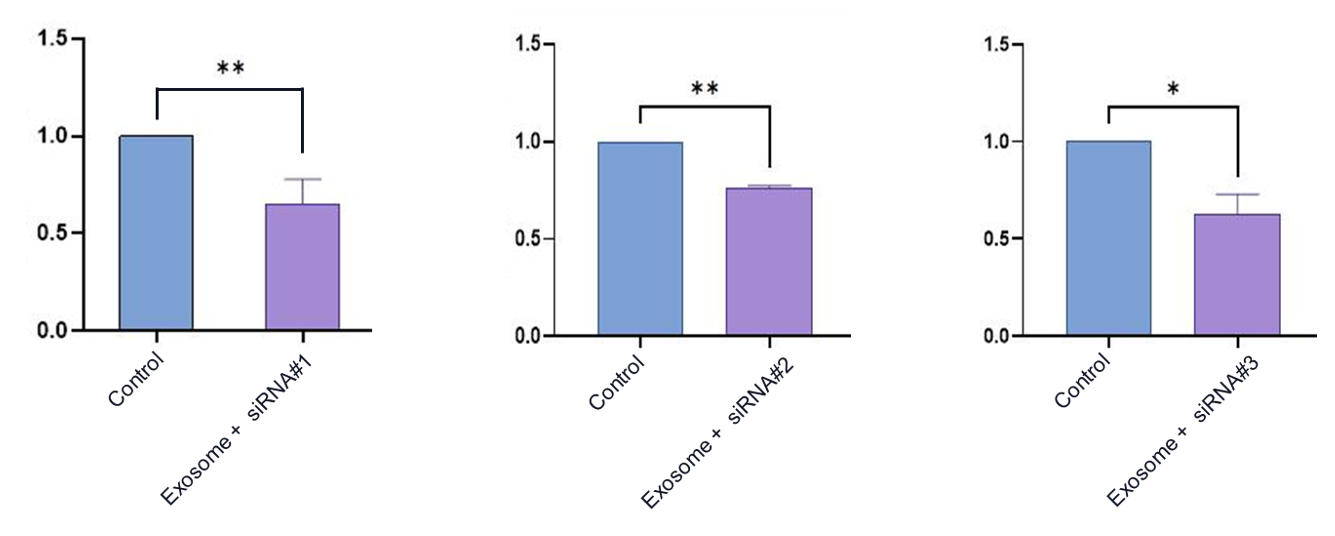 Fig.2 The gene silencing effects of siRNAs on their respective target genes were evaluated in three engineered exosomes using qPCR.
Design Your Tailored Exosome Engineering Strategy with Us
Exosomes loaded with siRNA have a wide range of uses in regenerative medicine, neurology, and oncology.

Precision oncology involves delivering siRNA straight to the tumor microenvironment in order to silence undruggable targets such as KRAS or MYC.
By utilizing the exosome's capacity to move through the neural parenchyma, protein misfolding pathways in Alzheimer's or Parkinson's disease can be targeted.
When conventional vaccines or small molecules are ineffective for treating chronic infections, siRNA is delivered to stop viral replication.
Adjusting cardiomyocyte gene expression to encourage myocardial infarction recovery.
Request a Quote for Your Loading Project

More than just siRNA loading is offered by Creative Biolabs. From functional validation to exosome isolation, we provide an integrated platform that facilitates the complete workflow. Every step of the vesicle preparation, engineering, and evaluation process is monitored and optimized thanks to our platform.
Cell culture supernatants from supplied or specially cultivated cells can be used to isolate exosomes. Furthermore, we can extract exosomes from biological fluids that our clients supply, like serum, plasma, or other bodily fluids.
Standard methods are used to systematically characterize the purified exosomes, such as western blotting to detect exosomal marker proteins, transmission electron microscopy (TEM) to observe morphology, and nanoparticle tracking analysis (NTA) to measure size and concentration.
In order to encapsulate siRNA cargo, purified exosomes are created by electroporation, a process in which regulated electrical pulses produce transient holes in the exosomal membrane.
Western blot analysis and quantitative PCR are used for in vitro studies to assess cellular uptake and gene regulation efficiency. Fluorescent labeling can be used for in vivo research to examine biodistribution and evaluate therapeutic efficacy in pertinent disease models.
Obtain Professional Assistance for Your Exosome RNA Delivery Research
A: Exosome aggregation is lessened by using special buffer systems and carefully adjusting electroporation settings like voltage, pulse duration, and pulse interval. These optimised conditions help to reduce membrane fusion and vesicle clustering during the loading process so that the engineered exosomes can keep a stable and monodisperse population after purification.
A: Compared to miRNA, siRNA offers higher specificity, stronger gene silencing efficiency, and better controllability, making it more suitable for targeted gene knockdown and therapeutic applications.