
The clinical translation of potent small molecular therapeutics is frequently obstructed by unfavorable pharmacokinetic profiles and systemic toxicities. While high-throughput screening has identified numerous candidates with high target affinity, their transition into effective treatments often fails due to poor aqueous solubility, rapid renal clearance, and a lack of tissue specificity.
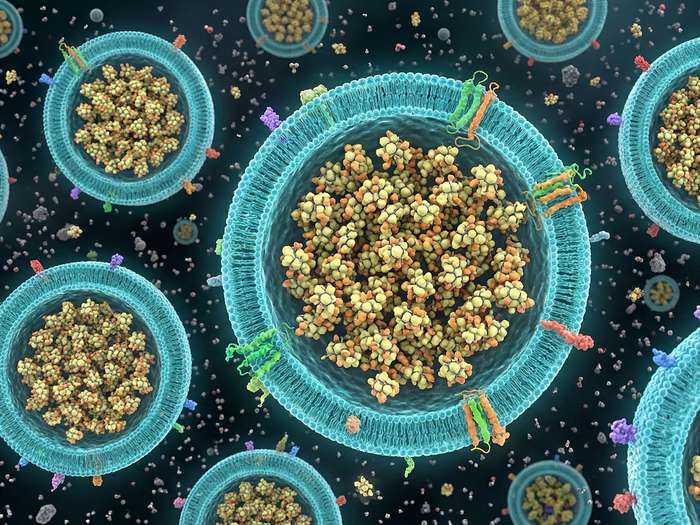
The primary challenge in small molecule delivery, exemplified by compounds such as Paclitaxel, is achieving a therapeutic concentration at the target site without inducing systemic adverse effects. Traditional delivery systems, including synthetic liposomes and nanoparticles, often face challenges regarding biocompatibility and immune recognition. Exosomes offer a biological alternative characterized by several distinct advantages.
The exosomal membrane, composed of specific phospholipids and cholesterol, shields the encapsulated cargo from metabolic enzymes and prevents premature degradation in the circulatory system.
Hydrophobic molecules that exhibit poor solubility in physiological buffers can be stably integrated into the lipid bilayer or the aqueous core of the exosome, enhancing their transport capacity.
Because exosomes are natural products of intercellular communication, they are inherently less likely to provoke the inflammatory responses associated with synthetic polymers.
Exosomes possess surface proteins that facilitate interaction with recipient cells through endogenous pathways, potentially improving the intracellular delivery of the small compound.
Partner With Our Scientists to Architect Your Encapsulation Strategy.
Creative Biolabs provides a specialized platform for the loading of small molecular entities into purified exosome populations. We focus on two primary active loading techniques that have been optimized to maximize encapsulation efficiency while preserving the structural and functional integrity of the vesicles.
| Methodology | Mechanism of Action | Primary Application |
|---|---|---|
| Electroporation | The application of controlled electrical fields to create temporary hydrophilic pores in the exosomal membrane. | Optimized for the loading of polar or hydrophilic small molecules into the internal lumen. |
| Sonication | The use of ultrasonic energy to induce transient mechanical disruption and reformation of the lipid bilayer. | Highly effective for hydrophobic compounds, often yielding superior loading capacity compared to passive incubation. |
Our technical team performs meticulous post-loading purification to ensure that any non-encapsulated compounds are removed, providing a homogenous product suitable for downstream functional analysis.
Consult With Our Leads to Refine Your Compound Loading Protocols.
 Blood-Brain Barrier (BBB) Permeability
Unlike many free small molecules, specific exosome populations demonstrate the capacity to cross the BBB, making them invaluable for treating central nervous system disorders.
Extended Pharmacokinetics
Encapsulated compounds typically exhibit a prolonged half-life in vivo, as the exosomal carrier prevents rapid filtration by the kidneys and sequestration by the mononuclear phagocyte system.
Cytosolic Delivery
Exosomes enter target cells via pathways such as clathrin-mediated endocytosis or direct membrane fusion. This allows the small compound to reach the cytoplasm directly, bypassing the lysosomal degradation that frequently inactivates synthetic delivery vehicles.
Align With Our Technical Team to Optimize Your Delivery Profile.
Our loading platform supports a broad spectrum of medical research, enabling the delivery of diverse small molecule classes to specific pathological environments.
In cancer models, loading cytotoxic agents like Paclitaxel or Doxorubicin into exosomes can significantly alter the drug's biodistribution. By utilizing exosomes with affinity for tumor tissues, researchers can increase the local concentration of the drug, thereby enhancing anti-tumor efficacy while minimizing off-target toxicity in healthy organs.
The delivery of neuroprotective small molecules or antioxidant compounds to the brain remains a significant hurdle. Exosomal loading provides a non-invasive strategy to transport these molecules across the BBB, offering new possibilities for the treatment of Alzheimer's and Parkinson's diseases.
Small molecule modulators of metabolic pathways or inflammatory cytokines can be encapsulated to ensure sustained release and targeted action. This approach is particularly relevant in autoimmune research, where localized immunomodulation is preferred over systemic suppression.
Work With Our Experts to Design a Tailored Loading Framework.
Creative Biolabs is committed to providing researchers with the technical precision required to advance exosomal drug delivery. Our senior scientists are available to discuss the specific requirements of your small molecule project and develop a customized loading strategy.

We utilize high-resolution techniques, including Tangential Flow Filtration (TFF) and Size Exclusion Chromatography (SEC), to obtain high-purity exosome populations from diverse cell sources such as MSCs or HEK293 cells.
Each batch is characterized using nanoparticle tracking analysis (NTA) for size and concentration, transmission electron microscopy (TEM) for morphology, and Western blotting for exosomal markers (e.g., CD63, Alix).
Following the selection of the optimal loading method (Electroporation or Sonication), we optimize parameters such as voltage, pulse duration, or ultrasonic frequency to suit the specific biophysical properties of the compound.
We offer a suite of in vitro and in vivo assays to verify that the loaded compound retains its bioactivity and that the engineered exosomes reach the intended cellular targets.
Connect With Our Specialists to Maximize Cargo Loading Efficiency.
A: After thorough purification via size exclusion chromatography to remove free molecules, we utilize high-performance liquid chromatography (HPLC) or mass spectrometry (LC-MS/MS) to quantify the amount of compound associated with the exosomal fraction.
A: Active loading methods involve temporary membrane disruption. However, our optimized protocols include a recovery phase that allows the lipid bilayer to restabilize, ensuring the vesicles remain intact for subsequent delivery applications.
A: The donor cell influences the lipid and protein composition of the exosomal membrane, which can affect the loading capacity for certain hydrophobic compounds and the subsequent targeting behavior in vivo.
A: Although freeze-drying is beneficial for long-term storage, we do not recommend lyophilize engineered exosomes to prevent lipid membrane rupture and leakage of small molecules.
Discuss Your Design to Transform Compounds.