Are you currently facing challenges with achieving therapeutically relevant drug concentrations in the brain, mitigating systemic toxicity from high dosing, or optimizing the pharmacokinetic profile of large-molecule Central Nervous System (CNS) candidates? Creative Biolabs' Bispecific antibody (BsAb) development for blood-brain barrier (BBB) penetrating service helps you unlock the CNS drug space through advanced affinity-tuned, monovalent BsAb engineering, bypassing the primary hurdles of conventional biologics.
Contact our team to get an inquiry now!
The CNS is protected by the Blood-Brain Barrier (BBB), a highly restrictive physical and metabolic barrier formed by tight junctions between cerebrovascular endothelial cells. While crucial for brain homeostasis, the BBB blocks over 98% of large-molecule drugs, including therapeutic antibodies, from reaching therapeutic targets in the brain parenchyma. Consequently, conventional monoclonal antibodies (mAbs) for neurological diseases achieve brain-to-serum ratios of less than 0.1%, necessitating high, often toxic, systemic doses to achieve minimal efficacy. This fundamental limitation is a major bottleneck for developing treatments for prevalent neurodegenerative diseases like Alzheimer's (AD) and devastating cancers like Glioblastoma (GBM).
The only efficient, natural pathway for large-molecule transport across the BBB is Receptor-Mediated Transcytosis (RMT). The Transferrin Receptor 1 (TfR1) is the most widely validated target for this "molecular Trojan horse" approach. BsAbs designed to bind TfR1 simultaneously with a therapeutic target (e.g., Aβ, Tau, or a tumor antigen) are internalized by the endothelial cell, shuttled across the cell in an endosome, and released into the brain parenchyma. This active transport mechanism is essential for achieving the high, uniform CNS drug concentrations required for clinical success.
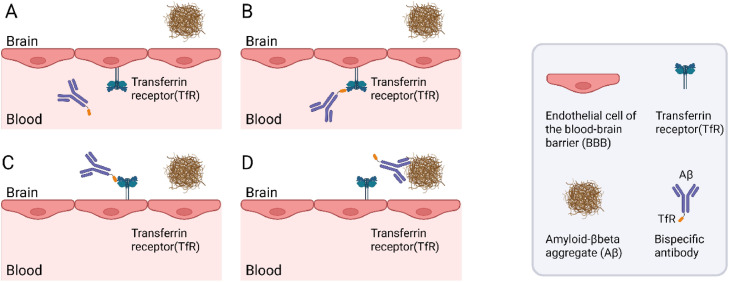 Fig.1 Transferrin receptor (TfR)-mediated transport across the blood-brain barrier (BBB).1
The success of RMT is critically dependent on BsAb design, and our work is grounded in the latest consensus derived from published literature. This research confirms that first-generation anti-Aβ antibodies, which often required extended, high-dose treatment to achieve modest amyloid reduction, frequently led to dose-limiting toxicity like ARIA. Crucially, studies further demonstrate the Affinity-Degradation Dilemma: high-affinity, bivalent binding to TfR1, while initially effective for cellular uptake, triggers receptor clustering and subsequent shunting to the lysosome for degradation, dramatically reducing therapeutic delivery. Therefore, the superior approach, known as the Monovalent Imperative, involves engineering BsAbs with a low-to-moderate affinity, monovalent binding arm targeting TfR1; this design successfully engages the receptor for transcytosis while avoiding the clustering signal that leads to lysosomal destruction, instead directing the BsAb into the fast-recycling endosomal pathway for highly efficient and intact delivery into the brain, a precise, monovalent engineering solution that Creative Biolabs specializes in.
We provide an end-to-end BsAb Development Service for BBB Penetration, including:
Through this integrated platform, we deliver BBB-penetrating BsAb candidates with predictable pharmacokinetics, robust brain exposure, and strong therapeutic potential.
Creative Biolabs is a recognized partner in active CNS delivery, leveraging deep expertise in RMT engineering to overcome the pitfalls of first-generation BBB shuttles. Our focus on precision affinity tuning and monovalent architecture is the differentiating factor that converts a theoretical delivery mechanism into a clinically viable therapeutic.
The Creative Biolabs Advantage: Monovalent Engineering
We address the most critical limitation of BBB transport: lysosomal degradation. Published data and industry findings show that high-affinity, bivalent binding to TfR1 triggers clustering and activates the ESCRT complex, which shunts the antibody directly to the lysosome for destruction. Creative Biolabs' engineering ensures:
Experience the Creative Biolabs Advantage - Get a Quote Today
A1: RMT provides active transport across the Blood-Brain Barrier (BBB), consistently achieving brain-to-serum ratios that are typically 10- to 20-fold higher than passively diffusing antibodies. This dramatic increase in efficiency is necessary to reach therapeutically effective concentrations in the brain parenchyma.
A2: High-affinity, bivalent binding to the Transferrin Receptor 1 (TfR1) often triggers receptor clustering, which signals the complex to be shunted to the lysosome for degradation. To avoid this, successful RMT shuttles employ a low-to-moderate affinity, monovalent binding arm that favors the fast-recycling endosomal pathway, ensuring intact drug delivery into the brain.
A3: Optimized RMT shuttles are designed with engineered affinity and epitope specificity to minimize competition with endogenous transferrin. By avoiding high-affinity, bivalent cross-linking, they prevent the widespread depletion of TfR1 from the endothelial surface, which is critical for preserving native iron transport and overall BBB function.
A4: The RMT approach is highly versatile and largely payload-agnostic. The TfR1 shuttle domain can be adapted for delivering various therapeutic molecules, including enzymes, Antisense Oligonucleotides (ASOs), and even viral vectors (AAVs) for gene therapy applications.
A5: While the shuttle arm is solely responsible for delivery across the BBB, the therapeutic arm must retain its potency and selectivity for the target antigen within the brain. The success of the final construct hinges on the therapeutic arm maintaining its functional integrity post-fusion, requiring comprehensive in vitro and in vivo testing.
By combining deep expertise in bispecific antibody engineering with specialized knowledge of BBB transport biology, Creative Biolabs enables the rational design of biologics capable of addressing previously inaccessible CNS targets. Our BBB-focused BsAb Development Service empowers partners to accelerate CNS drug pipelines and translate innovative neuroscience concepts into clinically viable therapies.
Contact us to require a specific Quote now!
References
Welcome! For price inquiries, we will get back to you as soon as possible.
INQUIRY





SERVICES
PRODUCTS
PLATFORMS