Are you currently facing long drug development cycles, complex chain mispairing, and difficulty in achieving high-purity protein expression for your next-generation biologic? Our Bispecific IgG Generation Services help you accelerate drug discovery and develop highly specific antibodies through advanced structure-guided engineering techniques. We ensure your therapeutic candidates possess the highest levels of purity, stability, and function required for clinical success.
Contact our team to get an inquiry now!
Bispecific IgGs (BsIgGs) are advanced IgG-based therapeutic proteins capable of binding two distinct targets, making them critical in oncology, particularly as T-cell engagers. These molecules retain the native IgG structure and the Fc region, ensuring a long molecular half-life, and the ability to undergo Fc engineering (e.g., modulating ADCC or CDC). However, the primary manufacturing challenge, especially for IgG-like formats (monovalent for each antigen), is obtaining high-purity heterodimers. The co-expression of two heavy and two light chains often yield low amounts of the desired BsIgG alongside mispaired IgG contaminants. To resolve this developability challenge, advanced engineering strategies are applied to force correct chain association.
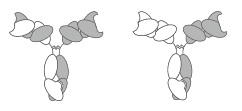
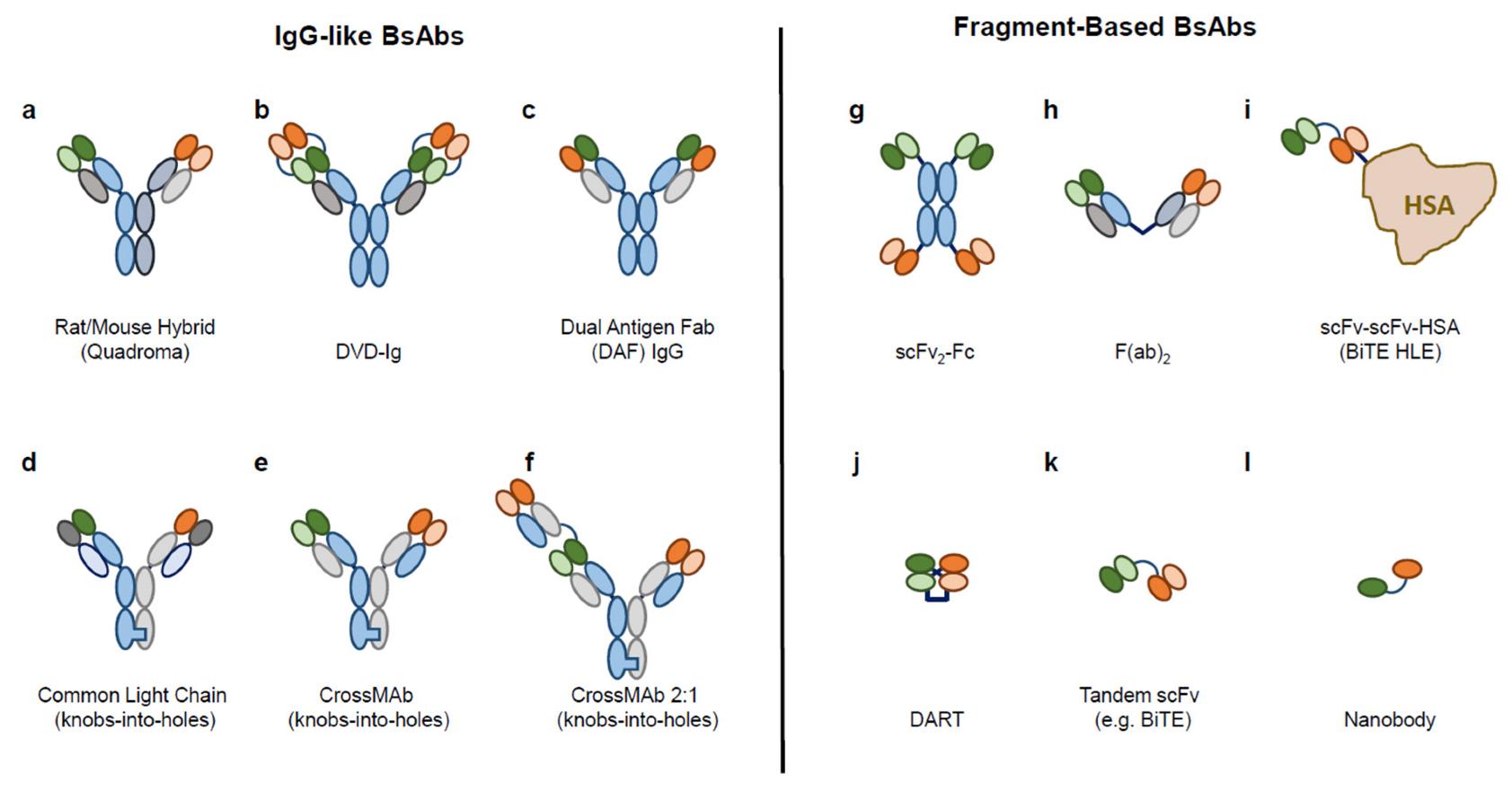 Fig.1 Examples of BsAb formats and structural diversity.1,3
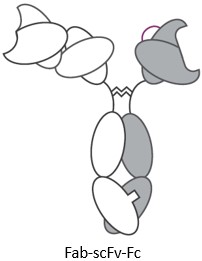
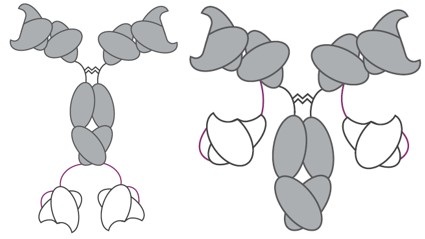
We categorize BsIgGs into two main architectural classes. IgG-like Formats (Class I) possess an asymmetric structure, highly similar to conventional IgG with 1+1 antigen valency. Their critical production challenge is managing required heterodimerization to avoid chain mismatch; which can be addressed using specialized technologies like Knobs-into-Holes (KiH), domain crossover, etc. In contrast, Appended IgG Formats (Class II) are built upon a conventional IgG backbone by fusing additional binding structures (e.g., Fab, scFv, VHH) via linkers. This design allows for flexible, often multivalent, binding (e.g., 1+2, 2+2) and largely bypasses HC/LC mispairing, although success depends on robust linker design and domain stability. Key examples include IgG-scFv and Fab-IgG.
Creative Biolabs uses advanced techniques to generate a wide variety of fully functional bispecific IgG antibodies. The bispecific IgG antibodies include:
IgG-like
Creative Biolabs stands apart through our commitment to manufacturability and clinical viability, enforced by leading-edge proven engineering platforms. We don't just create BsAbs; we engineer them for success from the gene level up.
Experience the Creative Biolabs Advantage - Get a Quote Today
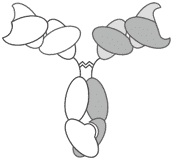
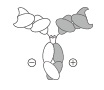
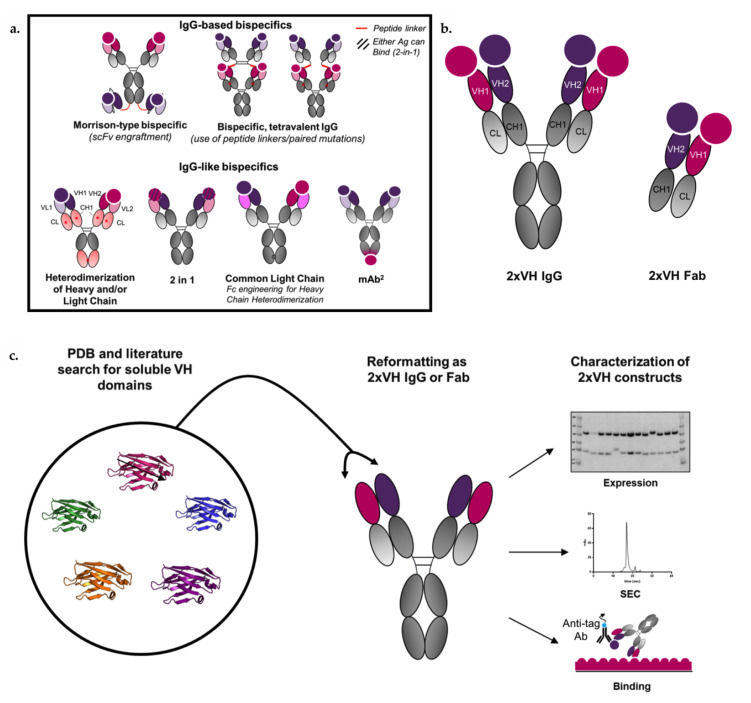 Fig.2 Bispecific IgG-based formats and overview of 2xVH IgG and Fab format.2,3
The 2xVH bispecific format, structurally engineered to resemble a native immunoglobulin G (IgG), was introduced to confer bivalency against any target epitope while obviating the need for complex cognate chain pairing engineering. This architecture incorporates two distinct VH domains, each recognizing a separate antigen, integrated directly into the CH1 and CL constant domains to generate dual binding specificity. Comprehensive analysis of the expression, binding affinity, and thermal stability of various human VH modules facilitated the production of prototype 2xVH IgG and Fab constructs based on a standard IgG framework. Critically, the resulting molecules displayed biophysical characteristics comparable to conventional monoclonal antibodies (mAbs), thereby simplifying post-expression purification protocols while effectively retaining bivalent, dual-target affinity. Consequently, the 2xVH format resolves key manufacturing challenges associated with asymmetric IgG-like bispecifics and simultaneously enables biologically pertinent co-engagement of two distinct targets.
A: The optimal format depends entirely on your specific biological goal, such as the required valency and the potential steric hindrance of the targets. Our experts can analyze your parental antibody sequences and target MOA to recommend the best structure-guided engineering platform to maximize both function and manufacturability. We recommend reaching out to our R&D team for a tailored format consultation.
A: Absolutely. We have specialized, rapid protocols, including the application of FAST-Ig principles to mouse IgG1 and IgG2a backbones, specifically designed to quickly yield high-purity functional mouse surrogates. This capability is essential for fast-tracking your in vivo testing in syngeneic models. Contact us to discuss your timeline for mouse surrogate delivery.
A: Our stringent quality control is built into the engineering phase. By utilizing Electrostatic Steering for HC:HC pairing and systems like CrossMab for LC:HC pairing, we minimize mispaired byproducts during expression. This is verified by Intact Mass Spectrometry and low aggregation is confirmed by SEC, ensuring your final product is >95% pure and monomeric.
A: We use sophisticated techniques like Flow-Induced Dispersion Analysis (FIDA) to confirm dual-antigen binding affinity in an immobilization-free setting. This provides a more accurate, solution-based assessment of function compared to standard surface assays, giving you confidence in the molecule's activity. Request a sample QC report to see our level of detail.
A: Yes. A key optimization step in our process involves dynamic plasmid ratio optimization during transient expression. This allows us to adjust the H1:L1:H2:L2 ratio to compensate for expression imbalance, ensuring the maximum yield of the desired heterodimer, even for difficult or low-expressing parent antibodies.
Acting as a trusted partner in BsAb services, Creative Biolabs provides comprehensive design, production, and evaluation services for bispecific IgG tailored to your research. Our team can develop BsAbs utilizing diverse formats and species to address the specific requirements of each client.
References
Welcome! For price inquiries, we will get back to you as soon as possible.
INQUIRY





SERVICES
PRODUCTS
PLATFORMS