Are you currently facing challenges in preventing therapeutic BsAb chain mispairing, ensuring long-term biophysical stability, or precisely tailoring the effector function for your target indication? Our Fc Engineering Service for Bispecific Antibody (BsAb) helps you accelerate BsAb development and obtain high-purity, functionally-optimized therapeutics through advanced Fc domain modifications and innovative protein engineering techniques.
Contact our team to get an inquiry now!
Bispecific antibodies (BsAbs) represent a transformative class of biologics capable of simultaneously engaging two distinct antigens or epitopes, enabling unprecedented therapeutic mechanisms in oncology, immunology, and beyond. However, the structural complexity of BsAbs introduces unique challenges in molecular assembly, stability, and functional control-particularly at the Fc region, which plays a central role in antibody folding, heterodimerization, effector functions, and pharmacokinetics.
Fc engineering is therefore a critical enabler for successful BsAb development. Through rational structural and functional modification of the Fc domain, BsAb molecules can be precisely programmed to achieve correct chain pairing, optimized manufacturability, controlled immune effector functions, and tailored in vivo behavior. As a CRO dedicated to bispecific antibody innovation, we Creative Biolabs provides a comprehensive Fc Engineering Service to support the design and development of next-generation BsAb therapeutics.
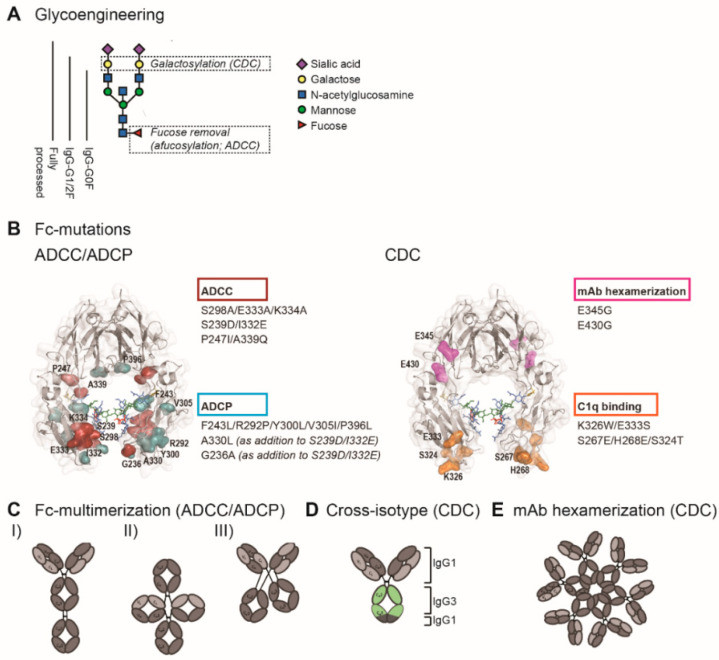 Fig.1 Fc engineering methods to enhance Fc-effector functions.1,4
Creative Biolabs is a trusted partner in engineering versatile, multi-functional therapeutic platforms. Our approach moves beyond simple dual targeting, focusing instead on optimizing the Fc domain for favorable drug-like qualities.
| Structural Fc Engineering---Enabling Correct BsAb Assembly | Functional Fc Engineering---Fine-Tuning Immune Effector Activity & Half-Life |
|---|---|
The hallmark of a successful BsAb is the correct assembly of two different heavy chains and two different light chains. Without precise engineering, "mismatch" isomers can significantly reduce yield and complicate purification.
|
Beyond structure, the Fc region is the "control center" for the antibody's interaction with the immune system. We offer precise amino acid substitutions and glycoengineering to tailor these effector functions:
|
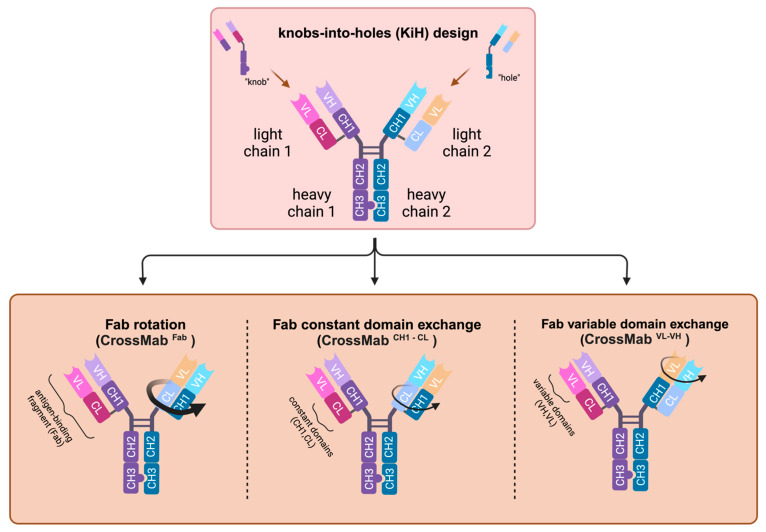 Fig.2 "Knob-into-holes" and CrossMab design of heterodimeric BsAbs.2,4
Synthesis of bispecific antibodies (BsAbs) in the heterodimeric format demands strict regulation of inter-chain assembly. Immunoglobulin fragment modification, specifically knobs-into-holes (KiH), enables this outcome. Incorporating reciprocal amino acid substitutions within the CH3 regions favors heterodimer creation compared to unwanted homodimer generation. Such a mechanism guarantees the resultant BsAb exhibits the necessary dual-specificity functionality. The distinctive "knob" substitution on a single CH3 subunit selectively engages with the "hole" counterpart on its partner, thus driving accurate dimerization. Utilizing this methodology proves crucial for manufacturing active BsAbs possessing appropriate ligand affinities, vital in clinical contexts. Subsequent refinement efforts focus on augmenting structural endurance and minimizing undesirable patient immune responses.
Creative Biolabs is experienced in engineering versatile, multi-functional therapeutic platforms. Our approach moves beyond simple dual targeting, focusing instead on optimizing the Fc domain for favorable drug-like qualities.
Experience the Creative Biolabs Advantage - Get a Quote Today
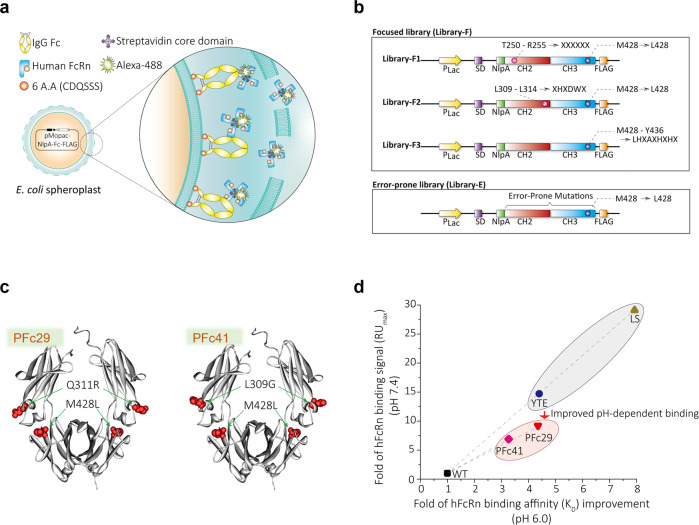 Fig.3 Isolation of Fc variants with improved FcRn binding.3,4
This investigation employed directed evolution to discover Fc variants that augment pH-dependent binding to human FcRn, thereby prolonging the serum half-life of both an Fc-fusion protein and a model IgG antibody. In human FcRn transgenic mice, the modified Fc variants exhibited significantly extended serum persistence compared to wild-type Fc. Moreover, within a cynomolgus monkey model, the Fc-engineered antibody demonstrated enhanced pharmacokinetic performance. The introduction of two specific mutations into PFc29 also elevated complement-dependent cytotoxicity and antibody-dependent cellular cytotoxicity, functions critical for eliminating cancer cell. Furthermore, integrating these mutations with those that silence effector functions enabled regulated activation while preserving optimal pH-dependent FcRn binding. These engineered Fc variants represent a promising strategy for enhancing the pharmacokinetic properties and therapeutic efficacy of antibodies and Fc-fusion proteins
A: Engineering the Fc domain, particularly through asymmetric designs in the CH2 or CH3 regions, can significantly increase the molecule's thermal stability (measured as a higher melting temperature, Tm. This molecular stabilization reduces the molecule's propensity to unfold or aggregate under stress, directly improving drug robustness and extending the product's shelf life.
A: Maximal half-life extension relies on increasing the antibody's binding affinity to the neonatal Fc receptor (FcRn) at acidic pH (approximately pH 6.0. Key hyper-binding variants include the REW (Q311R/M428E/N434W) and YTE (M252Y/S254T/T256E) substitutions in the Fc domain. These mutations can achieve up to a 20-fold enhancement in FcRn affinity, significantly prolonging serum exposure compared to the wild-type IgG1.
A: For T-cell engagers, where killing is mediated by T-cells, Fc-mediated effector functions are unwanted safety liabilities. This is typically achieved using Asymmetric Fc Engineering, such as the L234A/L235A (LALA) mutations applied to only one heavy chain. This approach ensures the non-specific FcγR-mediated killing is suppressed, minimizing the risk of adverse events like Cytokine Release Syndrome (CRS) while ensuring the primary T-cell recruitment mechanism remains the sole driver of efficacy.
A: Both techniques enforce the pairing of two different heavy chains (heterodimerization) but rely on distinct forces in the CH3 domain. Knobs-into-Holes (KiH) uses steric hindrance, introducing a bulky residue (the "knob") on one chain and a complementary small residue (the "hole") on the other. Electrostatic Steering uses charge repulsion and attraction, strategically placing complementary charged amino acids (positive on one CH3 domain and negative on the other) to drive efficient, high-yield pairing through powerful attraction/repulsion forces.
A: Yes, it is both feasible and common in therapeutic development. Fc engineering relies on the distinct, non-overlapping binding sites for FcRn (for half-life, located in the CH2/CH3 interface) and the FcγR receptors (for effector function, located in the CH2 lower hinge). Combining PK-enhancing mutations (like YTE or REW) and safety-driven silencing mutations (like Asymmetric LALA) typically creates an Fc scaffold with both sustained exposure and a clean safety profile without functional interference.
References
Welcome! For price inquiries, we will get back to you as soon as possible.
INQUIRY





SERVICES
PRODUCTS
PLATFORMS