
Malignant epithelial tumors arising within the upper aerodigestive tract represent a major oncological burden, collectively ranking as the seventh most common cancer across the globe.
The clinical and cellular complexity of this disease is characterized by several distinct factors:
The definition of head and neck cancer encompasses an extensive array of malignancies situated within the oral cavity, nasal passages, pharynx, larynx, paranasal sinuses, and salivary glands.
This broad spectrum is typically divided into cervical tumors such as thyroid malignancies, otorhinolaryngologic tumors comprising laryngeal and nasopharyngeal carcinomas, and oral and maxillofacial solid tumors.
During initial phases, local cellular alterations produce mild symptoms that are routinely mistaken for ordinary inflammation, including persistent oral ulcers, a minor foreign body sensation in the pharynx, chronic nasal congestion, intermittent nosebleeds, or minor changes in vocal quality.
Metastatic involvements within facial and cervical lymph nodes typically present as firm, entirely painless masses that expand slowly, causing many individuals to seek evaluation only after the disease has reached advanced stages.
Malignancies within this zone release endogenous nanovesicles that actively inhibit the effector functions of cytotoxic T lymphocytes and natural killer cells while driving the expansion of regulatory T cells and myeloid derived suppressor cells.
Cancer associated fibroblasts within the tumor stroma secrete specialized vesicles enriched with miR-196a. Upon internalization by epithelial cells, this cargo downregulates the tumor suppressors CDKN1B and ING5, directly inducing a cisplatin resistance phenotype.
Researching the Natural Delivery Carriers You've Been Looking For
The biological barriers that protect head and neck tumors from conventional chemotherapy can be bypassed by repurposing natural extracellular vesicles as target specific drug delivery vehicles. These lipid nanovesicles, naturally present in human biological fluids, possess unique biophysical and physiological attributes that make them superior to conventional synthetic delivery platforms such as synthetic liposomes or polymeric nanoparticles. The utilization of these biological bilayers provides a highly stable and effective method for packaging delicate nucleic acids, catalytic proteins, and hydrophobic small molecules for localized or systemic delivery.
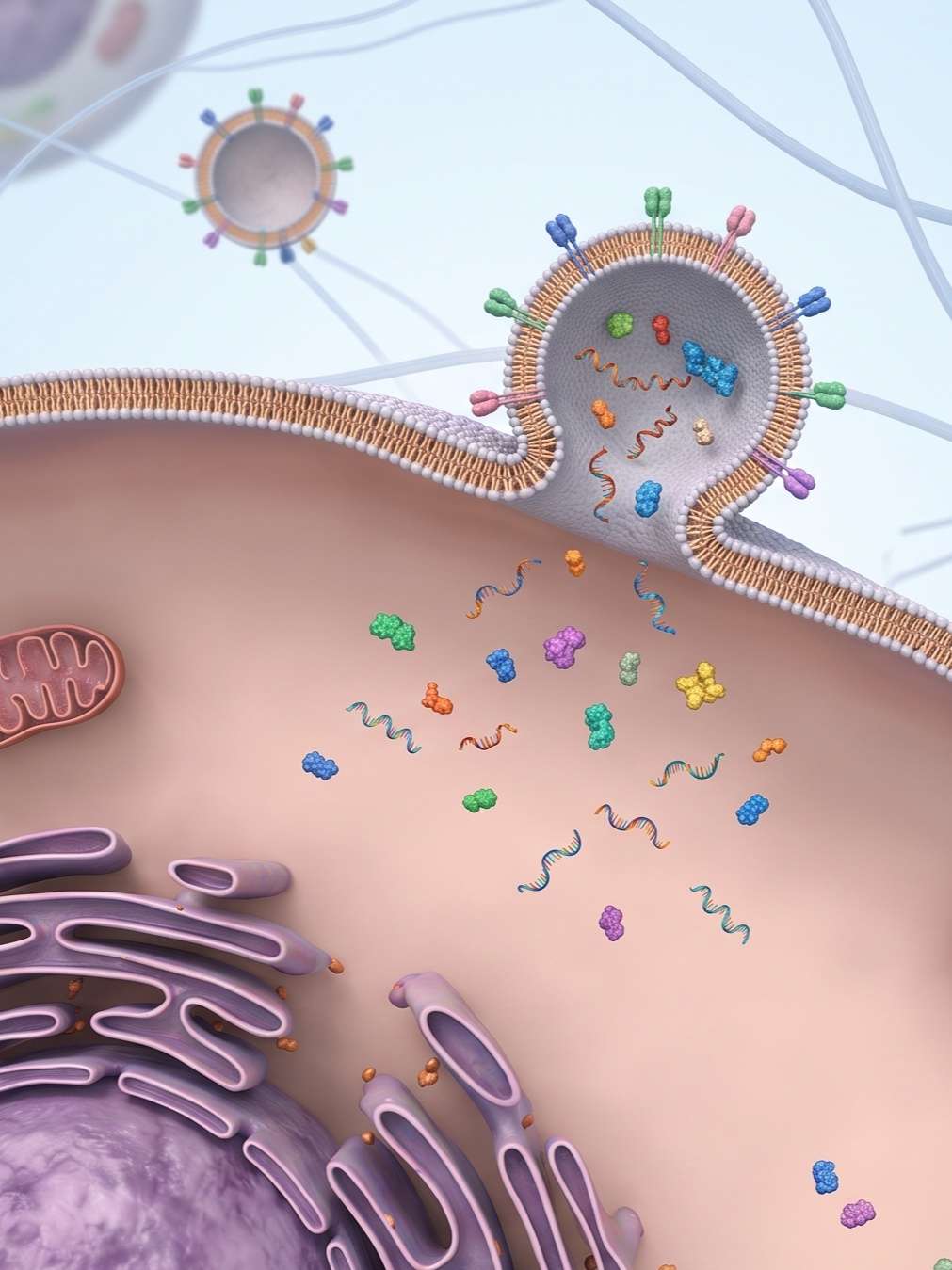
The distinct biophysical benefits of using these natural vesicles as therapeutic vehicles include the following attributes:




Consult With Our Scientists to Discuss Your Project
Preclinical investigations into head and neck oncology are moving in two complementary directions: intercepting the pathogenic vesicles that drive tumor progression and developing engineered or plant derived vesicle formulations to mitigate treatment induced toxicities.
Current progress in utilizing alternative vesicular configurations to manage severe side effects includes:
 Management of Radiation Induced Tissue Injury
High dose radiotherapy combined with platinum chemotherapy causes severe local tissue damage, with radiation induced oral mucositis occurring in more than 80% of patients undergoing active treatment.
Utilization of Botanical Structural Platforms
To address extensive mucosal ulceration and secondary infections, researchers have evaluated the therapeutic properties of nanovesicles derived from plant sources, specifically grapes.
High Abundance and Industrial Scalability
Quantitative isolation studies demonstrate that grapes contain a significant concentration of stable lipid vesicles, yielding approximately 1.76 mg of pure particles per gram of raw plant tissue, making them highly suitable for large scale manufacturing.
Suppression of Hyper Inflammatory Cascades
In experimental models, this plant derived vesicles are rapidly internalized by local epithelial cells and underlying immune cell populations upon introduction to the oral mucosa.
Clinical Translation for Mucosal Restoration
This protective intervention successfully prevents the onset and reduces the severity of oral mucositis associated with chemoradiotherapy, and the botanical formulation has transitioned into clinical phase I testing.
Creative Biolabs has established an integrated bioengineering platform to support researchers in developing and validating exosome therapies for head and neck malignancies. Our technical workflows cover the entire developmental pipeline, providing customized solutions from initial cultivation to validation.

Our facility specializes in isolating clean vesicle populations from diverse mammalian cultures, biological fluids, and complex botanical matrices.
We offer multiple engineering options to package therapeutic payloads into isolated vesicles. This includes passive loading configurations for lipophilic compounds and active methods, such as optimized electroporation or donor cell genetic modification, for the stable incorporation of regulatory oligonucleotides, proteins, or small molecule inhibitors.
Every customized batch undergoes multi parameter characterization to meet rigorous scientific standards. We perform Nanoparticle Tracking Analysis for sizing and concentration profiles, Transmission Electron Microscopy for structural analysis, and western blotting for classical markers. This is followed by functional assays in relevant cellular and animal models to document cellular uptake, target homing, and therapeutic potency.
Engage Our Specialists to Align Your Exosome Delivery Strategy
To support laboratory standardization and accelerate discovery timelines, Creative Biolabs maintains a catalog of research grade tools manufactured under strict quality management criteria.
Partner With Our Research Team to Optimize Your Loading Architecture
A: We use large volume homogenization systems combined with highly efficient exosome extraction technology. This technical setup allows us to process kilograms of plant material efficiently, delivering highly concentrated, purified plant derived vesicles with consistent batch to batch reproducibility for large scale preclinical studies.
A: We utilize western blotting and enzyme linked immunosorbent assays to confirm the enrichment of classical vesicular tetraspanins, such as CD63, CD81, and TSG101. Concurrently, we screen for negative markers, such as calnexin, to verify the absence of cellular or endoplasmic reticulum contamination.
A: Yes. While genetic engineering is reserved for mammalian donor cells, we can apply chemical conjugation methods, such as high efficiency click chemistry, to attach specific targeting peptides or single chain variable fragments directly to the surface lipids or anchor proteins of isolated plant vesicles, enhancing their target specificity.
Talk With Our Scientists to Design Your Testing Strategy