Therapeutic Exosomes for Oral Cancer
Oral Cancer Exosome Delivery Advantages Research Our Services Available Products FAQs
Current Challenges and Survival Rates in Oral Oncology
Malignant transformations within the oral cavity and oropharynx represent a severe clinical challenge, collectively ranking as the sixth most common malignancy globally. The anatomical scope of oral cancer is highly diverse, affecting the lips, the base of the tongue, the mobile tongue, the gingivae, the floor of the mouth, the hard and soft palate, the tonsils, and adjacent mucosal surfaces. Oral squamous cell carcinoma constitutes the predominant pathological entity, accounting for approximately 90% of all diagnosed cases. In recent years, both the incidence and mortality rates associated with these malignancies have increased globally, creating an urgent need for more effective therapeutic interventions.
Despite continuous refinements in radical surgical resection, sophisticated radiotherapy protocols, and systemic chemotherapy, the long term prognosis for individuals diagnosed with oral cancer remains poor. The overall five year survival rate continues to hover around 50%. This high mortality rate is driven by several critical barriers:
 Aggressive Local Invasion
Tumor cells quickly infiltrate deep muscular and bone structures within the maxillofacial region, complicating complete surgical removal.
Early Lymphatic Dissemination
High rates of occult nodal metastasis occur early in the disease process, leading to systemic spread.
Therapeutic Resistance
Malignant clones frequently develop tolerance to standard chemotherapy regimens, causing treatment failure.
Anatomical and Cosmetic Morbidity
The close proximity of these tumors to critical functional zones often limits radiation doses and surgical margins due to the risk of destroying speech and swallowing capabilities.
Talk With Our Scientists to Design Your Testing Strategy
Why Natural Vesicles Excel in Mucosal Delivery?
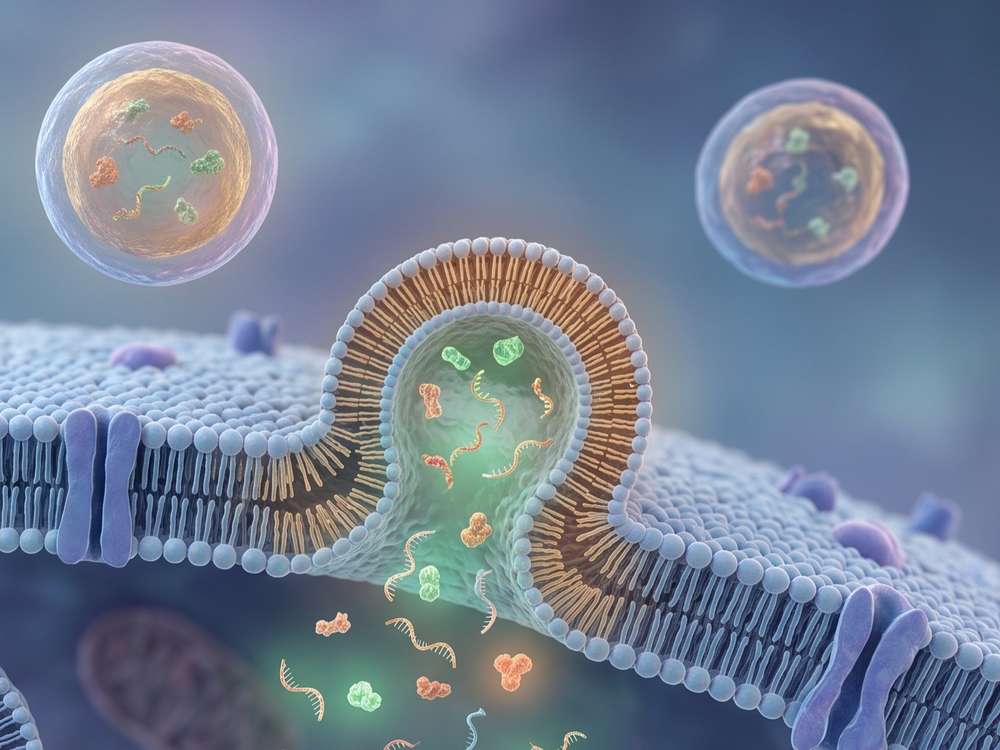
The progression of oral malignancies is regulated by continuous molecular crosstalk within the local microenvironment, largely mediated by endogenous nanovesicles. Malignant cells secrete specialized extracellular particles that transport functional DNA, diverse RNA species, and regulatory proteins to local stromal and distant immune cell populations. For example, tumor derived vesicles carrying high concentrations of epidermal growth factor receptor enter normal epithelial cells to trigger epithelial to mesenchymal transition, accelerating local tissue invasion. Conversely, specific vesicular components can activate antitumor immunity; vesicles containing nucleosome assembly protein 1 stimulate the cytotoxicity of natural killer cells via the interferon regulatory factor 3 pathway, highlighting the complex role of these particles.
The biophysical properties that allow these natural lipid bilayers to navigate the oral mucosa and systemic circulation can be utilized to construct target specific drug delivery configurations. Employing biological vesicles of endosomal origin offers technical advantages over standard synthetic nanostructures:
Superior Mucosal and Systemic Biocompatibility
Derived from natural cellular membranes, these lipid structures display minimal baseline immunogenicity and rarely trigger complement activation or immune rejection.
Enhanced Structural Stability
The natural lipid configuration shields sensitive molecular payloads, such as regulatory oligonucleotides or unstable cytotoxic agents, from enzymatic degradation by circulating nucleases.
Innate Localized Internalization
Surface integrins and tetraspanins inherited from donor cells promote high fusion efficiency with recipient cells, maximizing drug uptake at the target site.
Anatomical Barrier Adaptation
The nanoscale dimensions, typically ranging between 30 and 150 nm, facilitate efficient interstitial transport and localized accumulation within dense tumor tissues via altered vascular permeability.
Consult With Our Scientists to Define Your Project Parameters
Current Laboratory Progress in Targeted Drug Encapsulation
Current preclinical investigations are focusing on engineering these nanoscale carriers to reverse chemotherapy resistance, interrupt specific oncogenic signaling cascades, and arrest the progression of premalignant lesions.
Reversal of Platinum Resistance via Targeted RNA Interference
Cisplatin remains a cornerstone of systemic chemotherapy for oral cancer, yet the emergence of tolerance phenotypes frequently limits its long term clinical efficacy. To address this barrier, investigators have utilized engineered vesicles to deliver precise genetic payloads designed to restore drug sensitivity. In advanced three-dimensional tumor spheroids and in vivo xenograft mouse models, targeted delivery of vesicle-encapsulated miR-155 inhibitors has shown significant therapeutic potential by restoring the tumor suppressor FOXO3a, blocking epithelial-to-mesenchymal transition programs, reducing active drug efflux transporter expression, and downregulating stemness markers in cisplatin-resistant tumor populations, thereby enhancing tumor sensitivity to therapy.
Interruption of the COL10A1 Axis via Stem Cell Derived Carriers
Another prominent area of research targets specific collagen imbalances within the oral tumor stroma. In malignant tissues, collagen type X alpha 1 chain (COL10A1) is regularly upregulated, whereas its regulatory counterpart, miR-101-3p, is suppressed. To correct this imbalance, human bone marrow mesenchymal stem cells have been genetically modified to overexpress miR-101-3p. The vesicles naturally secreted by these stem cells are highly enriched with the regulatory microRNA. Upon internalization by oral cancer cells, these therapeutic formulations suppress COL10A1 expression, inhibiting tumor cell proliferation, migration, and local tissue invasion in vitro.
Prevention of Premalignant Transformation
The clinical management of oral oncology also extends to interception strategies targeting oral potentially malignant diseases, such as oral leukoplakia, which exhibit high rates of malignant transformation. Biopsies from these lesions show a marked reduction in endogenous miR-185 expression. Administering engineered vesicles loaded with synthetic miR-185 mimics induces targeted apoptosis in aberrant mucosal cells through the Akt/NF-kB/caspase-9 signaling pathway. This localized intervention slows the development of premalignant tissue, offering a noninvasive approach to prevent transformation into invasive carcinomas.
Engage Our Technical Team to Align Your Custom Loading Architecture
Technical Support for Custom Isolation and Loading
Creative Biolabs maintains an advanced bioengineering infrastructure designed to assist researchers in navigating the complexities of exosome drug development for oral oncology. Our technical platforms deliver reproducible, standardized workflows across all stages of project engineering.
We isolate clean vesicle populations from diverse matrices, including stem cell conditioned media, immune cell cultures, or patient fluids, utilizing optimized extraction technology.
Our platform supports multiple loading strategies, including passive incubation for small molecules and active methods like optimized electroporation.
Every customized batch undergoes extensive quality control testing, including Nanoparticle Tracking Analysis for concentration profiles, Transmission Electron Microscopy for structural validation, and downstream bioassays to verify cellular uptake and payload functionality.
Discuss Your Project Specifications with Our Lead Group
Ready to Use Toolkits and Control Standards
To ensure experimental reproducibility and meet the strict requirements of peer reviewed scientific journals, Creative Biolabs offers a specialized portfolio of research grade tools manufactured under tight quality control guidelines.

Targeted Extraction Toolkits
Optimized isolation kits designed for the rapid and reproducible recovery of intact vesicle fractions from small volume tissue cultures or human saliva samples.

Molecular Trajectory Labels
Membrane specific fluorescent dyes and conjugation kits optimized to track the uptake and in vivo biodistribution of vesicles within complex head and neck tissue models.

Chemical Conjugation Reagents
High-performance click chemistry systems used to covalently modify vesicle membranes, thereby enabling antibody conjugation under physiological conditions.
Partner With Our Research Team to Optimize Your Loading Architecture
FAQs
Q: How do you evaluate whether loading miRNA inhibitors alters the sizing or stability of the vesicles?
A: Every engineered batch undergoes comparative multi parameter analysis. We utilize nanoparticle tracking analysis to confirm that the physical diameter remains within the optimal 30 to 150 nm range and that the formulation remains monodisperse without particle aggregation.
Q: Can your team extract vesicles from human saliva samples if we provide them?
A: Saliva is a standard matrix for oral cancer research. We have optimized protocols that combine specific dilution steps with size exclusion chromatography to remove viscous mucins and large salivary proteins. This allows us to deliver a clean, intact population of nanovesicles from your samples.
Q: Is it possible to verify if the isolated vesicles express EGFR on their surface?
A: Since oral cancer derived vesicles frequently carry high levels of epidermal growth factor receptor, we routinely perform standard western blotting or enzyme linked immunosorbent assays (ELISA) to detect and quantify EGFR levels alongside classical vesicle markers like CD63 and CD81.
Coordinate With Our Laboratory Team to Finalize Your Testing
For Research Use Only. Cannot be used by patients.
Related Services: