Creative Biolabs is offering the most comprehensive services for antibody development projects. With strict regulation and effective execution, we are dedicated to providing the most valuable solutions to complete your projects.
HighlightsCreative Biolabs is offering the most comprehensive services for antibody development projects. With strict regulation and effective execution, we are dedicated to providing the most valuable solutions to complete your projects.
HighlightsCreative Biolabs has established a broad range of platforms for developing novel antibodies or equivalents. These cutting-edge technologies enable our scientists to meet your demands from different aspects and tailor the most appropriate solution that contributes to the success of your projects.
HighlightsWith deep understanding in antibody-related realms and extensive project experience, Creative Biolabs offers a variety of references to help you learn more about our capacities and achievements, including infographic, flyer, case study, peer-reviewed publications, and all kinds of knowledge that can assist your projects. You are also welcome to contact us directly for more specific solutions.
HighlightsGet a real taste of Creative Biolabs, one of the most professional custom service providers in the world. We are committed to providing highly customized comprehensive solutions with the best quality to advance your projects.
HighlightsCreative Biolabs overcomes the limitations of conventional IgGs by offering high-diversity Single Domain Antibody (SdAb/ VHH) screening. We leverage massive premade humanized and naïve VHH libraries to discover ultra-stable, 15kDa binders that penetrate dense tissues, access concave active sites, and serve as robust building blocks for next-generation biologics.
Access hidden targets and build superior multispecifics with our premier Single Domain Antibody libraries.
Conventional antibodies (~150kDa) often fail to penetrate dense solid tumors or access the "canyon-like" active sites of enzymes and GPCRs due to steric hindrance. Creative Biolabs' SdAb Service solves this. By utilizing Single Domain Antibodies (VHHs), which are one-tenth the size of an IgG, we enable you to target these undruggable epitopes. At Creative Biolabs, screening is a strategy engineered for developability. We don't just find VHHs that bind; we find VHHs that behave. Our premade libraries are engineered with humanized frameworks and extended CDR3 loops, screened via expert phage display strategies to deliver binders that combine the affinity of an IgG with the physical versatility of a small molecule.
|
Access Cryptic Epitopes Long-CDR3 paratopes designed to bind deep enzymatic clefts and hidden pockets. |
High Thermal Stability Binders selected to withstand harsh manufacturing and conjugation conditions. |
Modular Architecture Ideal building blocks for Bispecifics, CAR-Ts, and ADCs. |
Humanized Scaffolds Libraries built on clinically validated frameworks to minimize immunogenicity. |
Rapid Discovery Streamlined prokaryotic expression workflows accelerate hit-to-lead times. |
Target name, Crystal structure (if available), Desired Epitope (e.g., Active site, Receptor interface), Modality goal.



Ranked VHH sequences, epitope bins, kinetic data, and purified VHH protein.
We offer a curated selection of VHH libraries optimized for stability, humanization, and epitope access.
| Screening for Cross-Species Reactive VHH Binders | |||||||
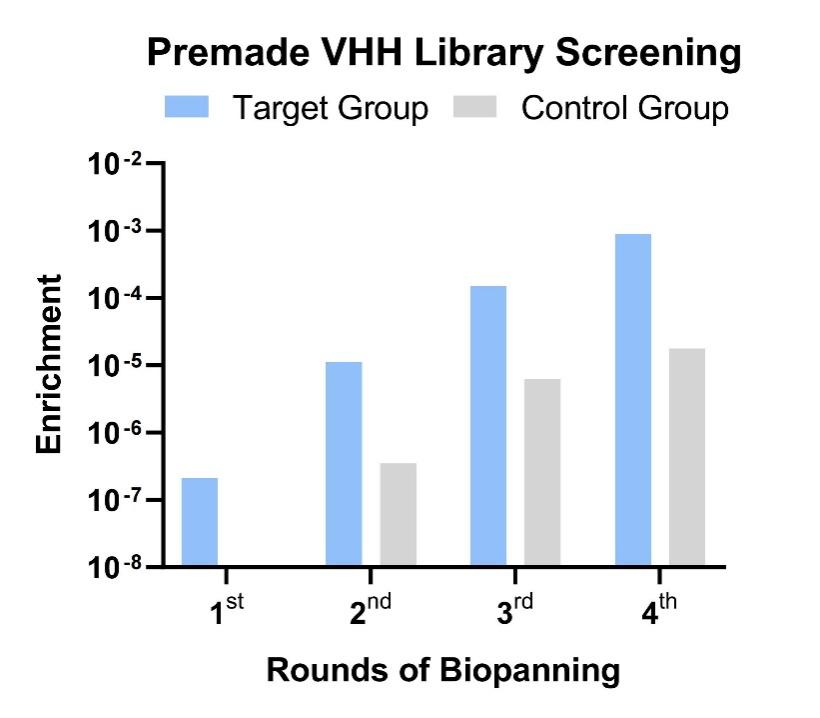
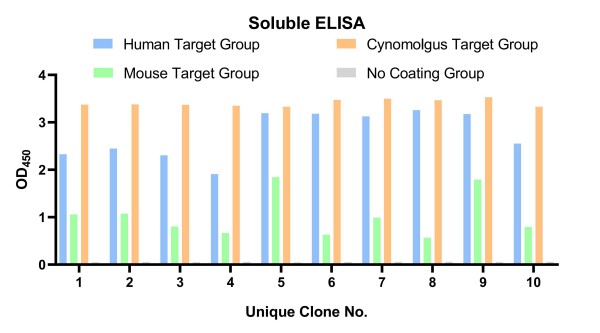
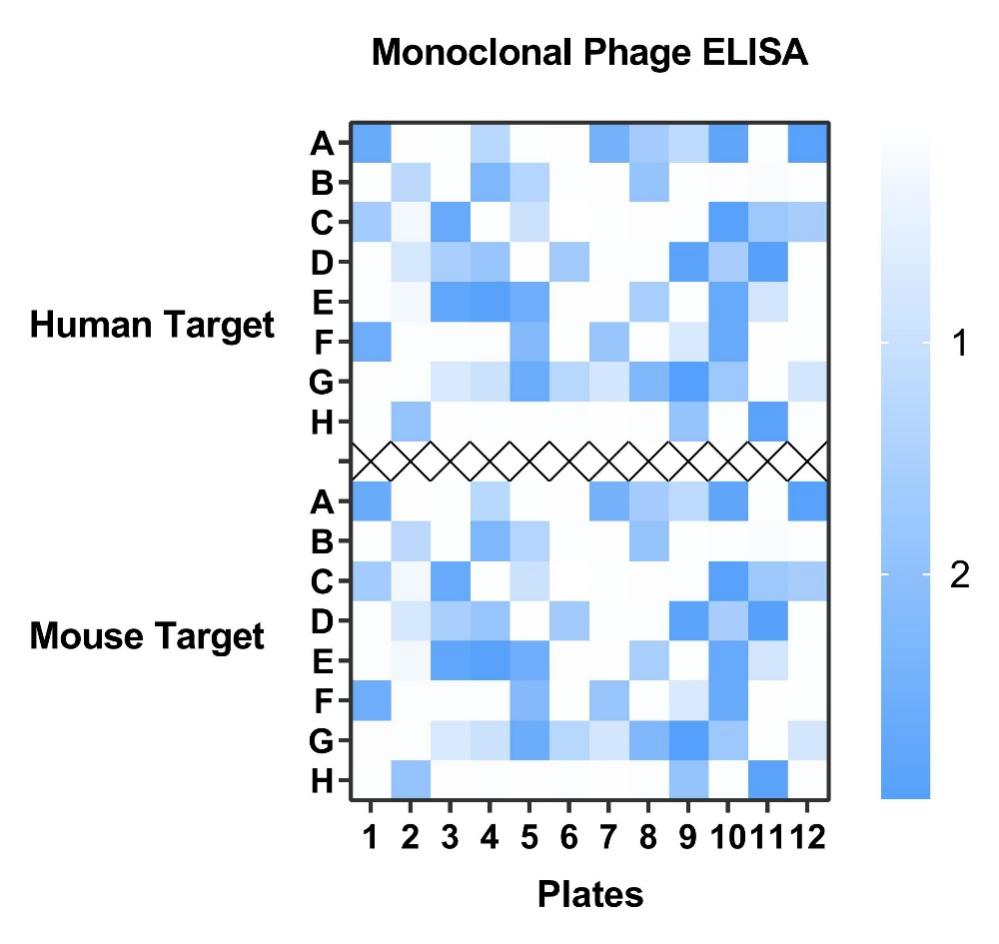
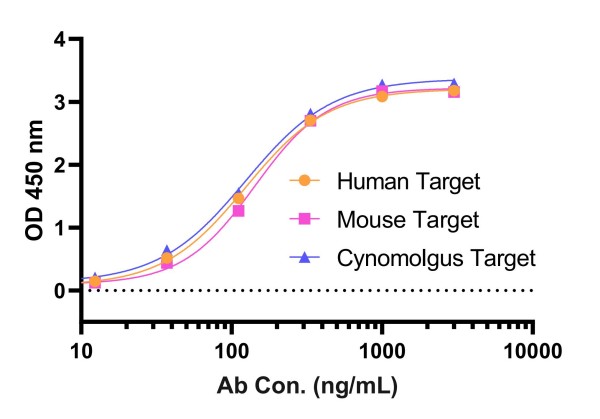
| Project Goal | Development of a therapeutic antibody targeting a transmembrane receptor involved in hematopoiesis. Crucially, the client required high-affinity binding to both Human and Murine orthologs to enable direct efficacy studies in syngeneic mouse models. | ||||||
| Project Challenge | The target receptor exhibits significant sequence divergence between humans and rodents in the extracellular domain. Standard panning campaigns typically yield binders that are highly specific to the human antigen but fail to recognize the murine counterpart. | ||||||
| Our Solution | We implemented an Alternating Antigen Selection Strategy. By strictly alternating the antigen source between Human and Murine recombinant proteins across consecutive rounds of panning, we applied selective pressure to favor phage clones targeting evolutionarily conserved epitopes. | ||||||
| Key Results |
|
||||||

We combine the versatility of single-domain antibodies with the rigor of industrial-scale screening to deliver robust therapeutic building blocks.
 Cryptic Epitope Access
Our library designs and screening strategies are specifically tuned to exploit the "finger-like" binding mode of VHHs to hit hidden targets.
Stability-Driven Selection
We incorporate thermal and chemical stress tests directly into the binder validation process, ensuring your leads are stable and aggregation-resistant.
Modularity Mastered
VHHs are perfect plug-and-play components for Bispecifics, CARs, and ADCs.
Weeks, Not Months
The high expression yields of VHHs in E. coli or Yeast allow us to compress the discovery timeline significantly compared to mammalian IgG workflows.
Humanization Logic
Our synthetic libraries are built on validated humanized scaffolds, reducing the need for extensive downstream engineering.
Radical Transparency
You receive end-to-end data access, including NGS clonotype clustering and full sequence deliverables.
Ready to move fast? Creative Biolabs will scope your target, advise on best library and protocol, and get screening up and running as soon as possible.
All listed services and products are For Research Use Only. Do Not use in any diagnostic or therapeutic applications.