Polyclonal Antibody Discovery Services
Overview Significance Service Workflow Host Species Case Study Features FAQ
At Creative Biolabs, we empower your scientific endeavors with cutting-edge polyclonal antibody discovery services. Leveraging years of expertise, we deliver high-quality, custom antibodies tailored to your unique project needs, accelerating your research and diagnostic development with unparalleled precision and efficiency. Our commitment ensures you gain reliable tools for your most critical discoveries.
Overview of Polyclonal Antibody (pAb)
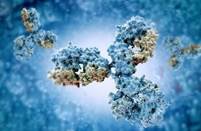
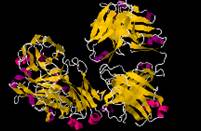
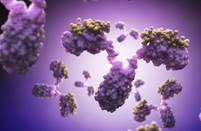
Polyclonal antibodies (pAbs) represent a heterogeneous collection of antibodies, each originating from distinct B cell clones within an immunized host animal. Unlike their monoclonal counterparts, which target a single epitope, pAbs possess the remarkable ability to recognize and bind to multiple epitopes present on a single antigen. The preparation of these invaluable reagents typically involves a multi-step process: initially, a host animal is immunized with a specific antigen (such as a protein, peptide, or DNA). This exposure stimulates a robust immune response, leading to the proliferation of various B cell populations that secrete antigen-specific antibodies. Following a carefully monitored immunization schedule, serum is collected from the animal. This raw antiserum, rich in pAbs, then undergoes meticulous purification to isolate the desired antibody population, often classified by the host species and the specific antigen used for immunization.
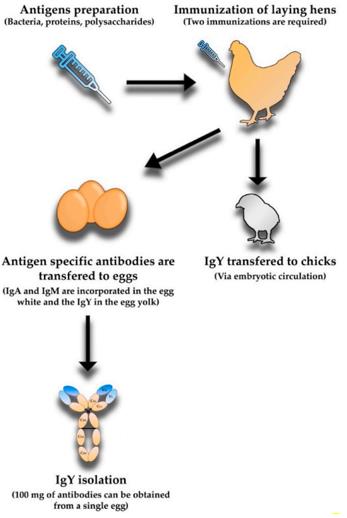 Fig. 1 Summary of polyclonal IgY production process.1
Why Develop pAbs?
Developing pAbs offers distinct advantages that make them an indispensable tool in numerous scientific research and diagnosis. Their inherent multi-epitope recognition provides a robust and comprehensive binding profile, often leading to superior performance in complex biological matrices.
Enhanced Sensitivity
By binding to multiple epitopes, pAbs can effectively amplify detection signals, making them exceptionally sensitive for identifying low-abundance targets. This characteristic is particularly crucial in diagnostic assays where even trace amounts of an analyte must be reliably detected.
Greater Robustness and Stability
pAbs demonstrate remarkable stability across a wide range of experimental conditions, including variations in pH and buffer composition. Their ability to recognize multiple epitopes also means they are less susceptible to minor changes in antigen conformation, such as denaturation or post-translational modifications, ensuring consistent performance.
Accelerated Production Timelines
The production cycle for pAbs is significantly shorter and more cost-effective compared to monoclonal antibody (mAb) development. This rapid turnaround allows researchers to obtain essential reagents quickly, thereby accelerating project timelines and optimizing research budgets.
Versatile Antigen Recognition
The heterogeneous nature of pAbs enables them to detect various forms of an antigen, including native, denatured, or even partially degraded states. This versatility makes them ideal for applications like Western blotting, where protein denaturation occurs, or immunohistochemistry, where epitopes might be partially obscured.
Superior Capture Efficiency
In sandwich ELISA formats, pAbs are often preferred as capture antibodies due to their high affinity and capacity to bind multiple epitopes, which significantly enhances assay sensitivity and broadens the detection range for diverse analytes.
Our pAb Discovery Service
Creative Biolabs offers comprehensive, customized pAb discovery services designed to streamline your research. Our end-to-end solution covers every critical phase, from initial antigen design and synthesis to final antibody purification and rigorous characterization. We guide you through the optimal selection of host animals, ensuring the most suitable species for your specific antibody requirements and desired quantities. Our expert team meticulously manages the entire production process, guaranteeing high-quality, specific, and functionally validated pAbs that meet the stringent demands of your scientific applications.
Workflow for Producing pAbs
|
Procedures
|
Duration
|
Description
|
|
Antigen Design
|
2 Days
|
Design polypeptide or protein sequences according to specific requirements.
|
|
Antigen Production
|
12-30 Days
|
Produce your target peptide or protein antigen in your desired expression system.
|
|
Animal Immunization
|
45 Days
|
Animal injection or provided antigen + Freund's adjuvant injection to produce pre-immune serum.
|
|
Titration
|
2 Days
|
Various assays are utilized for antibody QC analysis such as SDS-PAGE, Western Blot, and ELISA.
|
|
Serum Purification
|
6-12 Days
|
Serum or egg purification to obtain the final delivered pAb product.
|
|
Antibody QC
|
6 Days
|
Antibody evaluation by ELISA and WB or other assay required.
|
Hosts Available at Creative Biolabs
Rabbits
The most popular host that is suitable for antigen immunization. Rabbits are medium-sized, easy to handle, and can directly perform initial analysis of serum.
Chicken
Chicken is suitable for the production of antibodies against mammalian proteins, and these hosts allow for the acquisition of target antibodies in a non-invasive manner.
Sheep and Goats
As large mammals, sheep and goats are ideal hosts for obtaining larger quantities of antisera.
Rats
Rat only requires small amounts of antigen and allows for direct initial analysis of sera. They are suitable for small-scale production of polyclonal antibodies.
Case Study
Case 1 - Chicken Polyclonal Antibody Discovery
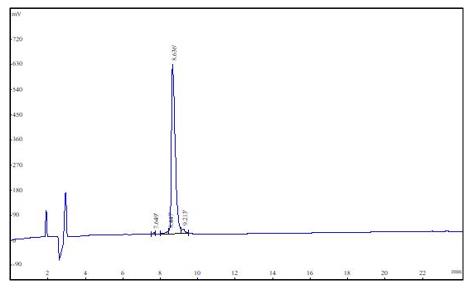 Fig. 2 HPLC analysis of target protein.
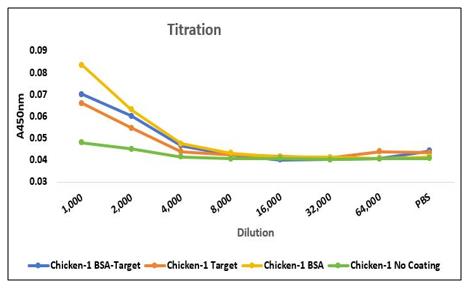 Fig. 3 Titration ELISA of pre-immune.
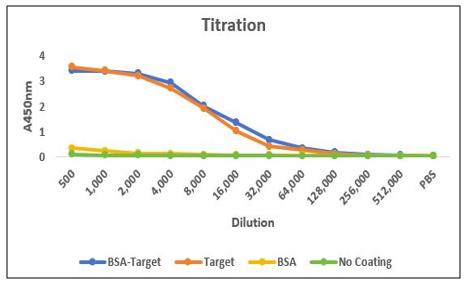 Fig. 4 2nd titration ELISA.
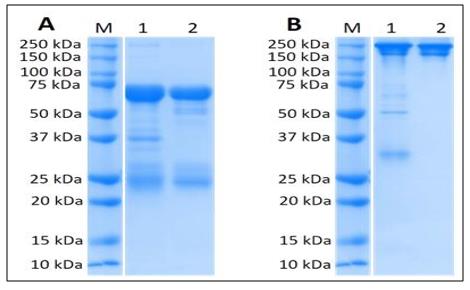 Fig. 5 Gel electrophoresis analysis.
Case 2 - Rabbit Polyclonal Antibody Discovery
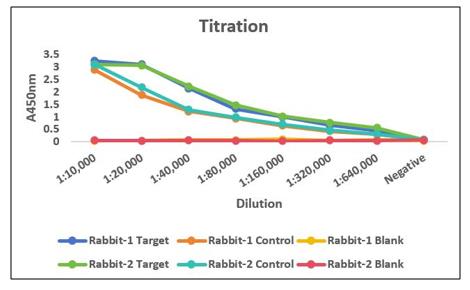 Fig. 6 1st titration ELISA.
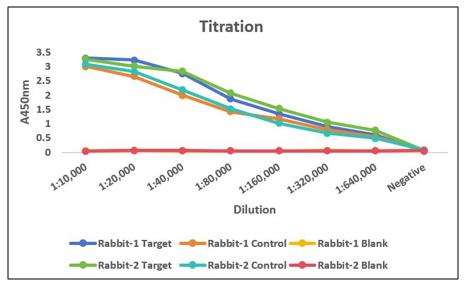 Fig. 7 2nd titration ELISA.
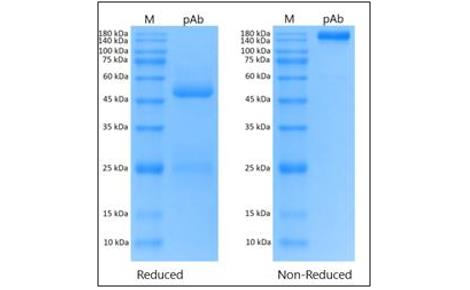 Fig. 8 SDS-PAGE of purified pAb.
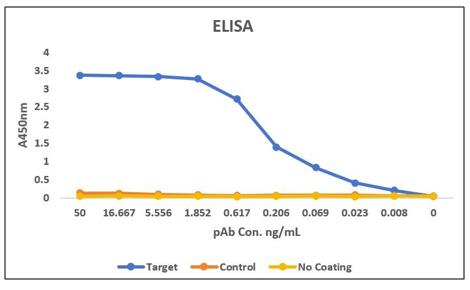 Fig. 9 QC of purified pAb by ELISA.
Key Features
Allowing customers to select the suitable host from multiple options based on the desired antibody characteristics.
Our validated antigen strategies significantly improve antibody affinity and specificity.
We are capable of scaling up your project to quickly obtain the final antibody in the quantities you need.
Our pAb team aims to provide pAb production solutions from antigen design to final binding assay.
FAQ
-
Q: Compared with mAbs, what are the characteristics of pAbs?
A: pAbs are fundamentally different from mAbs in their composition and binding properties. mAbs are homogeneous, targeting a single epitope. pAbs are heterogeneous, binding multiple epitopes, offering higher sensitivity and greater conformational tolerance. However, pAbs can exhibit batch-to-batch variability due to their biological origin, unlike the consistent homogeneity of mAbs.
-
Q: What aspects should be addressed when selecting a host animal for pAb production?
A: Key considerations include the desired quantity of antibody, as larger animals like goats and sheep yield more serum. The phylogenetic distance between the antigen source and the host species is also vital; a greater distance generally elicits a stronger immune response. Furthermore, the intended application of the antibody can influence host choice, as different host species may produce antibodies with varying characteristics suitable for specific assays.
-
Q: Why is phylogenetic distance a key factor in host selection?
A: Phylogenetic distance, or the evolutionary separation between the antigen source and the host animal, significantly impacts the immune response. When the antigen is introduced into a phylogenetically distant host, the host's immune system is more likely to recognize the antigen as foreign. This heightened recognition typically leads to a more robust and diverse antibody response, resulting in higher antibody titers and a broader range of epitope recognition, which is highly desirable for generating effective pAbs.
-
Q: How do you ensure the specificity of pAbs given their heterogeneous nature?
A: Ensuring specificity for pAbs is a cornerstone of our service. Creative Biolabs ensures pAb specificity through advanced antigen-affinity purification. This rigorous process selectively isolates target-specific antibodies, removing non-specific ones and reducing cross-reactivity. Comprehensive quality control assays, like ELISA and Western Blot, further confirm the purified antibody's specificity for your intended application.
-
Q: What types of antigens can be used for pAb production?
A: Creative Biolabs is highly versatile in the types of antigens we can utilize for pAb production. We routinely work with a wide array of immunogens, including DNA, recombinant proteins, synthetic peptides (which can be designed to target specific regions or post-translational modifications), and haptens. Our team provides expert guidance on antigen design and preparation, ensuring the chosen immunogen is optimal for eliciting a strong and specific immune response against your target molecule.
-
Q: Can you provide custom modifications or conjugations for the purified antibodies?
A: Absolutely. We offer a range of custom modification and conjugation services to enhance the utility of your purified pAbs. We can label antibodies with various enzymes, such as horseradish peroxidase (HRP) or alkaline phosphatase (AP), or with fluorescent dyes for detection in different assay formats. Additionally, we provide conjugation services to attach antibodies to nanoparticles or other molecules, expanding their versatility for specialized applications like diagnostics or drug delivery research.
-
Q: How do you address potential batch-to-batch variability in pAb production?
A: Batch-to-batch variability is a known characteristic of pAbs due to their biological origin. We mitigate this through stringent quality control measures and standardized purification protocols. We perform rigorous characterization of each batch, including titer measurements, specificity testing, and functional assays. While some inherent variability remains, our meticulous processes and transparent reporting ensure that each batch meets predefined quality specifications, providing you with reliable reagents for your ongoing research.
At Creative Biolabs, our stringent quality control gives our customers confidence in the pAbs delivered. Contact us to discuss your unique solution.
Reference
-
Seixas, António MM, Sílvia A. Sousa, and Jorge H. Leitão. "Antibody-based immunotherapies as a tool for tackling multidrug-resistant bacterial infections." Vaccines 10.11 (2022): 1789. Distributed under Open Access license CC BY 4.0, without modification.
All listed services and products are For Research Use Only. Do Not use in any diagnostic or therapeutic applications.