Idiotype Specific Antibody Discovery Services
Overview Types Service Summary Featured Services Platforms Applications Case Study Services Highlight FAQ
At Creative Biolabs, we are experts in providing comprehensive anti-idiotype (anti-ID) antibody production and downstream testing services. We specialize in developing highly specific, high-affinity, and high-sensitivity anti-ID antibodies from a diverse range of host species, including rabbits, chickens, mice, rats, sheep, cattle, and even humanized formats. Our unparalleled expertise ensures clients receive precision-engineered reagents crucial for advancing their biotherapeutic research programs with confidence and efficiency.
Anti-Idiotype Antibodies (anti-ID Abs) Overview
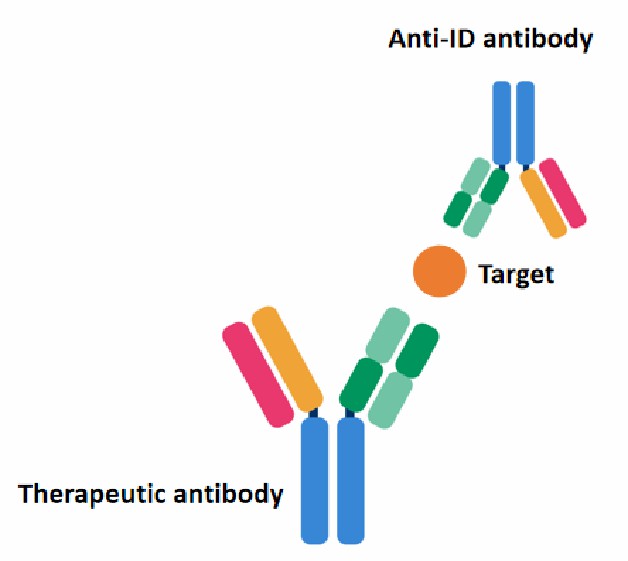
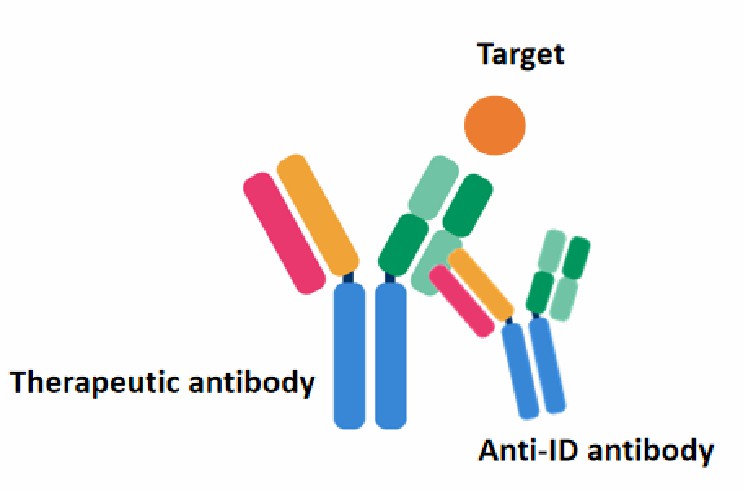
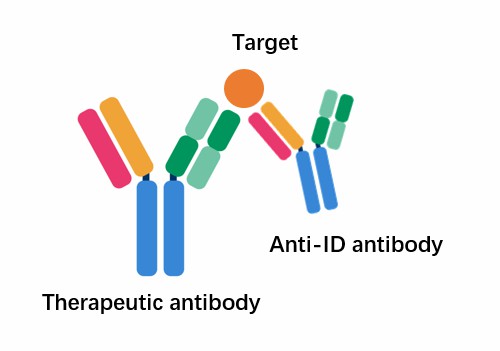
Anti-ID Abs are a unique class of Abs that specifically recognize and bind to the variable region, or "idiotype," of another Ab, typically a therapeutic Ab drug. This idiotype is essentially the unique fingerprint of a given Ab, primarily residing within its complementarity-determining regions (CDRs)—the very sites responsible for antigen binding. Due to their remarkable specificity for the drug molecule itself, anti-ID Abs are indispensable reagents throughout the biopharmaceutical development lifecycle. They serve as critical tools for monitoring drug levels in biological fluids, assessing potential immune responses against the therapeutic agent, and ensuring the overall safety and efficacy of novel biologics. Understanding the intricate binding characteristics of these anti-ID Abs is paramount for their successful application in various analytical assays.
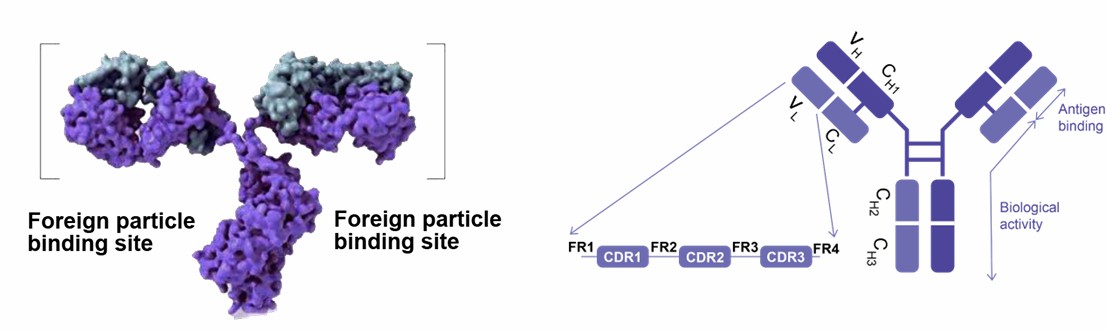 Fig.1 The structure of the antibody.
Types of Anti-ID Abs
Anti-ID Ab Development Summary
|
Services
|
Delivery
|
Lead time
|
|
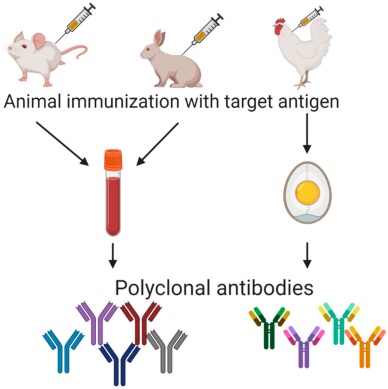
Anti-ID Rabbit Polyclonal Ab Preparation Service
|
Purified Ab;
Ab QC Report
|
3.5 months
|
|
Anti-ID Mouse Monoclonal Ab Preparation Service
|
Compete and/or non-compete purified Abs; Ab QC Report; Hybridoma cell line
|
5 months
|
|
Phage Displayed Library Screening of Anti-ID Ab
|
Purified Ab; Plasmid; Strain; Ab sequences, Ab QC Report
|
4 months
|
|
Development of Immunogenicity Detection Kits
|
Kit; Manual; R&D report
|
3.5 months
|
|
Development of PK Detection Kits
|
Kit; Manual; R&D report
|
3.5 months
|
Featured Anti-ID Ab Services
Featured Technology Platforms
Applications
PK and PD Analysis of Ab Drugs
Our anti-ID Abs precisely quantify therapeutic drug levels in complex biological matrices. Leveraging different anti-ID Ab types (antigen-blocking for free drug, non-blocking for total drug, or complex-specific for bound drug), we accurately measure drug exposure, distribution, and elimination. This vital PK data is essential for dose optimization, understanding in vivo drug behavior, and supporting biosimilar studies. Insights also aid pharmacodynamic (PD) assessments.
Immunogenicity Study of Ab Drugs
Anti-ID Abs are paramount for assessing biotherapeutic immunogenicity. They serve as critical positive controls and reference standards in multi-tiered Anti-Drug Antibody (ADA) testing. Our anti-ID Abs validate assay performance, ensuring accurate detection, confirmation, and characterization of patient-derived ADAs. This assessment is crucial for understanding immune responses impacting drug efficacy and safety.
Preclinical Research of Therapeutic Abs
In early drug development, anti-ID Abs are invaluable for characterizing novel therapeutic candidates. They facilitate early bioassays, clarify Ab drug binding, and support initial in vitro and in vivo studies. Creative Biolabs' robust reagents accelerate preclinical research, enabling informed decision-making and efficient pipeline progression.
Controls in Ab Blocking Assays
Antigen-blocking anti-ID Abs are essential controls in assays evaluating Ab drug blocking capacity. They directly compete with the target antigen, allowing accurate assessment of the Ab drug's ability to neutralize or inhibit its target's function. This is critical for developing neutralizing Ab assays.
Controls in Ligand Binding Neutralizing Assays
Similar to blocking assays, anti-ID Abs are crucial controls in ligand binding neutralizing assays. They establish standard curves or serve as positive controls, confirming an Ab drug's ability to prevent ligand-receptor binding. This ensures reliability and reproducibility for measuring biotherapeutic neutralizing potential.
Suitable for High-Throughput Detection of Specific Ab Drug Content in the Blood
Creative Biolabs' highly specific and affinity-purified anti-ID Abs are ideal for developing robust, high-throughput assay formats, such as ELISA. This enables rapid, efficient quantification of specific Ab drug content in blood samples, vital for large-scale clinical trials and routine therapeutic drug monitoring.
Case A
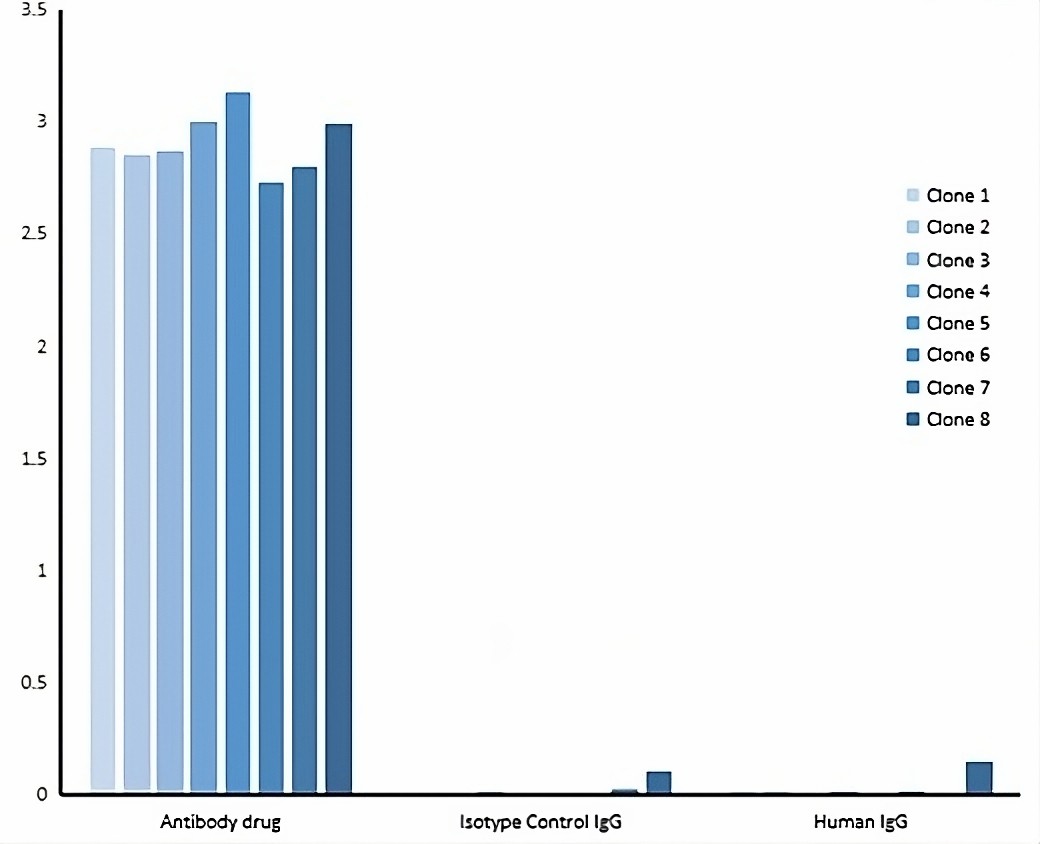 Fig. 5 Anti-ID monoclonal Ab has no cross reaction with isotype human IgG and total human IgG.
Case B
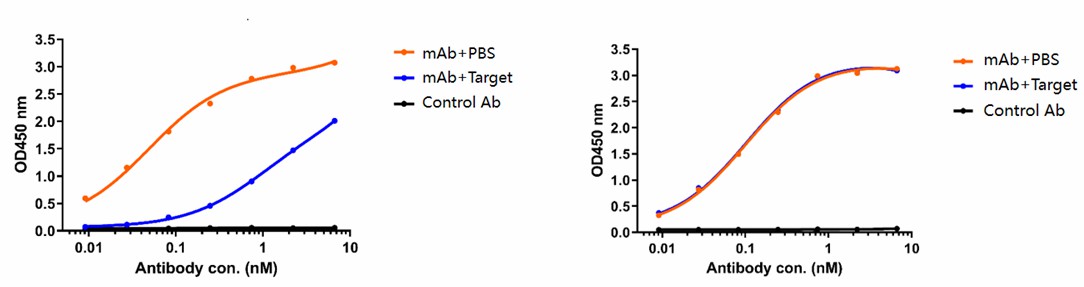 Fig. 6 Competition ELISA of Anti-ID monoclonal Ab.
Case C
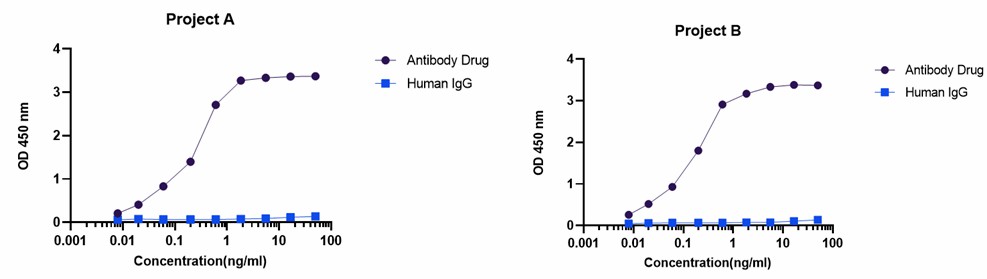 Fig. 7 Anti-ID polyclonal Ab-good specificity, little cross-reactivity with human IgG.
Services Highlight
-
High-Quality Abs: We guarantee the production of anti-ID Abs with exceptional specificity and sensitivity, ensuring precise recognition of your targets of interest.
-
Fast Turnaround Time: Our optimized workflows and efficient processes allow for rapid project completion, with the fastest production cycles typically around 3.5 months, significantly accelerating your research and development timelines.
-
Applicable to Multiple Drugs: Our expertise extends to a wide array of therapeutic modalities. We can develop anti-ID Abs against various drug types, including but not limited to monoclonal Abs, bispecific Abs, antibody-drug conjugates (ADCs), polypeptides, proteins, small molecules, cell lines, and DNA-based therapeutics.
-
One-Stop Service: We offer a seamless, integrated service experience, providing comprehensive technical support from the initial stages of Ab development to preclinical research applications of your Ab drugs.
-
Customizable Service: Our team works closely with you to design and implement highly customized experimental solutions tailored to your specific needs, optimizing resource utilization and ensuring cost-effectiveness.
FAQ
-
Q: How do you ensure the anti-ID Abs you develop are highly specific to my Ab drug and don't cross-react with other human Abs?
Ensuring exquisite specificity is a cornerstone of our development process. We employ rigorous dual-selection strategies, involving positive selection against your Ab drug and intensive counter-selection against isotype-matched control Abs and normal human IgG. This meticulous screening, often combined with advanced biophysical characterization techniques like SPR or BLI, eliminates non-specific binders and guarantees that the resulting anti-ID Abs recognize only the unique idiotope of your drug.
-
Q: What are the different types of anti-ID Abs, and how do I know which type I need for my specific assay?
There are primarily three functional types: antigen-blocking (neutralizing), non-blocking (non-neutralizing), and drug-target complex-specific. Antigen-blocking anti-ID Abs compete with your drug's target antigen and are ideal for measuring "free" drug. Non-blocking anti-ID Abs bind outside the antigen-binding site, allowing simultaneous binding of both the anti-ID and the target, making them suitable for measuring "total" drug. Complex-specific anti-ID Abs are designed to detect only the drug-target complex, quantifying the "bound" drug. Our scientific team will consult with you to understand your specific assay requirements and recommend the optimal anti-ID type for your application.
-
Q: What technology platforms do you utilize for anti-ID Ab discovery?
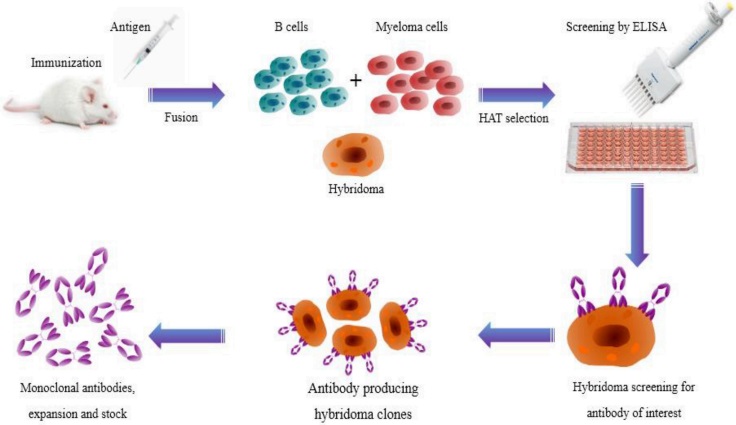
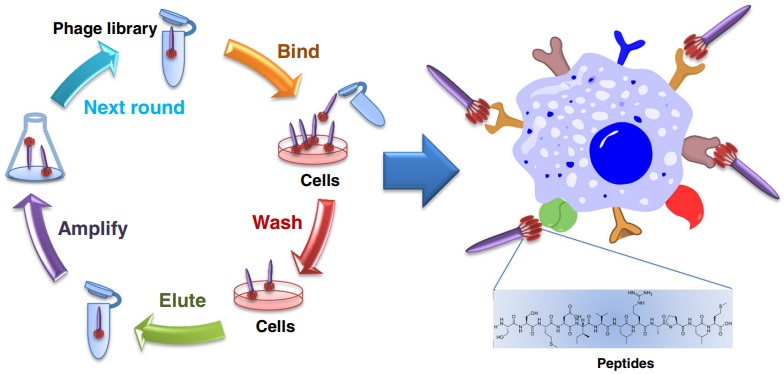
Creative Biolabs leverages a robust combination of cutting-edge technology platforms to ensure successful anti-ID development. Our capabilities include traditional yet highly effective hybridoma technology, which is excellent for generating stable, high-affinity monoclonal Abs. We also utilize advanced phage display and other Ab library screening techniques, providing vast diversity and rapid isolation of candidates. Additionally, our expertise in single B-cell screening allows for the direct isolation of B cells producing desired anti-ID Abs, preserving natural pairing and enhancing discovery efficiency.
-
Q: Can you develop anti-ID Abs against complex therapeutic modalities like ADCs or bispecific Abs?
Yes, our extensive experience covers complex therapeutic modalities. We routinely develop anti-ID Abs against ADCs, bispecific Abs, fusion proteins, and other challenging biotherapeutics. Our immunogen preparation and screening strategies are specifically tailored for these advanced molecules, ensuring highly specific and functionally relevant anti-ID Abs.
-
Q: What kind of quality control (QC) measures do you implement for the developed anti-ID Abs?
Rigorous quality control is fundamental to our process. Every anti-ID Ab undergoes comprehensive QC, including purity verification, concentration determination, specificity confirmation via binding assays, affinity/kinetics evaluation using biophysical methods like SPR, and long-term stability assessment. Our multi-faceted QC ensures consistently high-quality, assay-ready reagents for your critical studies.
-
Q: What kind of support can I expect from you after receiving the anti-ID Abs?
Our commitment extends beyond Ab delivery. We provide comprehensive end-to-end support, including detailed development reports, QC data, and technical guidance for optimal anti-ID use in your assays. We offer ongoing scientific consultation for any research challenges. We partner with clients, dedicated to ensuring successful reagent integration into your development pipeline.
If you are interested in our anti- ID Ab production services, please contact us in time to get a detailed quotation.
References
-
Saeed, Abdullah FUH, et al. "Antibody engineering for pursuing a healthier future." Frontiers in Microbiology 8 (2017): 256891.
-
Wu, Chien-Hsun, et al. "Advancement and applications of peptide phage display technology in biomedical science." Journal of Biomedical Science 23 (2016): 1-14.
-
Garcia-Calvo, Eduardo, et al. "From polyclonal sera to recombinant antibodies: A review of immunological detection of gluten in foodstuff." Foods 10.1 (2020): 66.
-
Distributed under Open Access license CC BY 4.0, without modification.
All listed services and products are For Research Use Only. Do Not use in any diagnostic or therapeutic applications.