
Custom Peptide-PEGylation Conjugation Service
Peptide therapeutics, composed of short amino acid chains, offer precise biological targeting for conditions ranging from diabetes to cancer but face challenges such as rapid clearance, enzymatic degradation, and limited solubility. PEGylation—the covalent attachment of polyethylene glycol (PEG) polymers—addresses these limitations by forming a protective shield around the peptide, significantly extending its circulation half-life (e.g., from minutes to days), enhancing resistance to proteases, and reducing immunogenicity. This modification also improves solubility, enabling higher dosing efficiency, while advanced strategies like site-specific conjugation preserve therapeutic activity. For instance, PEGylated GLP-1 analogs achieve weekly dosing with maintained efficacy, revolutionizing patient adherence. By balancing pharmacokinetic optimization with bioactivity retention, PEGylation transforms fragile peptides into robust clinical candidates, bridging the gap between discovery and real-world therapeutic impact.
Peptide PEGylation Methods
Several methods are employed for peptide PEGylation, and the choice depends on the specific peptide, desired properties, and target application.
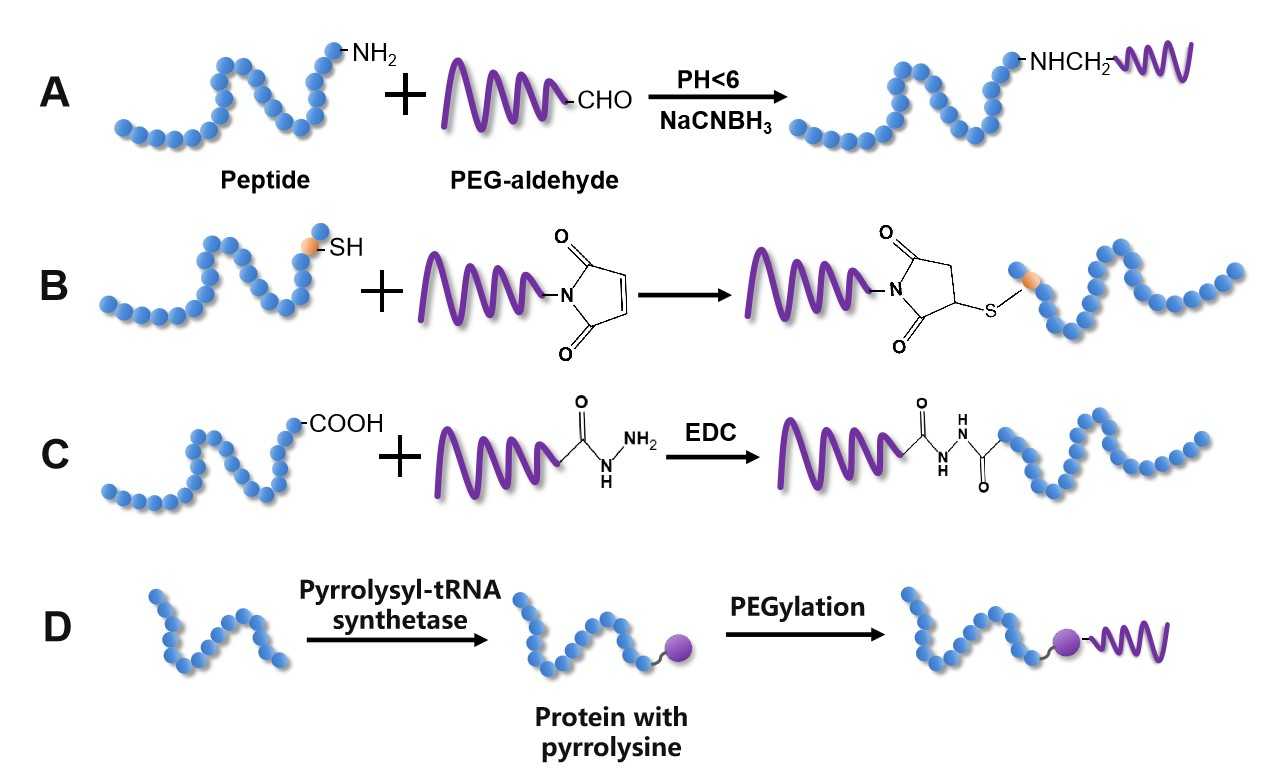 Fig.1 Strategies for site-specific PEGylation.
Common methods include:
| Method | Reagents | Mechanism | Key Advantages |
|---|---|---|---|
| N-Terminal PEGylation | Aldehyde-activated PEG (e.g., mPEG-ALD) | Reductive amination: Forms stable amine bonds with the N-terminal α-amino group under mild reducing conditions (NaBH3N). | Offers high site-specificity and minimal impact on peptide activity by targeting the usually non-essential N-terminus. |
| Lysine PEGylation | NHS ester-PEG (e.g., mPEG-NHS) | Nucleophilic substitution: Lysine ε-amino groups react with PEG-NHS esters at pH 8-9. | Provides multiple modification sites to significantly enhance solubility and prolong the circulating half-life of peptides. |
| Cysteine PEGylation | Maleimide-PEG or Pyridyl disulfide-PEG | Thiol-selective chemistry: Michael addition (maleimide-PEG) or disulfide exchange (pyridyl-PEG). | Allows for highly specific modification at thiol groups under mild conditions. |
| Click Chemistry-Based PEGylation | DBCO-PEG or Azide/alkyne-functionalized PEG | Copper-free click reaction: Strain-promoted alkyne-azide cycloaddition (SPAAC). | Features high efficiency, biocompatibility, and broad applicability for diverse and complex PEGylation strategies. |
Applications of Peptide PEGylation
Peptide PEGylation has been successfully applied in various therapeutic areas:
- Improved Pharmacokinetics of Glucagon-Like Peptide-1 (GLP-1) Analogs: PEGylation has been used to extend the half-life of GLP-1 analogs for the treatment of type 2 diabetes.
- Enhanced Efficacy of Interferons: PEGylation of interferons, such as PEGylated interferon alfa, has significantly improved their efficacy in treating chronic hepatitis C.
- Targeted Delivery of Peptide Therapeutics: PEGylation with specific linkers or targeting moieties has been employed to enhance the delivery of peptides to tumor sites or other target tissues.
- Increased Stability of Antimicrobial Peptides: PEGylation has been shown to improve the stability of antimicrobial peptides against enzymatic degradation, enhancing their therapeutic potential.
- Delivery of peptide nucleic acids (PNAs): PEGylation of PNA-peptide conjugates improved their water solubility and cell penetration ability.
What Can We Do to Help with Your Project?
Creative Biolabs offers comprehensive custom peptide-PEGylation conjugation services to support your research and development needs. We provide tailored solutions to overcome the challenges associated with peptide drug delivery and enhance the therapeutic potential of your peptide candidates. Our services are designed to deliver high-quality PEGylated peptides with optimal properties, enabling you to achieve your project goals efficiently and effectively. We focus on providing realistic solutions without the use of excessive technical jargon.
Our Services:
- Customized Peptide Synthesis: Creative Biolabs provides high-quality custom peptide synthesis services to generate your desired peptide sequence with the necessary modifications or functional groups for PEGylation.
- Customized PEG Reagent Synthesis: We can synthesize custom PEG reagents with specific molecular weights and functional groups to meet your unique project requirements.
- Site-Specific PEGylation of Peptides: Creative Biolabs specializes in site-specific PEGylation techniques to ensure precise control over the PEGylation site, minimizing the impact on peptide bioactivity.
- Functional Validation of PEG-Coupled Peptides: We offer functional validation services, including stability analysis (e.g., in vitro and in vivo stability studies) and bioactivity analysis (e.g., receptor binding assays, cell-based assays), to assess the impact of PEGylation on the biological activity and stability of your peptides.
Workflow:
Our streamlined process ensures efficient project completion:
- Project Consulting: We begin with a consultation to define your project goals, peptide properties, and desired conjugate characteristics. This includes evaluating peptide synthesis (optional), analyzing suitable conjugation sites, and recommending appropriate PEG reagents and conjugation strategies.
- Order Generation: We create a detailed order outlining the scope, timelines, and deliverables.
- Peptide Synthesis and Conjugate Preparation: If required, we perform peptide synthesis and execute PEGylation under optimized conditions for high conjugation efficiency and product yield.
- Purification and Characterization: We characterize PEGylated peptide conjugates using chromatography and mass spectrometry to confirm their identity, purity, and molecular weight.
- Functional Validation (optional): As needed, we conduct functional validation assays.
- Delivery: Finally, we deliver the PEGylated peptide conjugate with a Certificate of Analysis (COA) detailing product specifications and quality control results.
FAQs
1. Q: What types of peptides can be PEGylated?
A: We can PEGylate a wide range of peptides, including therapeutic peptides, targeting peptides, and diagnostic peptides.
2. Q: What PEGylation sites are available?
A: We offer PEGylation at various sites, including the N-terminus, lysine residues, cysteine residues, and site-specific PEGylation at custom-engineered sites.
3. Q: What is the turnaround time for a PEGylation project?
A: The turnaround time varies depending on the complexity of the project. We provide a detailed timeline during the initial consultation.
4 Q: How do you handle sensitive or proprietary information?
A: We adhere to strict confidentiality agreements and data security protocols to protect your sensitive information.
Creative Biolabs's expertise in peptide chemistry, PEGylation techniques, and analytical services ensures the delivery of high-quality PEGylated peptides tailored to your specific needs. Contact us today to discuss your project requirements and discover how our services can accelerate your research and development efforts.
Reference
- Li, Chunxiao, et al. "Research progress on the PEGylation of therapeutic proteins and peptides (TPPs)." Frontiers in Pharmacology 15 (2024): 1353626. Under open access license CC BY 4.0, without modification.