
Custom Nanoparticle-siRNA Conjugation Service
Creative Biolabs is a global leader in bioconjugation technologies with decades of expertise and experience in nanoparticle conjugation. Our custom nanoparticle-siRNA conjugate service is engineered to help you realize the full therapeutic potential of gene silencing. This versatile platform has the precision and controllability you need to make it happen. It addresses the issues that have hindered the development of RNAi therapeutics thus far: system stability, cellular uptake, and endosomal escape.
What is Nanoparticle-siRNA Conjugate?
Nanoparticle-siRNA conjugates may bring a new dimension to targeted drug delivery, particularly in cancer treatment. siRNAs, small RNA molecules capable of silencing specific genes, represent an attractive new class of genes that can interfere with specific pathways involved in tumorigenesis. However, the development of siRNA therapeutics has been limited by poor stability, rapid degradation in the body, and low efficiency of tissue-targeted delivery. Nanoparticles have emerged as convenient carriers capable of encapsulating and immobilizing siRNA molecules and precisely delivering them to cancer cells. This is one of the goals of conjugating siRNA to nanoparticles, aiming to overcome the weaknesses of naked siRNA and maximize its therapeutic efficacy. These conjugates offer numerous advantages, including increased stability, a longer circulation half-life, and enhanced cell penetration, thereby enhancing the RNAi gene-silencing activity of siRNA.
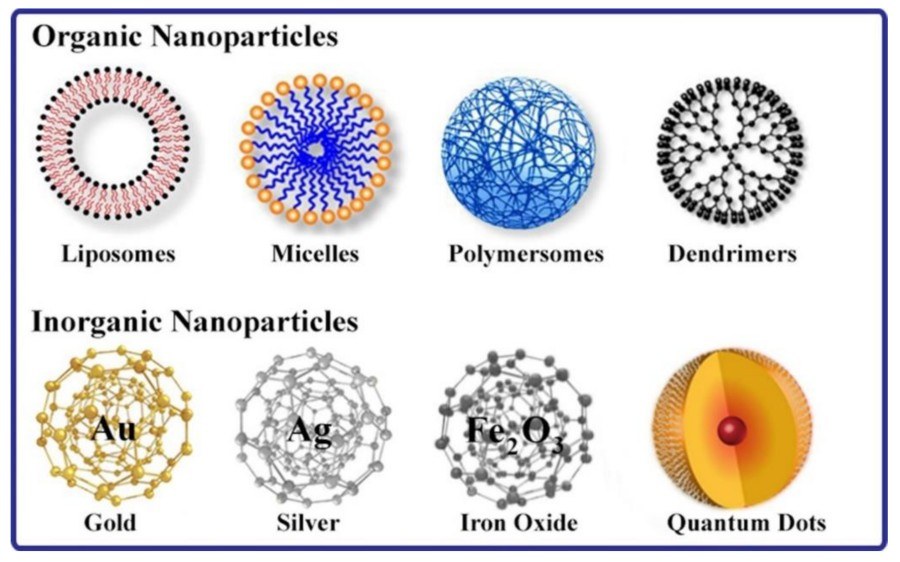 Figure 1. Scheme showing the different types of nanoparticles used in drug delivery for the treatment of the various types of cancers.1
Bioconjugate Technologies for Nanoparticle-siRNA Conjugation
| Strategy | Description | Key Advantage | Application Consideration |
|---|---|---|---|
| Non-Covalent | Electrostatic complexation (e.g., with cationic lipids or polymers) or hydrophobic interactions. | High loading capacity; simple formulation; preserves siRNA structure. | Cargo release depends on environmental pH or enzyme activity; may dissociate in vivo. |
| Covalent | Stable chemical linkage (e.g., Amide bond, Thiol-Maleimide click) between functionalized siRNA and NP. | Enhanced in vivo stability; precise control over siRNA density and orientation. | Requires chemical modification of siRNA; may be more complex to scale. |
Types of Nanoparticles
01 Liposomes and Lipid Nanoparticles (LNPs)
Lipid nanoparticles (LNPs) are one of the most advanced clinically effective nanoparticle platforms, exemplified by their successful application in mRNA vaccines. To deliver siRNA, LNPs are typically formulated with ionizable lipids that are neutral at physiological pH but positively charged in the acidic environment of endosomes. This improves siRNA encapsulation efficiency and facilitates key mechanisms of endosomal escape.
02 Polymeric Nanoparticles (PNPs)
Polymeric nanoparticles are typically synthesized from biodegradable and biocompatible polymers such as poly(lactic-co-glycolic acid) (PLGA), polyethyleneimine (PEI), or polyamidoamine (PAMAM) dendrimers. These platforms offer remarkable flexibility in controlling degradation kinetics and drug release properties.
03 Inorganic Nanoparticles
Gold nanoparticles (AuNPs) are highly sought after due to their biocompatibility, ease of functionalization, and unique physicochemical properties. Their high surface area enables them to be loaded with multiple siRNA molecules.
Features and Advantages of Nanoparticle-siRNA Conjugates
The shift from "naked" siRNA to nanoparticle-siRNA conjugates has fundamentally altered the therapeutic properties of gene silencing agents:
- Enhanced stability and protection: Nanoparticles shield siRNA from circulating ribonucleases, significantly extending its plasma half-life from minutes to hours.
- Targeted delivery: The nanoparticle surface can be functionalized with targeting ligands (e.g., peptides, antibodies, aptamers, or carbohydrates such as N-acetylgalactosamine (GalNAc)). These ligands specifically bind to receptors overexpressed on diseased cell surfaces (e.g., ASGPR on hepatocytes), thereby concentrating the therapeutic at the site of action and minimizing off-target effects.
- Improved bioavailability and efficacy: The combined improvements in stability, targeting, and cellular uptake directly lead to a significant reduction in the effective dose (ED50) and an increase in the therapeutic index, accelerating preclinical and clinical development.
- Improved cellular uptake and endosomal escape: Nanoparticles are efficiently taken up by cells primarily through endocytosis. Crucially, they are specifically designed to facilitate the escape of siRNA from the endosomal/lysosomal pathways that would otherwise destroy the siRNA.
Core Services at Creative Biolabs
At Creative Biolabs, our PhD-level scientists have the deep technical expertise to meet this challenge. Our custom nanoparticle-siRNA conjugate service is more than a product; it's a collaborative research effort designed to provide you with potent, targeted, and stable gene silencing therapies. We deliver scientific rigor, technological innovation, and proven results to accelerate your most ambitious drug discovery programs from bench to bedside.
siRNA Design and Synthesis
De novo design of highly specific and active siRNA sequences, including various chemical modifications (e.g., 2'-O-methyl or phosphorothioate backbones) to enhance stability.
- siRNA Design and Synthesis
- dsRNA Design and Synthesis
- miRNA Design and Synthesis
- circRNA Design and Synthesis lncRNA
- gRNA Design and Synthesis
Custom Nanoparticles
Custom synthesis and functionalization of LNPs, polymeric NPs, and AuNPs, including surface modification with custom targeting ligands for active targeting.
Precision Bioconjugation
Utilize the most appropriate covalent or non-covalent chemistry (e.g., thiol-maleimide, EDC/NHS, disulfide linkers) based on the customer's application and desired release kinetics.
Physicochemical Characterization
Comprehensive analysis of the final conjugates, including dynamic light scattering (DLS) for size and polydispersity index (PDI), zeta potential for surface charge, transmission electron microscopy (TEM) for morphology, and gel electrophoresis/HPLC for siRNA loading efficiency (LE).
Our Service Process: From Concept to Functional Nanoparticles
Our service is an end-to-end collaborative partnership:
- Consulting and Design: We work with you to identify target genes, disease pathologies, and ideal routes of administration.
- siRNA Sequence and Modification: We provide bioinformatics analysis to select the optimal siRNA sequence and advise on necessary chemical modifications (e.g., 2'-O-methyl, 2'-fluoro) to enhance nuclease resistance and minimize off-target effects.
- Nanoparticle Synthesis and Conjugation: Our core expertise. We select the optimal nanocarrier platform, synthesize under GMP-like conditions, and execute the selected bioconjugation strategy under strict quality control.
- Comprehensive Characterization: We provide complete analytical reports, including particle size (DLS), zeta potential, conjugation efficiency (HPLC, gel electrophoresis), morphology (TEM), and in vitro functionality (gene silencing assays).
- Optional In Vivo Validation: We offer preclinical testing in relevant animal models to demonstrate biodistribution, pharmacokinetics, and ultimately therapeutic efficacy.
Why choose Creative Biolabs?
As a leader in drug delivery, Creative Biolabs is your reliable partner for developing nanoparticle-siRNA conjugates, offering unparalleled expertise, experience, and innovation. This makes us the preferred choice for global biopharmaceutical companies, academic institutions, and research organizations who strive for excellence, scientific integrity, and customer satisfaction.
✅Leveraging our unique expertise in bioconjugate chemistry, we ensure the production of high-quality conjugates.
✅High-quality, well-defined conjugates.
✅Flexible service options.
✅Experienced and dedicated team, sophisticated technology.
Frequently Asked Questions
Q: What is the minimum and maximum size range of nanoparticles you can synthesize?
A: We typically work within an optimal size range of 20 nm to 200 nm. Nanoparticles smaller than 20 nm typically face rapid renal clearance, while those larger than 200 nm are rapidly cleared by the reticuloendothelial system (RES). Our customizable synthesis methods allow for precise control within this therapeutic window.
Q: How is siRNA loading efficiency (LE) determined?
A: Loading efficiency is a key metric determined by separating bound from unbound (free) siRNA (typically by ultracentrifugation or size exclusion chromatography) and then quantifying it. Quantification is typically performed using UV-Vis spectrophotometry at A260 or specialized HPLC methods. We strive to consistently achieve LE values that meet our clients' therapeutically relevant targets.
Q: Can I provide my own targeting ligand for conjugation?
A: Absolutely. We specialize in functionalizing the nanoparticle surface with customer-supplied targeting molecules, such as peptides, scFv fragments, or small molecules. We will optimize the conjugation chemistry (e.g., PEGylation and linker insertion) to ensure the ligand retains its biological activity and is properly oriented for receptor binding.
Q: What is the typical turnaround time for a custom conjugation project?
A: Project duration is highly dependent on the complexity of the project, particularly the type of nanoparticle and the requirements for custom ligand synthesis.
Q: Can I provide my own targeting ligand for conjugation?
A: Absolutely. We specialize in functionalizing the nanoparticle surface with customer-supplied targeting molecules (e.g., peptides, scFv fragments, or small molecules). We will optimize the conjugation chemistry (e.g., PEGylation and linker insertion) to ensure the ligand retains its biological activity and is properly oriented for receptor binding.
Conclusion
At Creative Biolabs, our PhD-level scientists have the deep technical expertise to meet this challenge. Our custom nanoparticle-siRNA conjugate service is more than a product; it's a collaborative research effort designed to provide you with potent, targeted, and stable gene silencing therapies. We deliver scientific rigor, technological innovation, and proven results to accelerate your most ambitious drug discovery programs from bench to bedside. If you are interested in our biojugation services, please feel free to contact us for more details.
Reference
- Itani R, Al Faraj A. SiRNA conjugated nanoparticles—a next generation strategy to treat lung cancer. International journal of molecular sciences, 2019, 20(23): 6088. https://doi.org/10.3390/ijms20236088. Distributed under Open Access license CC BY 4.0, without modification.