
Custom Lipid-DNA Conjugation Service
Lipid-DNA Conjugates
Lipids and DNA are the two major components of life. Interestingly, by chemically linking these two natural compounds together, the synthesized lipid DNA conjugate exhibits some attractive properties for cell membrane research. These lipid DNA conjugates are amphiphilic macromolecules that combine the cell membrane insertion ability of lipids with the precise hybridization and programmability of DNA. These supramolecular conjugates have shown exciting application prospects, from constructing cell membrane nanopores to transmembrane cargo transportation, from analyzing cell membrane events to tissue engineering.
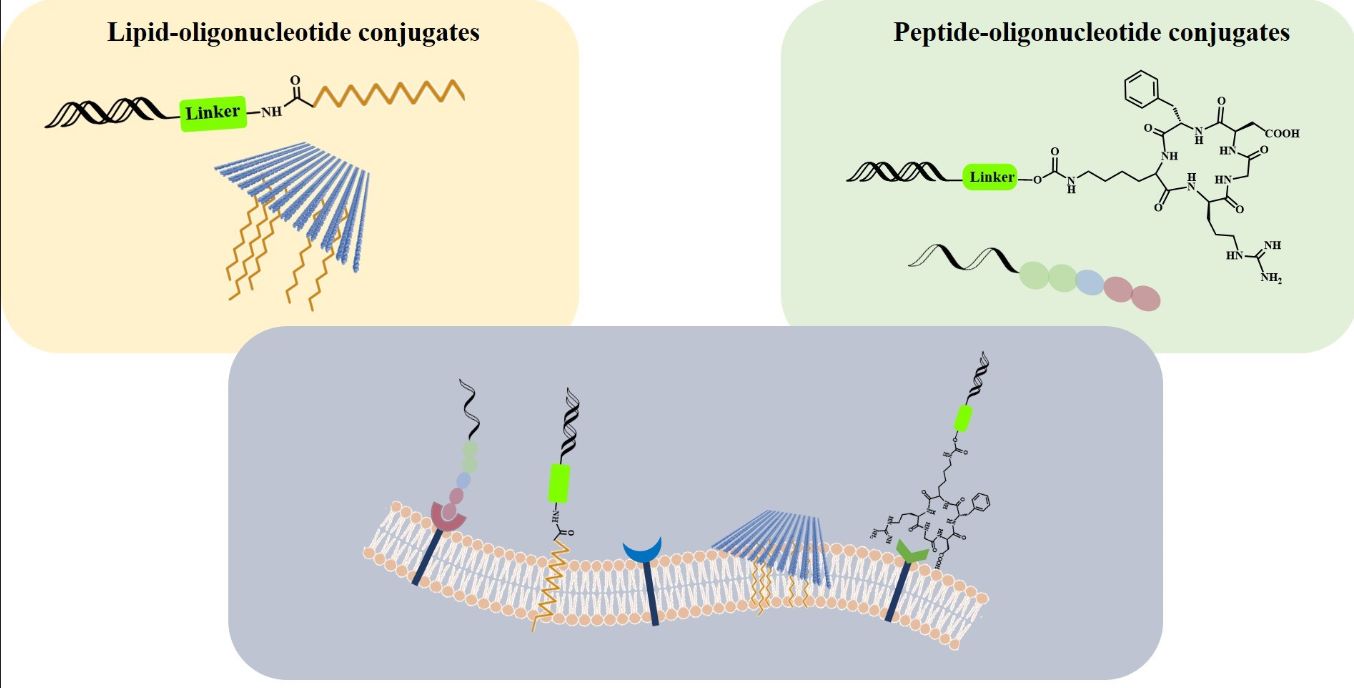 Figure 1 Lipid and Peptide-Oligonucleotide Conjugates for Therapeutic Purposes.1
Types of Lipids for Lipid-DNA Conjugates
Lipids are a group of naturally occurring organic molecules that play a crucial role in biology. Lipids are mainly composed of carbon, hydrogen, and oxygen atoms, and have hydrophobicity or amphiphilicity, which means they are largely insoluble in water but soluble in non-polar solvents. This unique feature is due to their long hydrocarbon chains or rings, which dominate their structure.
- Cationic Lipids
- Anionic Lipids
- PEGylated Lipids
- pH-Sensitive Lipids
- Thermosensitive Lipids
- Stable Lipids
- Stealth Lipids
- Fusogenic Lipids
- Hybrid Lipids
- Antibody-Targeted Lipids
- Long-Circulating Lipids
Why Choose Lipid Conjugation?
The strategic choice of lipid DNA coupling has many advantages over traditional biological coupling methods, making it the preferred method for next-generation drug delivery and cell engineering.
- Enhanced Cellular Uptake and Bioavailability: The main benefit is a significant increase in cellular internalization. By utilizing the natural interaction between lipids and cell membranes, these complexes have higher absorption efficiency compared to unbound nucleic acids or partially connected nucleic acids with lower membrane compatibility.
- Anchoring to Lipid Nanostructures: this is the basic principle of modern lipid nanoparticles (LNP) technology for mRNA vaccines (such as COVID-19 vaccine). Lipid DNA conjugates can incorporate LNP during the preparation process, effectively anchoring DNA onto the surface of particles. This displays DNA function externally, while the LNP core protects and delivers another payload (such as siRNA or mRNA) internally.
- Precise Spatial Organization: Unlike electrostatic encapsulation, conjugation provides stoichiometric control and predictable orientation of surface nucleic acids, which is crucial for constructing biosensors, arranging nanostructures, or engineering synthetic intercellular communication networks.
Lipid-DNA Conjugates for Cell Membrane Modification, Analysis, And Regulation
The true power of lipid DNA conjugates goes far beyond simple delivery; They are transformative tools for membrane engineering.
Cell membrane modification and "DNAization"
By simply incubating cells with lipid DNA conjugates, researchers can effectively "draw" the outer lobules of the cell membrane with oligonucleotides. This process is sometimes referred to as "DNAlization", which produces a highly programmable artificial glycocalyx. These surface bound DNA strands can be used for:
- Cell Assembly
- Actuation and Sensing
Membrane Analysis and Tracking
- Single molecule tracking: Attaching fluorescent groups to DNA can accurately track the diffusion and organization of lipids within the membrane, thereby revealing lipid raft dynamics and membrane heterogeneity.
- Adjacent markers: Lipid anchors locate DNA chains onto the membrane and can then hybridize with complementary chains linked to enzymes. This system can be used for local enzyme reactions to label and identify proximal membrane proteins.
Membrane Regulation and Therapeutic Intervention
- Targeted delivery: A lipid DNA conjugate can be designed to display an adapter that specifically binds to receptors on target cells. This guides the entire construct (as well as any attached cargo) to specific cell types, enhancing therapeutic specificity and reducing off target effects.
- Mechanical transduction: A DNA based tension probe array can be displayed on the cell surface through lipid anchoring to measure and manipulate the skin Newton level forces exerted by cells during migration and differentiation processes.
Overview of What Creative Biolabs Can Provide
Creative Biolabs provides enzyme labeling of DNA and chemical modification of nucleic acids and oligonucleotides. These chemically modified oligonucleotides are very useful in fixing conformation by introducing crosslinking agents into DNA or nucleic acid biomolecule complexes. Site specific crosslinking allows for the determination of the proximity of nucleotides or amino acids, as crosslinking at distances greater than the length of the spacer is not possible. In most cases, such reagents typically adhere to the alkaline or sugar moiety.
- Customize liposome composition, size, and surface properties.
- Modify DNA to achieve specific sequences and functions.
- Efficiently encapsulate DNA into liposomes.
- Physicochemical characterization of lipid-DNA complexes.
- Evaluate in vitro cellular uptake and intracellular distribution of complexes.
- Enhance cellular uptake and intracellular delivery.
- Determine the controlled-release kinetics of encapsulated cargo DNA.
- Provide expert guidance and consulting on formulation design.
- Customize surface modifications to achieve specific cell targeting.
- Evaluate stability under physiological conditions.
- Construct lipid-DNA hybrids.
- Comprehensive characterization using state-of-the-art analytical methods.
What Makes Creative Biolabs Your Top Choice

Cost-Effective Solutions
Our solutions are designed to help you stay on top of your budget and work successfully within your research endeavors.

Fast Turnaround Time
Our efficient processes and streamlined workflows allow us to offer the shortest turnaround time available in the industry.

Client-Centric Approach
We customize our services for you and offer solutions that meet your exact requirements and specifications.
Frequently Asked Questions
Q: What is the typical turnaround time for custom conjugate projects?
A: The turnaround time may vary due to the complexity of the project. Please contact us and let us know your specific requirements for a detailed quotation and schedule.
Q: What types of lipids can be conjugated to DNA?
A: We can combine various lipids, including cholesterol, fatty acids (such as palmitic acid), and various phospholipids, each of which provides unique properties for different applications.
Q: Can you synthesize conjugates with modified DNA skeletons, such as thiophosphates?
A: Yes, it is. We regularly synthesize lipid DNA conjugates with thiophosphates, phosphodiesters, or phosphoramidite morpholino oligomers (PMO) skeletons. Thiophosphate ester conjugates are particularly popular in vivo applications due to their enhanced serum stability.
Q: What is the stability of lipid DNA conjugates in serum?
A: The DNA portion is sensitive to nucleases. For in vivo applications, we strongly recommend using modified nucleic acids (such as thiophosphate backbone, 2 '- O-methylRNA) to significantly enhance nuclease resistance. We can use these stable oligonucleotides to synthesize conjugates.
Reference
- Fàbrega C, Aviñó A, Navarro N, et al. Lipid and peptide-oligonucleotide conjugates for therapeutic purposes: from simple hybrids to complex multifunctional assemblies. Pharmaceutics, 2023, 15(2): 320.https://doi.org/10.3390/pharmaceutics15020320Distributed under Open Access license CC BY 4.0, without modification.