Nucleic Acid/Oligonucleotide related Conjugation Services
Oligonucleotide conjugation is a method used to attach oligonucleotides to other molecules, including fluorescent markers, drugs, or solid supports. This conjugation technology holds significant applications in molecular biology, drug development, and diagnostics. Creative Biolabs possesses extensive expertise and experience in bioconjugation services, offering custom oligonucleotide conjugation solutions designed to deliver the highest quality conjugates for our client's research needs.
Introduction of Oligonucleotide Conjugates
Oligonucleotides are short, synthetic single-stranded or double-stranded DNA, RNA, or their analogs, encompassing a range of types such as antisense oligonucleotides (ASOs), small interfering RNA (siRNA), and aptamers, which have been utilized in nucleic acid drug development. Compared to traditional small molecule drugs, oligonucleotides offer distinct advantages, including enhanced specificity, efficiency, and durability, enabling them to target previously undruggable sites. These therapeutics can effectively influence biological processes by modulating gene expression and immune responses, making them powerful tools for post-transcriptional gene silencing or activation.
Fig.1 The mechanism of action and location of oligonucleotides (ONs).1
However, due to the inherent physicochemical properties of oligonucleotides, they exhibit a short half-life, low active targeting ability, and poor capacity for endocytosis and endosomal escape. Oligonucleotide conjugation technologies can provide oligonucleotides with a "navigation" capability, thereby facilitating targeted delivery to specific cells and tissues. This approach effectively enhances cellular uptake, tissue distribution, bioavailability, and catalytic characteristics, significantly improving the overall efficiency of oligonucleotides. With approximately a dozen oligonucleotide-based drugs approved by the Food and Drug Administration (FDA), this field holds significant promise for advancing biomedical research and therapeutic applications.
Methods of Oligonucleotide Conjugation
Oligonucleotide conjugation is primarily achieved through two methods: chemical processes and enzymatic reactions. The chemical approach employs specific crosslinking agents to introduce functional groups (such as amines, thiols, or biotins) at the nucleotide bases or phosphate positions. In contrast, enzymatic reactions utilize specific enzymes to generate functional groups. Additionally, oligonucleotides can be tightly bound to proteins through electrostatic interactions between the negatively charged backbone of the oligonucleotides and the positively charged regions of proteins, such as protamine or polyarginine.
Oligonucleotide Conjugation for Drug Delivery
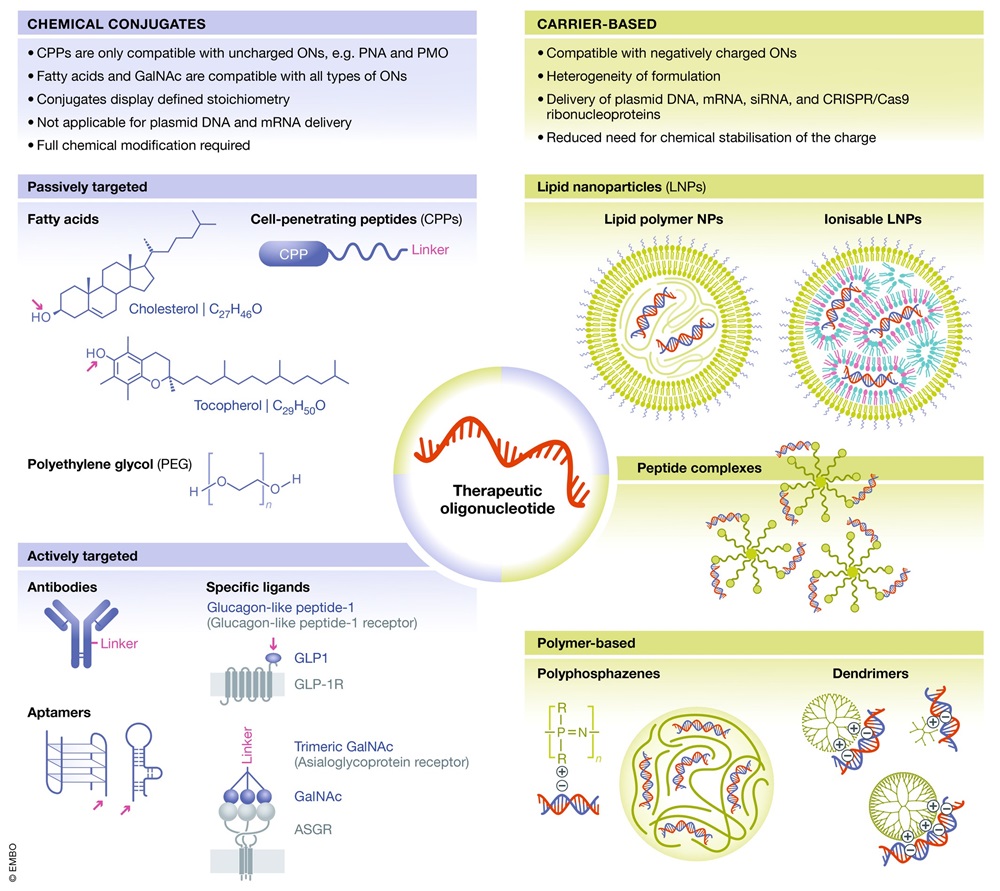
Fig.2 The delivery technologies for oligonucleotides (ONs).1
Antibody-oligonucleotide conjugates (AOCs)
Antibodies, characterized by their high specificity, long half-life, and low immunogenicity, have proven to be ideal functional molecules for drug delivery. AOCs combine the precision of siRNA/ASOs with the delivery capabilities of antibodies, synergistically enhancing the advantages of both types of molecules. This innovative approach not only serves as a powerful means for developing diagnostic tools but is also widely utilized in the development of targeted therapeutic strategies for various diseases.
Polypeptide-oligonucleotide conjugates
The conjugation of peptides with therapeutic oligonucleotides can bestow a variety of attributes on the oligonucleotides, such as tissue/cell targeting capabilities, enhanced cell permeability, antiviral/antibacterial properties, and catalytic degradation characteristics. Common conjugation methods include thiol-maleimide/bromoacetamide reactions, disulfide linkages, native chemical ligation, oxime or thiazolidine reactions, Diels-Alder reactions, and copper(I)-catalyzed azide-alkyne “click” reactions.
Receptor ligand-oligonucleotide conjugates
The conjugation of oligonucleotides with receptor ligands facilitates specific binding to receptors on target cells, thereby enabling tissue-specific delivery. For instance, triantennary N-acetyl galactosamine (GalNAc) acts as a ligand for asialoglycoprotein receptors (ASGPRs), which are abundantly expressed in the liver. After covalent attachment to oligonucleotides, the GalNAc moiety effectively binds to ASGPR, enabling targeted delivery of oligonucleotides to liver cells. This approach has emerged as a groundbreaking strategy in the field of therapeutic oligonucleotides.
Aptamer-oligonucleotide conjugates
Aptamers are short single-stranded oligonucleotides that can specifically bind to target molecules, exhibiting low toxicity and low immunogenicity. With a relative molecular weight and size of approximately 1/25 that of antibodies, they demonstrate superior tissue penetration capabilities. Aptamers have been shown to facilitate the delivery of therapeutic oligonucleotides as oligonucleotide-aptamer conjugates or within nanoparticle formulations.
Lipophilic molecular-oligonucleotide conjugates
Amino-modified siRNA can be conjugated with various small lipid molecules with carboxyl (e.g., cholesterol, fatty acids, and bile acids) to form lipid-siRNA complexes that interact with lipoproteins. Upon interacting with these lipoproteins, the complexes can be effectively delivered to the liver, intestine, and kidneys via specific lipoprotein-mediated receptors.
Our Oligonucleotide Conjugation Services
Creative Biolabs is dedicated to the research and development of oligonucleotide therapeutics, offering a diverse array of oligonucleotide conjugates and fluorescent labels tailored to meet the specific requirements of your project.
If the options presented in the aforementioned table do not meet your requirements, we encourage you to contact with our expert team at any time.
Reference
- Hammond, Suzan M., et al. "Delivery of oligonucleotide‐based therapeutics: challenges and opportunities." EMBO molecular medicine 13.4 (2021): e13243. Distributed under Open Access license CC BY 4.0, without modification.