
Custom Small Molecule-Lipid Conjugation Service
Creative Biolabs team has a strong expertise in bioconjugation to create next-generation biomedical tools. For example, lipid-small molecule bioconjugation could be used in improved pharmacokinetics, drug delivery, or in vivo Imaging. Our team can help you with your options and to develop a suitable design that is right for your research or product development needs.
Small Molecule-Lipid Conjugation
Lipid bioconjugation is a term used to describe the covalent or non-covalent bonding of lipids to other biomolecules such as drugs, proteins, small molecules, and oligonucleotides. It is typically done to improve the drug stability and targeting ability in vivo or to achieve high bioavailability, low toxicity, and good drug delivery efficiency. The common coupling strategies of lipids and small molecules include covalent coupling and non-covalent coupling. Covalent coupling is one of the most commonly used coupling strategies, which is generally realized by chemical reaction between small molecule ligands and hydrophobic groups on the surface of liposomes to form stable covalent bonds. Common hydrophobic group donors include long-chain fatty acids (palmitic acid) and phospholipids (phosphatidylethanolamine (PE), phosphatidylcellulose (PI)). Moreover, some coupling strategies also include amino, carboxyl, thiol, maleimide, alkyne, aldehyde, and hydrazine groups coupling.
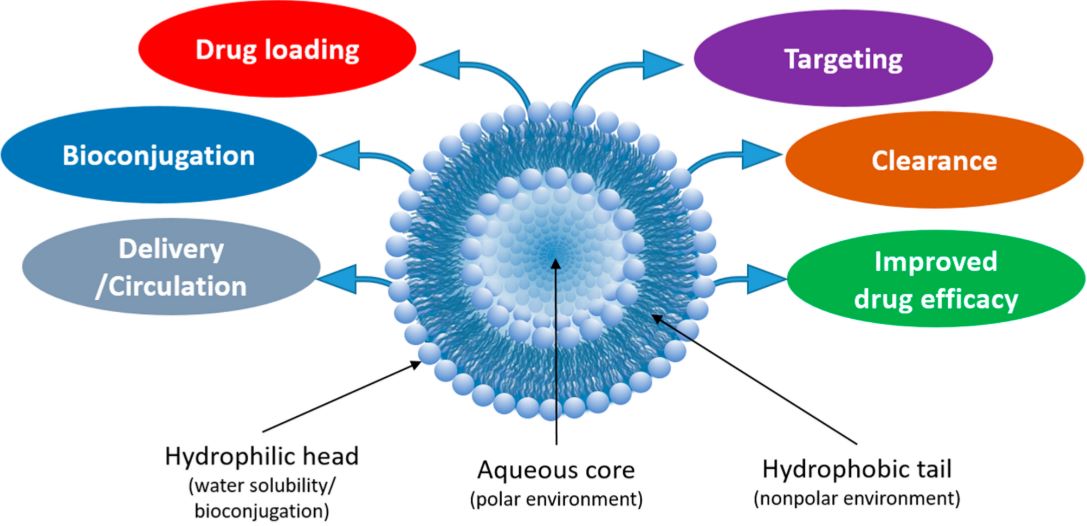 Figure 1 Structural features of liposomes and their advantageous features for improved drug delivery and therapeutic efficacy.1,3
Assays to verify lipid-small molecule conjugation
Mass Spectrometry Analysis
The UPLC-MS/MS method can efficiently detect and quantify lipid conjugates such as Lip-PEG13-cR9K, and perform high-sensitivity analysis through tandem mass spectrometry. UPLC-MS/MS has good selectivity, linearity and accuracy and it is suitable for quantitative detection in biological analysis.
Liquid Chromatography Tandem Mass Spectrometry (LC-MS/MS)
LC-MS/MS can be used for the precise and accurate detection of small molecule analytes, and its reliability has been thoroughly verified through various case studies. This powerful analytical method is particularly suitable for detecting specific target molecules even in complex biological or environmental samples.
UV Absorption Spectroscopy
It is pointed out that UV absorption spectroscopy is a simple and fast detection method that can be used to determine whether coupling is successful. By comparing the UV absorption peaks of the conjugate and unconjugated protein, the coupling effect can be determined. In addition, it was mentioned that UV visible absorption spectroscopy can be used to determine whether the probe has been successfully coupled.
Key reagents and reaction conditions in Small Molecule-Lipid Bioconjugation
| Coupling Type | Key Reagents | Reaction Conditions |
|---|---|---|
| Amide Bond Formation | DSPE-COOH, EDC, NHS | pH 5.5–7.5, Room Temperature, Anhydrous |
| Thiol-Maleimide | DSPE-PEG-Mal, Thiol-containing Small Molecule | Neutral pH, Inert Gas Protection |
| Click Chemistry | DSPE-PEG-TCO, Tetrazine-Small Molecule | Room Temperature, No Catalyst, Aqueous Environment |
| Enzymatic Coupling | Lipase, Vinyl Stearate | Non-aqueous Solvent, 40–60°C |
| Hydrophobic Insertion | Palmitic Acid/Cholesterol-modified Small Molecule | Added to Organic Solvent (Chloroform/Methanol) during Lipid Film Preparation |
Advantages of Lipid Conjugation
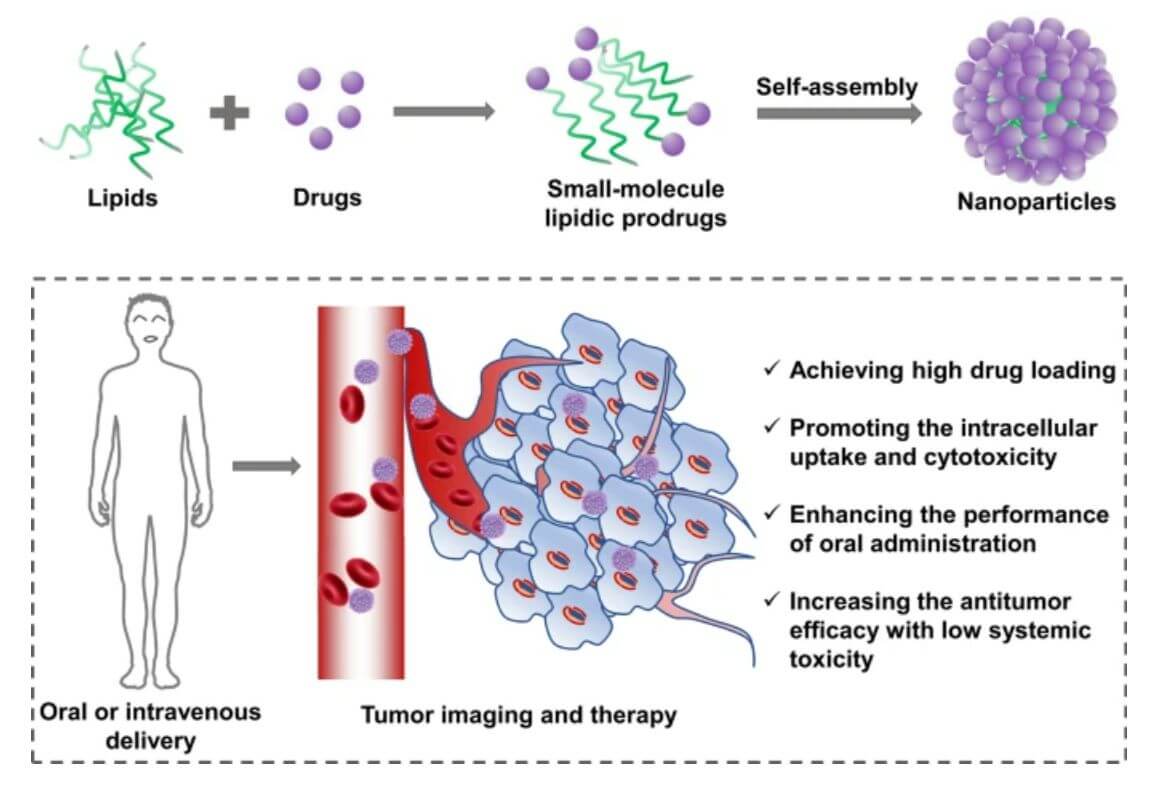 Figure 2 Engineering of small-molecule lipidic prodrugs as novel nanomedicines.2,3
- Lipidation can reduce the strong positive charge density of PEI, mitigating its disruptive effects on cell membranes and decreasing overall cytotoxicity.
- The lipid component contributes to the physical stability of the polyplexes, protecting the nucleic acids from enzymatic degradation in biological fluids.
- The lipid moieties can facilitate interaction with cell membranes through various mechanisms, including direct fusion, endocytosis mediated by lipid raft components, or enhanced membrane permeability, thereby improving cellular uptake of the polyplexes.
- Specific lipids or lipid-conjugated small molecules can be incorporated to provide targeted delivery, directing the polyplexes to specific cell types or tissues that express complementary receptors.
Small Molecule-Lipid Bioconjugation in Biopharmaceutical
- Improved Solubility and Bioavailability: Insufficient aqueous solubility is one of the most common challenges for drug development of many effective small molecules. The drugs are difficult to formulate into conventional dosage forms (tablets, capsules, etc.) and have low oral bioavailability. By conjugation to amphiphilic lipids, the physicochemical properties can be altered. Physicochemical properties can be changed by conjugation to amphiphilic lipids. The drug conjugate can then be incorporated in lipid-based nanocarriers (liposomes, micelles, solid lipid nanoparticles) leading to a very high apparent solubility and in vivo absorption and bioavailability.
- Extended Circulation Half-Life and Reduced Clearance: Lipid conjugation can be used to avoid rapid clearance from the body. By making the drug-lipid conjugate larger (micellar, liposomal encapsulation) or by modifying the surface (PEGylated lipids) the conjugate can escape renal clearance or uptake by the reticuloendothelial system (RES). As a result, it can show a much longer systemic circulation half-life, and therefore drug accumulation in the target can be significantly improved. This can be very useful for anti-cancer drugs where high drug concentrations at the tumor are important.
Small Molecule-Lipid Bioconjugation Services at Creative Biolabs
At Creative Biolabs, we offer a comprehensive range of small-lipid molecule bioconjugation services. Our team of experienced scientists has in - depth knowledge and expertise in bioconjugation chemistry, molecular biology, and drug delivery. We offer custom - designed lipid - small molecule conjugation services to suit your exact requirements. If you have a new drug candidate that you want conjugated to a lipid for improved PK or you are working on a lipid-nucleic acid conjugate for gene therapy applications we can design and perform the conjugation for you from beginning to end.
Why Choose Creative Biolabs for Small Molecule-Lipid Bioconjugation?
At Creative Biolabs, we combine expertise in synthetic chemistry, bioconjugation, and nanomedicine to deliver customized small molecule-lipid conjugation solutions. Our services include:
✅ Custom Lipid-Drug Conjugate Design & Synthesis
✅ Stable & Bioactive Conjugate Optimization
✅ Liposome & Lipid Nanoparticle Formulation
✅ Analytical Validation (HPLC, MS, DLS, in vitro/in vivo testing)
Creative Biolabs' services also include the characterization of the resulting small-lipid molecule conjugates. We use state-of-the- art analytical techniques such as high-performance liquid chromatography (HPLC), mass spectrometry (MS), and nuclear magnetic resonance (NMR) spectroscopy to determine the purity, structure, and conjugation efficiency of the conjugates. This ensures that the conjugates meet the required quality standards for further pre - clinical and clinical studies. If you are interested in our biojugation services, please feel free to contact us for more details.
References
- Almeida B, Nag O K, Rogers K E, et al. Recent progress in bioconjugation strategies for liposome-mediated drug delivery. Molecules, 2020, 25(23): 5672. https://doi.org/10.3390/molecules25235672.
- Huang L, Yang J, Wang T, et al. Engineering of small-molecule lipidic prodrugs as novel nanomedicines for enhanced drug delivery. Journal of Nanobiotechnology, 2022, 20(1): 49. https://doi.org/10.1186/s12951-022-01257-4
- Distributed under Open Access license CC BY 4.0, without modification.