
Custom Peptide-Drug Conjugation Service
At Creative Biolabs, our extensive expertise in bioconjugation chemistry and peptide synthesis allows us to provide a comprehensive suite of services to accelerate your PDC development pipeline. Our offerings cover every stage, from initial design and synthesis to final characterization and optimization.
Peptide-Drug Bioconjugation Introduction
Peptide drug conjugates (PDCs) is a drug delivery system based on drugs covalently conjugated to multifunctional peptides via cleavable linkers. PDCs is an emerging prodrug strategy, which not only preserves the function and biological activity of peptides, but also responsively releases drugs through the cleavable property of linkers. As PDCs can greatly enhance the stability and targeting of drugs in circulation and reduce the toxic side effects of drugs in the body, PDCs have been widely used in drug delivery. PDCs is mainly composed of three components: peptides, crosslinkers and payloads. In the process of assembling PDC, the role and mechanism of each component is a key point to consider.
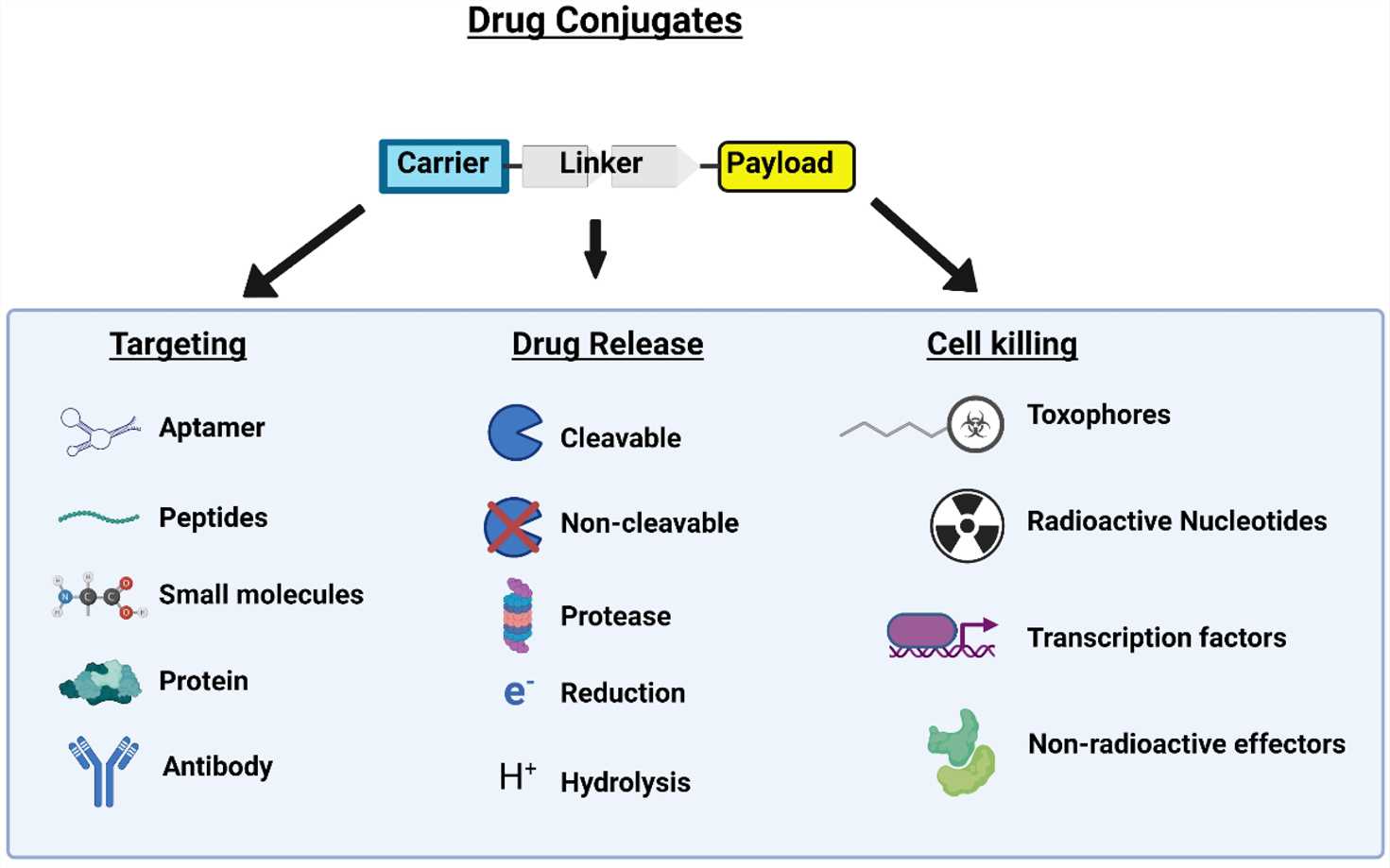 Figure 1 Drug conjugates are composed of 3 parts, carrier, linker and payload.1
Why Bioconjugation Is So Important to Peptides?
The cutting-edge technology of biological coupling makes the interface between chemistry and biology very blurred. The ability to chemically connect molecules and biomolecules has opened up a vast world for state-of-the-art diagnosis and treatment, helping to combat the most threatening diseases and conditions to humanity. Especially, the biological coupling of drugs can greatly improve their:
✅ Half-life
✅ Target conveying system
✅ Immune stimulation ability
Peptide-Drug Conjugate Design and Optimization
PDC is a type of targeted therapeutic drug composed of peptides and small molecule drugs covalently linked together. Although the name is clear and concise, it fails to provide information on the complex considerations involved in PDC development. Designing PDC is not an easy task, as researchers must consider the roles and activities of various small molecules and peptides, as well as their limitations.
Strategic Selection: Enhancing Peptide-Drug Conjugate Potency
The design of PDC development projects begins with selecting peptides and small molecules with complementary activities. Identifying small molecules and/or peptides that are active against specific targets or disease states is a reasonable starting point. Combining small molecules with similar targets and activities with peptides may result in ultra potent PDCs; However, the combination can also be used to salvage molecules that were once promising but ultimately deemed to lack pharmaceutical properties.
Overcoming Limitations: Addressing Structural Rigidities in Connectionless Peptide-Drug Conjugates
Primary PDCs are formed by covalent binding of small molecules and peptides, without the need for introducing linkers. When small molecules and peptides act on the same target and their binding sites are close to each other, these PDCs are most effective; However, the connectionless PDC strategy has limitations as their structure is relatively rigid, which significantly restricts peptides or drugs from approaching the target in a preferential direction. The short distance between peptides and small molecules is another drawback of two-part PDCs, as the close distance between these two components may result in poor target binding due to steric hindrance.
Optimizing Binding Sites: Effective Strategies for Peptide-Drug Conjugate Design
The most important factor in PDC design may be determining the optimal binding site and chemical properties. Ideally, the structural information of small molecules and/or peptides can be utilized to determine the preferred molecular orientation. Considering the inherent stability of the peptide backbone and the relatively limited reactivity of amino acid side chains, determining the reaction center of the peptide is a good starting point for designing binding strategies. The biological binding reactions developed for cysteine thiols, lysine, and N-terminal free amines are highly robust and have been optimized over the past few decades.
Types of Peptide-Drug Conjugates
Anti-Viral Peptide-Drug Conjugates
The devastating consequences of the severe acute respiratory syndrome coronavirus type 2 (SARS-CoV2) pandemic highlight the importance of antiviral therapy. Antiviral PDCs are an attractive strategy to overcome this challenge, as peptides with high affinity for viral proteins can be used to deliver drugs to targets. In the case of drug-resistant viruses, high affinity peptides carry antiviral payloads to the vicinity of target proteins, increasing the local concentration of antiviral compounds. This significant increase in concentration may be sufficient to overcome the decrease in binding affinity caused by mutations.
Antibacterial Peptide-Drug Conjugates
Antibiotic resistant bacteria are dependent on the rise in antibiotic use, as the resistance mechanism grows in response to long term and repeated exposure. It is of concern that the rate of antibiotic resistance is also rising with an increase in multidrug-resistant bacteria, which further supports the need for new antibiotic treatments. An antibiotic PDC strategy has been put into place in which the paired drugs either have a synergistic antibiotic activity, or act as a regulator on existing antibiotics to help them evade resistance mechanisms. Antibiotics that have been created as PDCs have also been made with the goal of a great therapeutic effect against Gram negative bacteria, which is difficult for traditional small molecule antibiotics.
Peptide-Drug Conjugates for Different Diseases
Peptide-Drug Conjugates in Inflammation
PDC drugs also have the application value in the treatment of diseases. Inflammation is a disease that troubles millions of people around the world and seriously hinders their life quality. Naproxen, as a non-steroidal anti-inflammatory drug, can show its anti-inflammatory effects by inhibiting the synthesis of prostaglandins. However, for this type of drug, the lack of selectivity always leads to some adverse reactions in the gastrointestinal tract. To improve the selectivity of peptide drugs, dipeptide conjugates were constructed and it was found that they could form fibrous supramolecular hydrogels with nanostructures easily. Such a hydrogel may be the best strategy for inflammation treatment.
Peptide-Drug Conjugates in Infectious Diseases
PDC drugs are also widely used in the treatment of bacterial infectious diseases. Effectively and safely treating bacterial infection is one of the major challenges that modern medicine is faced with. This is mainly due to the fact that there are some limitations of current antibiotics in the field of host toxicity, effective drug delivery, and increasing bacterial resistance. To solve the above problems, fluconazole was covalently linked with cell penetrating peptides to form PDC. The resulting conjugates exhibited higher Candida killing efficacy than free fluconazole.
Choosing Creative Biolabs for Peptide-Drug Bioconjugation
At Creative Biolabs, our in-depth knowledge of bioconjugation chemistry and peptide synthesis enables us to offer a complete range of services to expedite your PDC development. We support every phase, from initial design and synthesis through to final characterization and optimization. If you are interested in our bioconjugation services, please feel free to contact us for more details.
- Custom Peptide Synthesis
- Linker and Payload Chemistry
- Site-Specific Conjugation
- Peptide-Drug Conjugate Design and Optimization
Reference
- Heh E, Allen J, Ramirez F, et al. Peptide drug conjugates and their role in cancer therapy. International Journal of Molecular Sciences, 2023, 24(1): 829. https://doi.org/10.3390/ijms24010829. Distributed under Open Access license CC BY 4.0, without modification.