The current generation of smartphones is equipped with advanced processors, high-resolution camera, numerous smart applications, and a variety of built-in sensors. Therefore, smartphones have been transformed into a prospective personalized in vitro diagnostics system to deliver mobile health care to remote, resource-deficient, private, and public settings. Smartphone-based point-of-care (POC) technologies have emerged as ideal next-generation point-of-care devices. Smartphone-based spectroscopy has seen much more attention as image sensor quality continues to improve. The high precision requirements of spectroscopic methods have been prohibitive in the past but as smartphones continue to get more sophisticated so do the applications for which they qualify. The optical design to achieve spectrophotometric measurements is relatively simple. An incident light source is shown through a pinhole which is then collimated and polarized. The light then passes through the sample and is refocused onto the diffraction grating through a cylindrical lens, to direct it to the complementary metal-oxide semiconductor (CMOS) sensor.
 Fig.1 Illustration of spectroscopy.Distributed under CC BY-SA 3.0 at, from Wiki,
without modification.
Fig.1 Illustration of spectroscopy.Distributed under CC BY-SA 3.0 at, from Wiki,
without modification.
Raman spectroscopy in Point-of-Care Technologies
Raman spectroscopy (SERS) relies on the loss or gain in energy of an inelastically scattered photon due to a molecular vibrational event. With the advanced development of the miniaturized SERS, enhanced SERS has extended its applications into the field of Point of Care Testing (POCT) and demonstrated its great significance in virtue of non-invasive property and capability of fingerprint identification. By characterizing the typical analytes with the miniaturized smartphone-based Raman analyzer, the proposed SERS have successfully demonstrated good sensitivity, repeatability and stability. SERS can detect nano-grams per milliliter analytes concentrations.
Applications of Spectroscopy in Smartphone-based Point-of-Care Technologies
- Immunoassays
Combining molecular tests with smartphone readers with the help of Microfluidics and biosensors has allowed the development of several POC concepts for various diseases. For example, a smartphone-based LFA reader platform that works with various lateral flow immunochromatographic assays was created and tested with malaria, TB and HIV LFAs. The measurement of IL-6 and Ara h1 levels has also been reported with a microplate ELISA assay coupled to smartphone-based spectrometer. Similarly, Microfluidic ELISA chips have also been combined with smartphones for detecting sexually transmitted diseases. Additionally, for detecting hepatitis C virus (HCV) in serum, an immunochromatographic Microfluidic device comprised of microchannels filled with a hydrogel with patterned immobilized antigens has been used. Upon recognition of HCV and addition of fluorescently labeled secondary antibodies, the barcode-like patterns are imaged and analyzed using a smartphone.
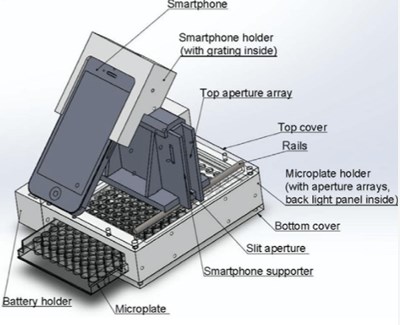 Fig.2 Smartphone-integrated spectrophotometer for high-throughput analysis.1, 3
- Biosensing applications
Smartphone biosensing platforms based on the SPR properties of gold nanoparticles(AuNPs) have been proposed as diagnostic tools. For instance, the concentration of vitamins such as B12 and D in blood and serum samples has been measured by performing an AuNP-based immunoassay along with a smartphone-based colorimetric reader. Other applications include the diagnosis of KSHV, via a colorimetric assay based on the aggregation of functionalized AuNPs in the presence of the viral target DNA. The aggregation causes a strongly enhanced colour change in the particle suspension allowing to use simple smartphone detector to perform the analysis with high sensitivity.
- G-Fresnel device
The smartphone spectrophotometer is developed using a G-Fresnel device, with a nanometer resolution in the visible range. The G-Fresnel is a dual-functionality diffractive optical element with a low f-number that could simultaneously focus and disperse the incident light.The optical elements are placed in a 3D-printed smartphone attachment, which has slots to hold the G-Fresnel and the slit at pre-aligned positions. The smartphone attachment is secured to the smartphone case and then attached to the smartphone. The removing and reinstalling of the smartphone attachment cause only a negligible shift of alignment, thereby providing a compact and stable design. Moreover, the device could use optical fiber or another light source. The device is used for the Bradford assay for the determination of various concentrations of BSA.
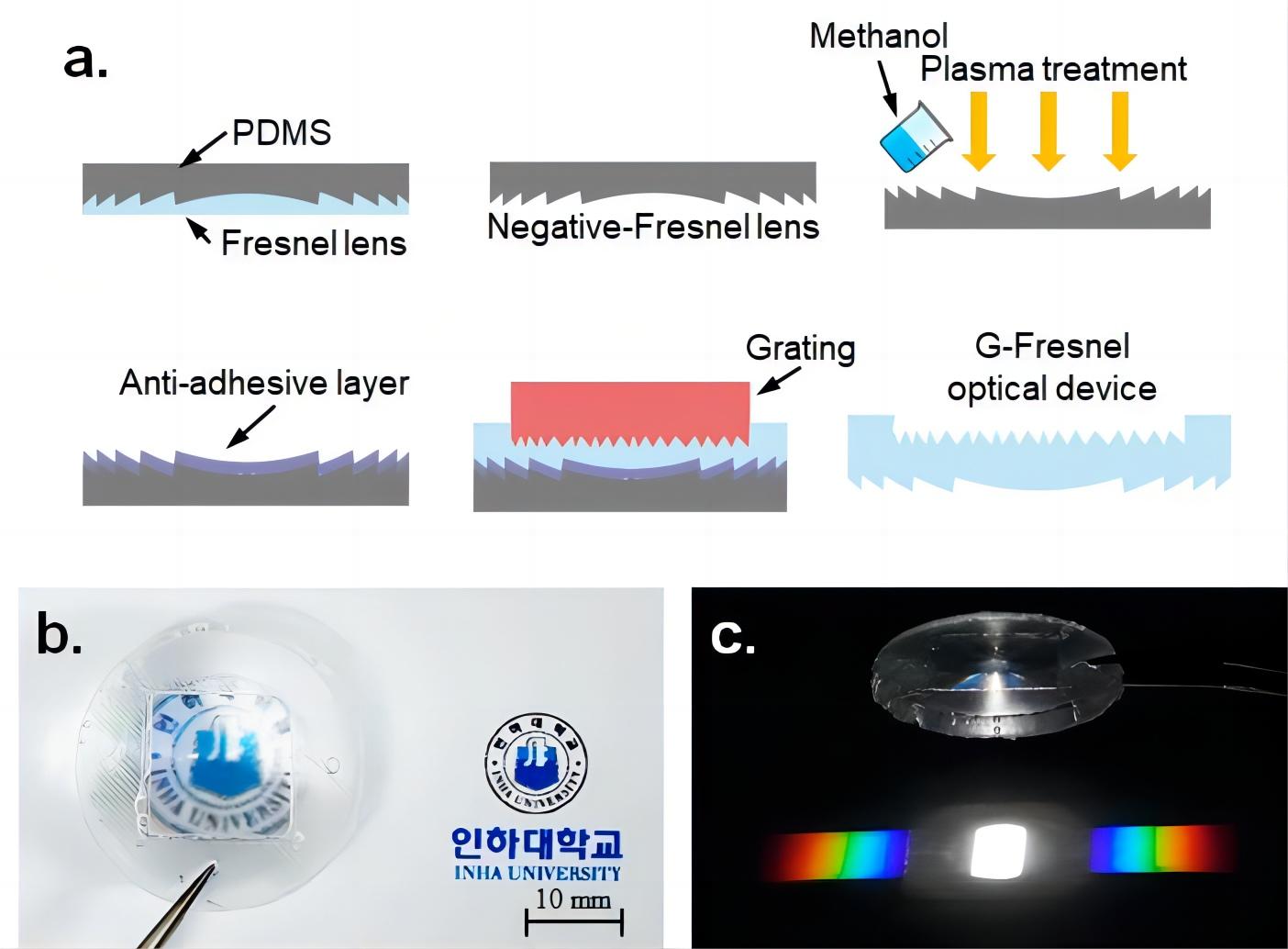 Fig.3 The mechanism of G-Fresnel optical device.2, 3
References
- Hernández‐Neuta, Iván, et al. "Smartphone‐based clinical diagnostics: towards democratization of evidence‐based health care." Journal of internal medicine 285.1 (2019): 19-39.
- Min, Kyung-Pyo, et al. "A G-fresnel optical device and image processing based miniature spectrometer for mechanoluminescence sensor applications." Sensors 19.16 (2019): 3528.
- Distributed under Open Access license CC BY 4.0, without modification.
For Research Use Only.