Natural killer (NK) cells are a key component of the innate immune system, playing a frontline role in defending the body against viral infections and cancer. They're equipped with a wide array of receptors that allow them to sense environmental cues—such as stress signals, cytokines, or changes in antigen expression. Once activated, NK cells respond swiftly, eliminating harmful cells through mechanisms like perforin- and granzyme-mediated cytotoxicity, as well as by releasing immune-modulating cytokines. Keeping NK cell activity in check is essential; when dysregulated, it can contribute to a range of diseases including autoimmunity, cancer, and infections.
How Does Stem Cell-derived Exosome (SC-Exo) Regulate NK cells?
Recent studies suggest that stem cells (SCs) influence NK cells not only through direct contact or soluble factors, but also—perhaps more importantly—through exosomes they secrete. These stem cell-derived exosomes (SC-Exos) act as carriers for various functional molecules, helping to modulate NK cell development, activation, and function. Compared to stem cell therapies themselves, SC-Exos offer several practical advantages: they're easier to produce and store, can be administered in multiple ways, and carry a much lower risk of immune rejection or tumorigenicity.
At Creative Biolabs, we recognize the exciting therapeutic potential of using SC-Exos to regulate NK cell activity in disease contexts. Our comprehensive service portfolio includes exosome isolation services, exosome purification services and exosome characterization services, ensuring high-quality preparations tailored to your research goals. We also offer exosome engineering services, exosome labeling services, and exosome cargo loading services to help optimize SC-Exos for functional studies or therapeutic applications.
SC-Exo Exerts Its Therapeutic Potential by Modulating the Activity of NK Cells
Natural killer (NK) cells rely on a finely tuned balance of activating and inhibitory signals from surface receptors to distinguish between healthy and abnormal cells. This balance enables them to effectively eliminate infected or transformed targets while sparing normal tissue. However, when NK cell function becomes dysregulated, the immune system may fail to respond properly, potentially contributing to the development of various diseases.
Fig.1 Contribution of NK cells in autoimmune disorders.1
Stem cell-derived exosomes (SC-Exos) are gaining attention for their ability to modulate abnormal NK cell activity. Studies have shown that SC-Exos can suppress excessive proliferation, activation, and cytotoxic responses of NK cells under pathological conditions. At Creative Biolabs, we offer a range of specialized services—including exosome profiling services and exosome quantification services—to help researchers better understand and harness this therapeutic potential.
The current findings regarding SC-Exo modulation of NK cells are as follows:
Tissue Damage Repair
In renal ischemia-reperfusion injury models, exosomes from human umbilical cord mesenchymal stem cells have been shown to carry specific miRNAs that downregulate pro-inflammatory markers like CX3CL1 and TLR-2. This leads to reduced NK cell infiltration and ultimately promotes tissue recovery. Our exosomal RNA isolation and qPCR analysis services and exosome proteomic detection services can support in-depth investigations into these molecular effects.
Inflammation Treatment
Exosomes derived from mesenchymal stem cells (MSC-Exos) contain anti-inflammatory factors that can suppress the release of key cytokines such as IFN-γ and TNF-α from activated NK cells, helping to mitigate inflammatory responses. Our exosome lipidomics and metabolomics servicess, along with exosomal cytokines profiling services, allow for detailed analysis of the anti-inflammatory cargo within SC-Exos. Additionally, our exosome functional research services in vitro can help identify the most effective strategies for modulating NK-driven inflammation.
Treatment of Autoimmune Diseases
In animal models of autoimmune uveitis, local administration of MSC-Exos has been found to reduce NK cell infiltration into ocular tissue, thereby alleviating autoimmune damage. Moreover, TGF-β encapsulated in exosomes derived from fetal liver mesenchymal stem cells has been shown to impair NK cytotoxicity by engaging the Smad signaling pathway. Creative Biolabs supports this area of research through constructing eye disease models and studying the function of SC-Exo, enabling clients to evaluate the therapeutic potential of SC-Exos in autoimmune conditions.
Creative Biolabs One-stop Services for SC-Exo Research
At Creative Biolabs, we've long recognized the unique potential of stem cell-derived exosomes (SC-Exos) in modulating immune responses—particularly through their influence on NK cell behavior. Ongoing research continues to uncover critical molecular players and signaling pathways involved in this regulatory process. Moving forward, there's a strong need to deepen our understanding of how exosomes from different SCs affect NK cells both in vivo and in vitro.
If your research touches on this area—or you're exploring new directions and encountering challenges—we welcome you to contact us and share your ideas or questions. Our expert team is here to support you with a full suite of SC-Exo services, designed to streamline your experiments and help move your project past technical roadblocks.
FAQs
Q: How do stem cell-derived exosomes (SC-Exos) regulate NK cell function?
A: SC-Exos carry a variety of bioactive molecules—like proteins, miRNAs, and signaling lipids—that can influence how NK cells grow, activate, or release cytotoxic substances. Studies suggest SC-Exos can suppress overactive NK cell responses, which might help reduce inflammation or autoimmunity in certain disease settings.
Q: Do SC-Exos have real therapeutic potential when it comes to NK cell regulation?
A: Yes, SC-Exos are considered a promising alternative to direct cell therapy. They're easier to store and transport, less likely to trigger immune rejection, and can be engineered for targeted delivery. Their ability to fine-tune NK cell activity opens new doors for treating conditions like chronic inflammation, autoimmune disorders, and even cancer.
Q: What kind of services does Creative Biolabs offer for researching SC-Exos and NK cells?
A: We provide a full suite of SC-Exo-related services, including exosome isolation and purification, comprehensive molecular profiling (proteomics, transcriptomics, etc.), exosome engineering and cargo loading, and functional in vitro/in vivo studies. Whether you're studying mechanisms or preparing for therapeutic development, we've got you covered.
Q: What specific experiments can help me understand how SC-Exos affect NK cells?
A: Some popular service options include:
Exosomal RNA/miRNA sequencing to pinpoint regulatory molecules
In vitro co-culture assays with NK cells to assess cytotoxicity, proliferation, or cytokine release
Cytokine profiling services (e.g., IFN-γ, TNF-α)
Animal model studies to evaluate therapeutic outcomes in disease-relevant contexts
Reference
Kucuksezer, Umut Can, et al. "The role of natural killer cells in autoimmune diseases." Frontiers in immunology 12 (2021): 622306. Distributed under Open Access license CC BY 4.0, without modification.


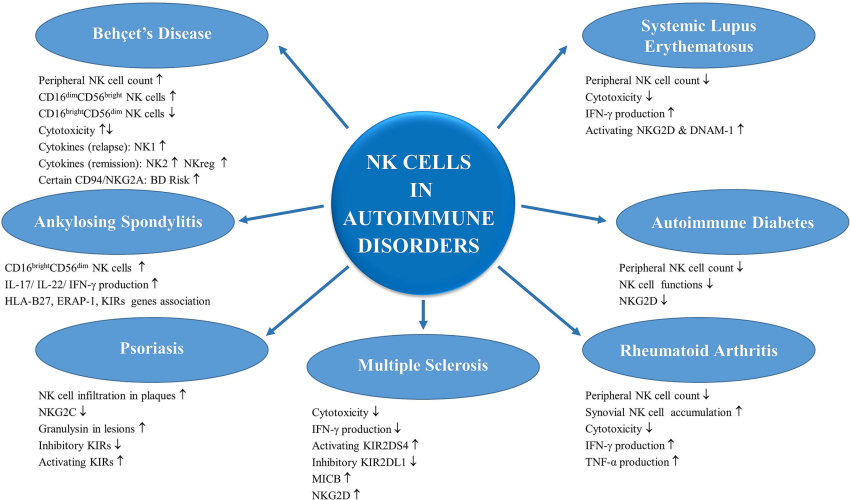 Fig.1 Contribution of NK cells in autoimmune disorders.1