Organ-on-a-chip Model Introduction
Organ-on-a-Chip (OoC) technology represents a groundbreaking advancement in in vitro biomedical research, offering a transformative approach to mimic the complex microenvironments and physiological functions of human organs. These microfluidic devices replicate both the complex cellular structure and dynamic biological processes found in human organs. Organ-on-a-chip (OoC) devices surpass traditional 2D cell cultures and 3D spheroids or organoids by embedding living cells into exact microfluidic channels which establish a more physiologically relevant environment.
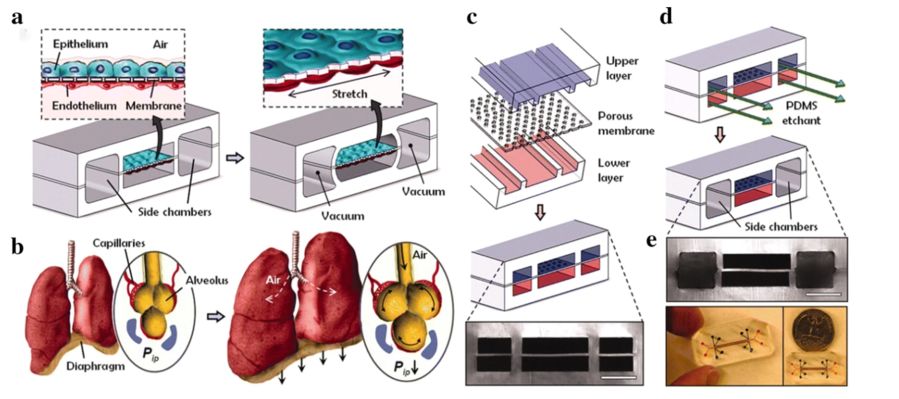 Figure 1 Lung-on-a-chip system.1,3
Development of Organ-on-a-Chip Models
Integrated Multi-Organ Systems
The latest technological developments have enabled organ-on-a-chip devices to evolve into multi-organ models which allow scientists to examine interactions between different organs. Multi-organ chips provide essential tools for studying multifaceted diseases including diabetes and cancer as well as evaluating systemic drug responses.
Integrated Multi-Organ Systems
High-Throughput Screening & Disease Modeling: The development of organ-on-a-chip platforms offers immense potential for both drug testing applications and disease simulation research. Scientists simulate disease conditions and evaluate drug performance through co-culturing different cell types on one chip which allows for comprehensive toxicity assessment
Microfluidics Integration
Organ-on-a-chip technology uses microfluidics together with 3D cell culture methods to create a dynamic organ-like environment. Researchers achieve exact regulation of nutrient delivery alongside signaling pathways and mechanical stimulation to emulate physiological conditions in an authentic manner.
Advanced 3D Cell Culture
Organ-on-a-chip platforms deliver intricate 3D structures which provide a more precise representation of real tissue morphology and function compared to conventional 2D methods. Microfluidic channels direct cell alignment through controlled flow patterns which imitate essential biological functions such as blood movement and nutrient distribution within organ systems.
Cell Sources for Organ-on-a-Chip Models
|
Cell Source Category
|
Key Characteristics
|
Advantages
|
Disadvantages
|
|
Primary Cells
|
Directly taken from human or animal tissues (e.g., liver, lung, heart). They keep much of their natural function and behavior.
|
Closely resemble in vivo (in-body) physiology; offer highly relevant data.
|
Limited availability; difficult to obtain; short lifespan in culture; significant variability between donors.
|
|
Immortalized Cell Lines
|
Genetically altered cells that can grow indefinitely in the lab (e.g., Caco-2, HepG2).
|
Easy to grow, readily available, and very consistent (reproducible results).
|
Often lose specific organ functions and natural characteristics; may not accurately reflect real human biology.
|
|
iPSC-Derived Cells
|
iPSCs are adult cells reprogrammed into a stem-cell state, then differentiated into specific organ cells (e.g., iPSC-derived cardiomyocytes, neurons). Can be patient-specific.
|
Unlimited supply; can create patient-specific models for personalized medicine; can be differentiated into almost any cell type.
|
Differentiation is complex and time-consuming; derived cells might not be fully mature; can have variability between different iPSC lines.
|
|
Co-culture Systems
|
Combine two or more of the above cell types within the same chip (e.g., lung cells with endothelial cells).
|
Recreate complex tissue interactions and cellular environments, leading to more realistic models.
|
Increased complexity in setting up and maintaining the culture; requires careful balancing of different cell types.
|
Types of Organ-on-a-Chip Models
Organ-on-a-Chip technology versatility enables scientists to create diverse models that replicate particular organ functions and disease conditions. Researchers classify these technologies into one type that focuses on individual organs and another that combines multiple organs into a "human-on-a-chip" system.
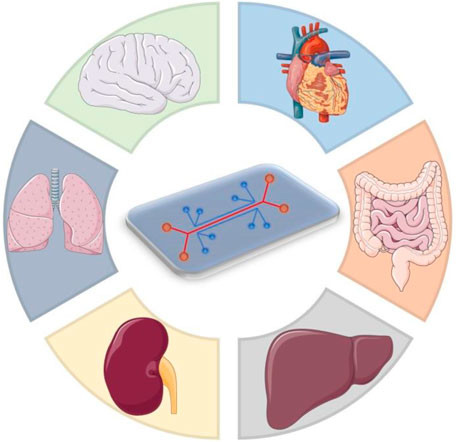 Figure 2 Multi-organ chip platform for disease modeling.2,3
Single-Organ-on-a-Chip Models
The primary focus of these devices is to duplicate the microarchitecture and function found within a single organ. These models serve as critical tools for conducting comprehensive research on the physiology, pathophysiology, and pharmacological responses specific to individual organs. Examples include:
Multi-Organ-on-a-Chip Models
The main goal of multi-organ chips which are also called body-on-a-chip or human-on-a-chip models is to connect various organ-on-a-chip systems to model how different body organs interact with each other. These models provide a more complete representation of how drugs, diseases, and environmental factors affect the entire system.
-
Gut-Liver-on-a-Chip: The design of the Gut-Liver-on-a-Chip enables researchers to study drug absorption in the gut and subsequent liver metabolism which offers a complete perspective on oral drug bioavailability and first-pass metabolism.
-
Lung-Liver-on-a-Chip: The Lung-Liver-on-a-Chip platform helps analyze how inhaled compounds affect the body because they get absorbed by the lung tissue before liver metabolism processes them.
-
Integrated Four-Organ Chip (e.g., Intestine-Liver-Skin-Kidney): Scientists create advanced systems for evaluating systemic toxicity and drug interactions among different organs to build preclinical models that better resemble human physiology.
Organ-on-a-Chip vs. Traditional Cell Cultures
|
Feature
|
Traditional 2D Cell Culture (Flat Dish)
|
3D Cell Culture (Spheroids, Organoids)
|
Organ-on-a-Chip (OoC) Models
|
|
Environment
|
Cells in a single flat layer.
|
Cells grow in 3D clumps/structures.
|
Cells in microfluidic channels mimicking organ structure and flow.
|
|
Physiology
|
Very basic; doesn't mimic real body.
|
Better; some 3D structure and cell interaction.
|
High; mimics key organ functions, flow, and forces.
|
|
Complexity
|
Simple.
|
Moderate.
|
High; involves microfabrication and dynamic control.
|
|
Cost
|
Low.
|
Moderate.
|
High initial setup.
|
|
Drug Testing
|
Low prediction for human response.
|
Improved prediction; better for specific tissue effects.
|
High prediction for human response; organ-specific and systemic.
|
|
Disease Modeling
|
Limited.
|
Good for basic disease aspects.
|
Excellent; dynamic, realistic disease progression.
|
|
Real-time Monitoring
|
Easy.
|
Challenging due to 3D opacity.
|
Excellent; transparent, integrated sensors allow real-time insights.
|
|
Applications
|
Basic cell studies, initial toxicity screens.
|
Early drug efficacy, specific disease mechanisms, personalized medicine.
|
Advanced drug discovery, disease modeling, personalized medicine, safety pharmacology.
|
Frequently Asked Questions
Q: Why are Organ-on-a-Chip models considered superior to animal models for certain applications?
A: OoC models use human cells to overcome species-specific variations that create inconsistencies between animal research findings and actual human clinical results. These models provide data applicable to humans which helps predict drug success and toxicity levels, thus lowering the failure rates of clinical trials. OoC supports ethical guidelines by minimizing the need for animal testing.
Q: What types of cells are typically used in Organ-on-a-Chip models?
A: Primary human cells extracted directly from tissues and cells derived from induced pluripotent stem cells represent standard resources for researchers. Primary cells provide direct physiological relevance while their availability and lifespan remain constrained. iPSC-derived cells are an endless supply which enables patient-specific model creation for personalized medicine and disease research but their maturity requires careful evaluation.
Q: Can multi-organ-on-a-chip systems fully replicate the human body?
A: Multi-organ chips establish connections between multiple organ units to recreate inter-organ communication and systemic effects such as ADME and systemic toxicity but fall short of reproducing the full human body complexity including the comprehensive interactions of the nervous, endocrine, and immune systems and the entire circulatory network. These systems focus on reproducing essential systemic interactions that are important for drug development purposes.
Conclusion
The organ-on-a-chip model represents groundbreaking technology through the integration of biology with engineering and materials science. Researchers can recreate human organ microenvironments and functions in vitro with organ-on-a-chip technology which presents a physiologically accurate substitute to conventional cell culture techniques and animal experiments. The use of microfluidic devices with meticulously engineered substrates and scaffolds enables organ-on-a-chip models to recreate cell - cell interactions while also replicating mechanical forces and dynamic nutrient and waste exchange. Organ-on-a-chip models serve as essential tools across multiple biomedical fields including drug development and disease modeling while supporting toxicology tests and personalized medicine approaches.
Discover What Creative Biolabs Can Offer You
Creative Biolabs leads the industry in delivering state-of-the-art OoC technology solutions that enable researchers and pharmaceutical companies to speed up their biomedical research advancements. Our team possesses complete knowledge of OoC development and application to deliver high-quality models that ensure reproducibility and physiological relevance across varied research domains.
At Creative Biolabs, we offer a comprehensive range of services and products related to organ-on-a-chip technology. Our team of experts can tailor the chip design according to specific research requirements, whether it's a simple single organ-on-a-chip or a more complex multi-organ-on-a-chip system that simulates the interactions between different organs in the human body. Contact us today to learn more!
References
-
Wu Q, Liu J, Wang X, et al. Organ-on-a-chip: recent breakthroughs and future prospects. Biomedical engineering online, 2020, 19: 1-19. https://doi.org/10.1186/s12938-020-0752-0
-
Danku A E, Dulf E H, Braicu C, et al. Organ-on-a-chip: a survey of technical results and problems. Frontiers in bioengineering and biotechnology, 2022, 10: 840674. https://doi.org/10.3389/fbioe.2022.840674
-
Distributed under Open Access license CC BY 4.0, without modification.
Research Model
Related Sections: