The sequencing methods of 16S, 18S, and ITS (internal transcribed spacer) genes are widely employed for the identification and classification of microorganisms within intricate biological mixtures, such as gut samples and environmental samples. As a pioneering NGS service provider, Creative Biolabs offers a comprehensive suite of solutions tailored for 16S/18S/ITS amplicon sequencing, distinguished by their cost-effectiveness and practicality, enabling you to delve into the microbial community with ease.
Overview of 16S/18S/ITS Sequencing
16S/18S/ITS sequencing involves extracting DNA from environmental samples, selecting appropriate universal primers to amplify specific regions of 16S/18S/ITS, and sequencing these target regions in both forward and reverse directions. By examining the sequence variations and abundances within these target regions, researchers can analyze various aspects of the environmental samples, including species classification and abundance, population structure, phylogeny, and community comparisons. Gradually, 16S/18S/ITS sequencing has emerged as a powerful method for microbial identification and phylogenetic studies of samples derived from complex microbiomes or environments.
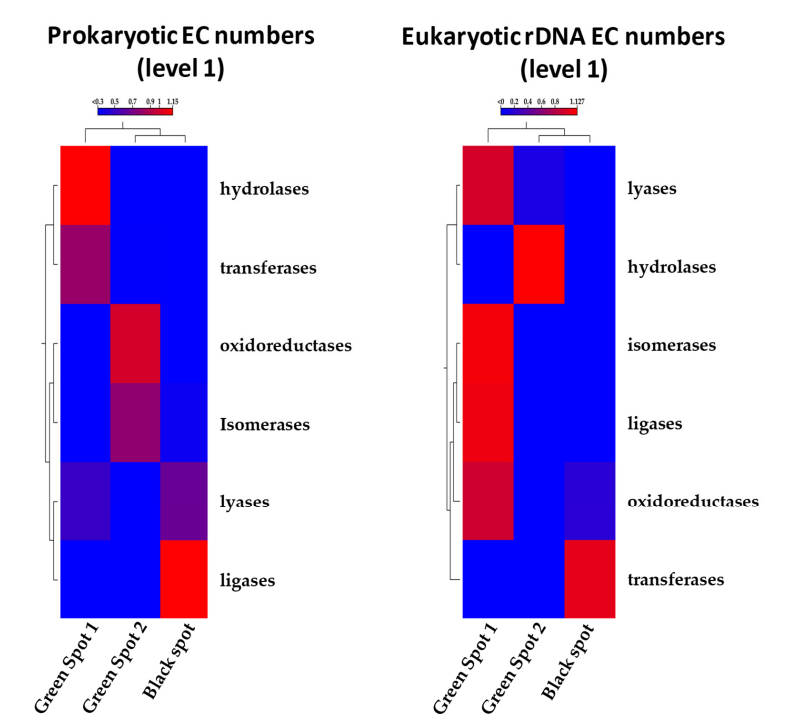 Fig.1 Heatmap showing the relative abundances of predicted enzyme classes by PICRUSt2 across the three different sampling points.1
Features of 16S/18S/ITS Sequencing
- High Precision
The versatility of 16S/18S/ITS sequencing lies in its ability to target one or multiple variable regions. This flexibility not only allows for longer sequence reads but also enhances the accuracy of colony analysis. By examining multiple regions, researchers can gain a more comprehensive understanding of microbial diversity and population structure.
- High Efficiency
In comparison to traditional techniques, such as cloning and/or culturing, the application of 16S/18S/ITS sequencing for microbiota analysis stands out as a significantly faster and more precise method. It circumvents the time-consuming and labor-intensive processes associated with traditional methods, offering a streamlined approach to microbial identification.
- Cost-Effectiveness
When compared to metagenomic sequencing, 16S/18S/ITS sequencing demands much less sequencing depth. This translates into substantial cost savings, making it a more economically viable option for researchers working with limited budgets or large sample sizes.
- Heightened Sensitivity
One of the remarkable advantages of 16S/18S/ITS sequencing is its exceptional sensitivity. This method is capable of identifying even extremely low abundance bacteria, which might be missed by other less sensitive techniques. This high sensitivity ensures a more comprehensive and accurate representation of the microbial community present in the sample.
Project Workflow
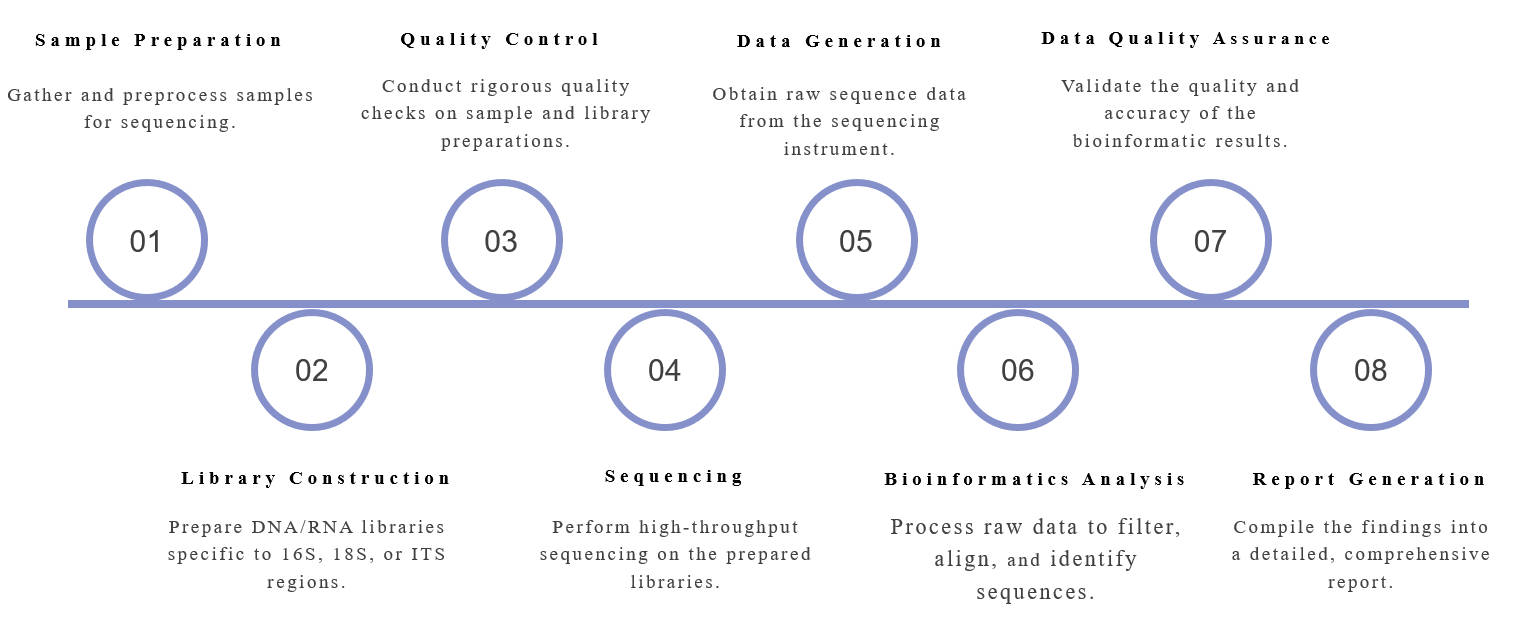
From inception to results reporting, we closely monitor your samples throughout the entire process. Experienced laboratory professionals adhere to stringent quality procedures to ensure the integrity of the outcomes.
Why Creative Biolabs?
- Comprehensive Insights
With our high-throughput sequencing technology, we provide deep and detailed insights into the microbial communities present in your samples.
- High Accuracy and Reliability
We utilize advanced bioinformatics tools and rigorous quality control measures to ensure that your sequencing data is reliable and reproducible.
- Fast Turnaround Times
Our efficient workflow and automated systems allow us to process and analyze your samples quickly, without compromising on quality.
- Reliable Consultation
Our team of experienced bioinformaticians is available to provide expert consultation and support throughout your project.
Applications
- Environmental Science
Gain insights into the microbial communities present in soil, water, and air in order to evaluate the health of ecosystems and assess pollution levels.
- Agriculture
Optimize crop yields and soil health by identifying beneficial and pathogenic microorganisms.
- Clinical Microbiology
Identify and closely monitor microbial infections and patterns of antibiotic resistance among patients.
- Biotechnology
Discover novel microbial enzymes, metabolites, and biopharmaceuticals for industrial applications.
Contact us today to explore our extensive 16S/18S/ITS sequencing services and how they can expedite your research.
Reference
- Tsouggou, Natalia, et al. "16S and 18S rDNA Amplicon Sequencing Analysis of Aesthetically Problematic Microbial Mats on the Walls of the Petralona Cave: The Use of Essential Oils as a Cleaning Method." Microorganisms 11.11 (2023): 2681. Distributed under Open Access license CC BY 4.0, without modification.
For Research Use Only.