Are you currently facing long drug development cycles, difficulty in developing high-specificity antibodies, or challenges in streamlining complex clinical trials? Our Creative Biolabs Bispecific Antibody (BsAb) Conjugates Generation Services helps you accelerate drug discovery and obtain highly specific and functional therapeutic candidates through advanced recombinant DNA technology and innovative protein engineering techniques, establishing a new paradigm in targeted delivery.
Contact our team to get an inquiry now!
The development of therapeutic antibodies has evolved from traditional monoclonal antibodies (mAbs) toward increasingly sophisticated molecular architectures, among which bispecific antibodies (BsAbs) represent one of the most powerful and versatile platforms in modern biologics. Beyond dual-target recognition, the next major innovation in this field is the functionalization of antibodies through precise chemical or site-specific conjugation with diverse functional moieties.
Antibody-Functionality Conjugates (AFCs) integrate the exquisite target specificity of antibodies with additional functional components-such as fluorescent probes, polyethylene glycol (PEG), cytotoxic payloads, imaging agents, or immune-modulating molecules-thereby enabling enhanced pharmacokinetics, controlled biodistribution, real-time tracking, and targeted cytotoxicity. In the context of bispecific antibodies, functional conjugation further expands therapeutic potential, enabling the creation of next-generation modalities, including Bispecific ADCs, imaging-enabled BsAbs, and long-acting engineered constructs.
As a specialized service provider in bispecific antibody engineering, we provide an end-to-end Antibody-Functionality Conjugates Generation Service designed to deliver robust, scalable, and application-ready conjugates tailored to your research and development objectives.
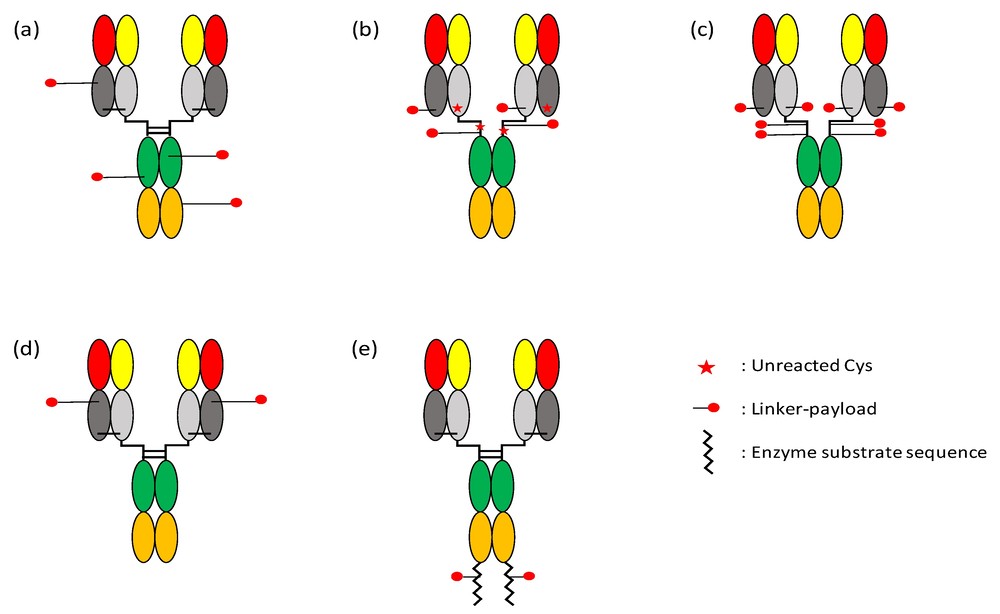 Fig.1 The structure and conjugation methods of ADCs.1
AFCs expand therapeutic and diagnostic antibody potential by enabling non-antibody functionalities. Key applications leverage the antibody's precision targeting to deliver a specific mechanism of action:

Choosing Creative Biolabs for your Antibody-Functionality Conjugates Generation needs means leveraging deep expertise in complex bioconjugation and antibody engineering. Our unique advantages include stable cell lines that ensure high-titer production, enabling faster turnaround times and competitive pricing. We specialize in non-traditional formats and chemistries, allowing for the conjugation of sensitive payloads and the creation of novel therapeutic modalities with superior pharmacological profiles.
Experience the Creative Biolabs Advantage - Get a Quote Today
A: Achieving high linkage stability is crucial to prevent premature payload release in vivo. The best practices involve prioritizing site-specific conjugation techniques (such as engineered cysteines, enzymatic methods, or unnatural amino acid incorporation) over random attachment. This precise control optimizes the stoichiometry and provides robust covalent bonds.
A: A variety of non-IgG formats are employed, including smaller, fragment-based constructs like Tandem scFvs. These are often chosen for enhanced tissue penetration into solid tumors. However, they typically require chemical modifications, like PEGylation or fusion to serum albumin binders, to compensate for their inherently shorter half-life compared to full-length BsIgGs.
A: Critical characterization focuses on confirming homogeneity and functionality. Key techniques include Mass Spectrometry (MS) for precise molecular weight confirmation and verification of conjugation sites, and Hydrophobic Interaction Chromatography (HIC-HPLC) or similar methods to accurately determine the Drug-to-Antibody Ratio (DAR) distribution, which is essential for batch consistency and safety.
A: Mitigating immunogenicity starts at the design stage. Primary strategies involve utilizing human or fully humanized antibody scaffolds and conducting in silico de-immunization screening. Sequence optimization, particularly in linker and hinge regions, minimizes the presence of T-cell epitopes, leading to a safer, more tolerable therapeutic profile.
A: A single BsAb conjugate provides superior advantages: Controlled Stoichiometry (guaranteed 1:1 dual targeting) and Homogeneity. This results in predictable pharmacokinetics and more efficient target cell engagement (e.g., T-cell redirection). A simple mAb combination, by contrast, relies on simultaneous binding of two separate molecules, which is less efficient and highly susceptible to differences in individual mAb PK profiles.
Reference
Welcome! For price inquiries, we will get back to you as soon as possible.
INQUIRY





SERVICES
PRODUCTS
PLATFORMS