Are you currently facing molecular heterogeneity, suboptimal therapeutic windows, or payload toxicity challenges common in first-generation Antibody-Drug Conjugates (ADCs)? Our Antibody-Peptide Conjugates (APC) Generation Service helps you accelerate the development of next-generation biologics through innovative peptide engineering, site-specific bioconjugation, and enhanced linker stability.
Contact our team to get an inquiry now!
Antibody-Peptide Conjugates (APCs) are novel targeted agents that combine the high specificity of antibodies with the versatile function of peptide payloads (e.g., enzyme inhibitors, toxins, or imaging agents). This modularity offers significant advantages over Antibody-Drug Conjugates (ADCs), particularly in creating constructs with controlled physicochemical properties, lower overall molecular weight, and the capacity to exploit new therapeutic mechanisms such as protein-protein interaction inhibition. The field is rapidly gaining momentum, driven by advances in peptide synthesis and site-specific ligation chemistry, positioning APCs as a cornerstone of next-generation targeted therapy development.
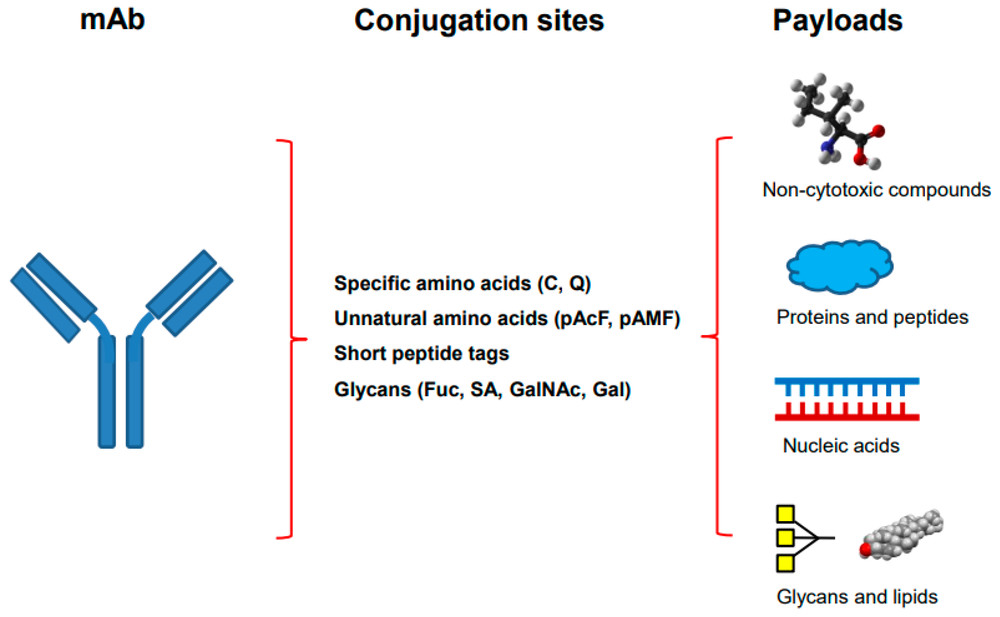 Fig.1 The site-specific antibody conjugation.1
In conventional monoclonal antibodies, antigen recognition is achieved through six complementarity-determining regions. Conversely, for chemically programmed antibodies, peptides mediate the antigen binding; this process is site-specific and enables covalent attachment to the antibody framework via "chemical programming". The antibody framework confers upon the peptides an extended half-life, Fc domain-driven effector functions, and the bivalent character inherent to conventional mAbs. Furthermore, the scaffold antibody enhances the capacity to disrupt interactions between ligands and receptors. Assembling a complete antibody-peptide conjugate necessitates four components: a scaffold antibody, a peptide pharmacophore, a reactive moiety, and a linker that separates the pharmacophore from the reactive group. The supporting antibody can be full-length IgGs or fragmented versions. Additionally, the pharmacophores may take the form of peptidomimetics, DNA/RNA aptamers, or additional small molecules. Coupling the pharmacophores to the scaffold antibody depends on distinctive reactive centers.
The unique APC design enables a broad range of applications in therapeutics and diagnostics:
Creative Biolabs offers a decisive advantage in the competitive biopharma landscape by leveraging specialized expertise in linker chemistry and advanced bioconjugation methods, providing superior control and product homogeneity far beyond what standard, stochastic conjugation methods can achieve.
Experience the Creative Biolabs Advantage - Get a Quote Today
A: APCs often provide a superior balance of efficacy and safety. The smaller size and chemical versatility of peptide payloads, compared to typical small-molecule drugs, facilitate easier conjugation control and result in high homogeneity (consistent Drug-to-Antibody Ratio, DAR). This precision minimizes molecular heterogeneity and ensures predictable payload release, contributing to a wider therapeutic window and reduced off-target toxicity.
A: BsAPCs are primarily used in oncology for the targeted delivery of inhibitory or cytotoxic peptides. Their versatility also supports applications in infectious and autoimmune disorders. BsAPCs are most advantageous when the target requires dual-binding specificity or when the payload needs to overcome biological barriers to achieve intracellular target engagement.
A: While mAbs are effective carriers, using a BsAb significantly enhances therapeutic versatility. A BsAb can simultaneously engage two distinct antigens, offering superior tumor selectivity or enabling targeted transport across a biological barrier, such as the blood-brain barrier.
A: Maintaining stability is critical to a conjugate's success. This is achieved primarily through the meticulous design and selection of the chemical linker to resist degradation by plasma enzymes and hydrolysis. Furthermore, using site-specific conjugation methods is crucial to avoid modifying the antibody's essential binding or structural domains.
A: The scaffold's primary role is to confer drug-like properties onto the peptide pharmacophore. These properties include a long serum half-life, Fc-mediated effector functions (such as ADCC or CDC), and bivalence, while maintaining target specificity and augmenting the pharmacophore's ability to interfere with ligand-receptor interactions.
Reference
Welcome! For price inquiries, we will get back to you as soon as possible.
INQUIRY





SERVICES
PRODUCTS
PLATFORMS