Are you currently facing challenges in developing effective immunotherapies for solid tumors due to antigen escape, T-cell exhaustion, or systemic toxicity? Our Bispecific Fusion Proteins Generation Services helps you accelerate the development of potent, high-specificity therapeutics through innovative T-Cell Receptor (TCR)-fusion construct engineering and robust BsIgG (Bispecific IgG) platforms.
Contact our team to get an inquiry now!
In recent years, bispecific antibodies (BsAbs) have emerged as a powerful immunotherapeutic modality by simultaneously engaging tumor-associated antigens and immune effector cells, thereby promoting targeted immune activation. However, conventional BsAb formats often rely on indirect immune synapse formation and can suffer from suboptimal signal integration, limited persistence of effector cells, and insufficient control over T-cell activation strength. To address these limitations, a new class of engineered receptors, termed Antibody-TCR Fusions, has been developed by integrating the antigen-binding domain of an antibody with the intracellular signaling machinery of the T-cell receptor (TCR) complex.
Antibody-TCR Fusions combine the high-affinity, MHC-independent target recognition of antibodies with the finely tuned, physiologic signaling architecture of the native TCR-CD3 complex. In contrast to classical CAR constructs, which employ synthetic signaling domains, Antibody-TCR Fusions preserve the full TCR signaling network, enabling more balanced T-cell activation, improved functional persistence, and reduced tonic signaling. Functionally, this design allows the precision targeting advantages of bispecific antibodies to be directly coupled to endogenous T-cell signaling pathways, thereby creating a more natural and durable immune response against tumor cells. Consequently, Antibody-TCR Fusion platforms represent a promising next-generation strategy that extends the conceptual framework of bispecific antibodies into the realm of engineered cellular immunotherapy, particularly for the treatment of solid tumors where conventional BsAb and CAR approaches face significant challenges.
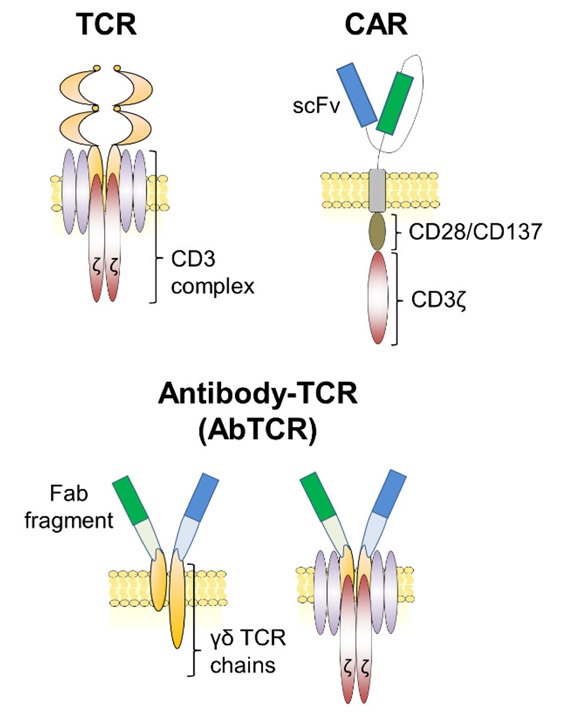 Fig.1 Schematic of antibody-TCR futions.1
By preserving physiological TCR signaling while enabling MHC-independent antigen recognition, Antibody-TCR Fusions overcome several fundamental limitations of conventional bispecific antibodies and CAR-based therapies, resulting in superior functional performance and therapeutic potential.
Antibody-TCR Fusions retain the complete TCR-CD3 signaling complex, allowing signal transduction to occur through endogenous activation pathways. This ensures balanced activation, proper co-stimulation, and controlled effector responses, closely mimicking natural immune synapse signaling.
By leveraging native TCR signaling networks, Antibody-TCR Fusion-engineered T cells demonstrate improved persistence, memory formation, and sustained cytotoxic activity, which are critical determinants of durable clinical responses.
The antibody-derived recognition domain enables targeting of surface antigens without MHC restriction, expanding patient applicability and bypassing common tumor immune evasion mechanisms involving MHC downregulation.
The enhanced signal fidelity and persistence of Antibody-TCR Fusion-engineered T cells allow them to maintain functionality within immunosuppressive tumor microenvironments, where conventional bispecific antibodies and CAR-T therapies often fail.
Creative Bioabs specializes in constructs that provide superior potency and a wider therapeutic window by harnessing the power of the T-cell receptor. We leverage advanced structural modeling to ensure optimal chain pairing, dramatically reducing mispaired by-products that complicate downstream purification and regulatory approval.
Experience the Creative Biolabs Advantage - Get a Quote Today
A: While CAR-T excels in hematological malignancies, solid tumors often exhibit resistance due to signaling deficiencies inherent to the CAR structure. TCR-Fusion constructs (TruC) are designed to utilize the entire native T-cell receptor (TCR) complex for signaling. This results in more physiological T-cell activation, leading to better persistence, reduced T-cell exhaustion, and more favorable cytokine release profiles, which is crucial for effective infiltration and function within the hostile solid TME.
A: Enhancing safety involves two key strategies: highly stringent in silico target screening to predict and avoid potential on-target, off-tumor toxicity, and using low-affinity, optimized CD3 ε-binding domains. The optimized affinity ensures T-cell activation is dependent on multivalent binding to the tumor target, effectively decoupling potent cytotoxicity from non-specific systemic cytokine release (CRS).
A: Complex binding domains require advanced engineering. Techniques include optimizing linker design for flexibility and resistance to protease cleavage, and utilizing scaffolding method to enhance the structural stability and affinity of low-avidity TCRs or scFvs. These methods are critical for generating a stable, manufacturable therapeutic molecule.
A: A robust pre-clinical data package must confirm the quality, purity, and potency of the molecule. Key requirements typically include a detailed Certificate of Analysis (CoA), validation of high monomer purity (e.g., SEC-HPLC), quantification of process-related impurities like endotoxin levels, and extensive functional data, such as target-specific EC50 values and in vitro cytotoxicity against target-positive cell lines.
A: Fragment-based bispecifics often have short half-lives. Strategies to enhance pharmacokinetics primarily involve incorporating elements that facilitate FcRn-mediated recycling. This is achieved by engineering the molecule with an inert Fc domain (e.g., BsIgG format) or, alternatively, conjugating the fragment to a long-lived protein like serum albumin or a specific albumin-binding domain, thus dramatically extending the molecule's residence time in circulation.
Reference
Welcome! For price inquiries, we will get back to you as soon as possible.
INQUIRY





SERVICES
PRODUCTS
PLATFORMS