Are you currently facing complex challenges in developing next-generation biotherapeutics or achieving translational success with short-lived molecules? Our Fc Fusions Generation Service helps you obtain stable, customized therapeutic candidates and streamline preclinical development through innovative protein engineering and modular assembly technologies. This significantly de-risks your pipeline and accelerates time-to-market.
Contact our team to get an inquiry now!
In the evolving landscape of biotherapeutics, the antibody Fc region has transcended its natural role as an immune effector to become a sophisticated structural scaffold. By leveraging the Fc domain as a homodimeric or heterodimeric backbone, protein engineers can strategically "tinker" with molecular geometry, grafting diverse antigen-binding domains at both the N-terminal and C-terminal ends. This modularity allows for the creation of multi-specific and multi-valent constructs tailored for complex therapeutic mechanisms.
The "plug-and-play" nature of the Fc scaffold enables the integration of various binding moieties, including Fabs, scFvs, VHHs, and even non-antibody scaffolds or TCRs. Depending on the desired valency and geometry, several distinct architectures can be achieved:
Creative Biolabs provides a full range of featured Fc Fusion products, including but not limited to:
| scFv-Fc | scFv-Fc-scFv |
| tandem scFv-Fc | VHH-Fc-VHH |
| Diabody-Fc | …… |
Using the Fc region as a central backbone offers several critical pharmacological and industrial benefits that are essential for clinical success:
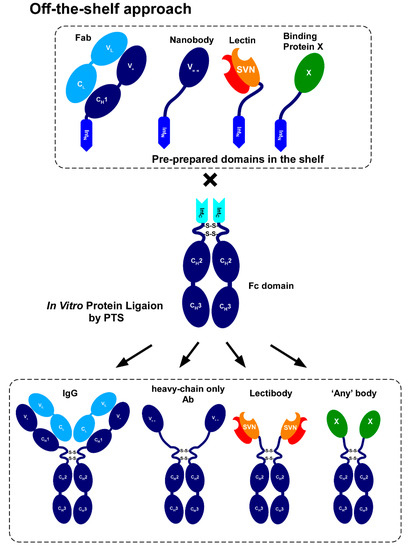 Fig.1 Off-the-shelf approach for in vitro production of Fc fusion by protein ligation.1

Creative Biolabs stands at the forefront of protein engineering, specializing in advanced Fc-fusion strategies that are designed for translational success. Our deep expertise and innovative platforms minimize the financial and scientific risks associated with novel biotherapeutic development.
Experience the Creative Biolabs Advantage - Get a Quote Today
A: Domains requiring complex N-linked glycosylation or specialized disulfide bond patterns necessitate mammalian expression systems (CHO, HEK) to provide the correct post-translational modification machinery. For proteins with simpler folding requirements, prokaryotic or yeast systems can offer faster, high-yield production. Regardless of the system, rigorous Quality Control (QC) assays, such as SEC and Mass Spectrometry-based analysis, are essential to confirm structural integrity, purity, and correct folding before any further development.
A: PEGylation extends half-life primarily by increasing the molecule's hydrodynamic size, thereby hindering renal clearance. In contrast, Fc fusions utilize a biological mechanism: active recycling through the neonatal Fc receptor (FcRn). At acidic pH (in the endosome), the Fc domain binds FcRn, protecting the molecule from lysosomal degradation and recycling it back into the circulation at physiological pH. This biological pathway often results in superior PK profiles and minimizes the risk of reduced target binding affinity sometimes associated with steric modification.
A: Multivalency, achieved through specialized engineering techniques (e.g., incorporating the IgM J-chain or designed oligomerization tags), dramatically enhances functional avidity. While intrinsic binding affinity (KD) may remain the same, the simultaneous binding of multiple therapeutic moieties to cell surface targets results in exponentially stronger and more durable binding. This increase in avidity is critical for inducing cellular cross-linking, enhancing receptor clustering, or boosting immunogenicity (e.g., in vaccine platforms).
A: Suitability for in vivo studies depends on demonstrating high purity, low endotoxin levels, and confirmed functionality. Essential analytical methods include SEC (to confirm low aggregation and ≥95% purity), SPR or ELISA (to confirm target binding and kinetic data), and specialized FcRn binding assays across the relevant pH range (e.g., pH 6.0 vs. pH 7.4) to accurately predict serum half-life. Endotoxin testing is non-negotiable for injection safety.
A: Successful construct design requires the coding sequence of the therapeutic moiety, detailed specifications for the linker (length, sequence, flexibility) to minimize steric clashes between the domains, and the desired Fc isotype (e.g., IgG1 vs. IgG4) to control potential effector function. Furthermore, understanding the functional constraints of the therapeutic moiety is key to selecting the optimal Fc format (dimer, trimer, or hexamer) and expression host.
Reference
Welcome! For price inquiries, we will get back to you as soon as possible.
INQUIRY





SERVICES
PRODUCTS
PLATFORMS