
Creative Biolabs has been at the forefront of exploring extracellular vesicles derived from protozoa, particularly Acanthamoeba, and we offer comprehensive research services to support studies focusing on protozoan-derived exosomes. With growing interest in their roles in biology and medicine, understanding these vesicles provides unique insights into host-pathogen interactions, environmental adaptation, and potential therapeutic applications. The cargo within Acanthamoeba exosomes reflects the physiological state of the parent amoeba and adapts to environmental changes, which can enhance survival in challenging habitats such as water systems, soil, and decaying organic matter.
Beyond their biological functions, Acanthamoeba-derived exosomes hold promising applications in biotechnology and medicine. They are being investigated as potential drug delivery systems, biomarkers for disease, and even as candidates for novel therapeutic interventions. Studying these vesicles opens avenues not only for understanding protozoan biology but also for developing innovative solutions in environmental science, infectious disease research, and bioengineering.
| Research Focus | Methodology | Key Findings |
|---|---|---|
| Isolation of exosomes | Ultracentrifugation | Successful isolation of exosomes from multiple Acanthamoeba genotypes, confirming reproducibility across strains. |
| Quantification and sizing | Nanoparticle Tracking Analysis (NTA) and Transmission Electron Microscopy (TEM) | Exosomes exhibited consistent size distribution and concentration across different genotypes. |
| Protease activity profiling | Zymography assays | Serine protease activity was detected, highlighting their potential role in host-pathogen interactions. |
| Immunomodulatory function | Stimulation of peritoneal macrophages followed by cytokine and nitrite quantification | Exosomes from non-pathogenic environmental strains triggered stronger inflammatory responses, while protease disruption attenuated these effects. |
TEM imaging and detailed molecular profiling are routinely employed to validate vesicle integrity and cargo content, ensuring reproducible and high-quality results for downstream applications. Start your project or request custom assay design by contacting Creative Biolabs.
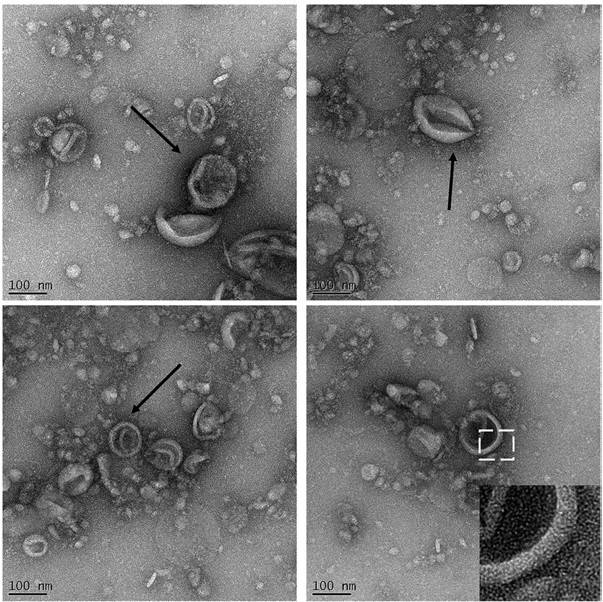 Fig.1 TEM characterization of EVs from Acanthamoeba castellanii.1
These insights highlight the dynamic nature of Acanthamoeba-derived exosomes and their potential to act as molecular messengers in both environmental and host contexts. For custom assay design and project initiation, feel free to get in touch with Creative Biolabs.
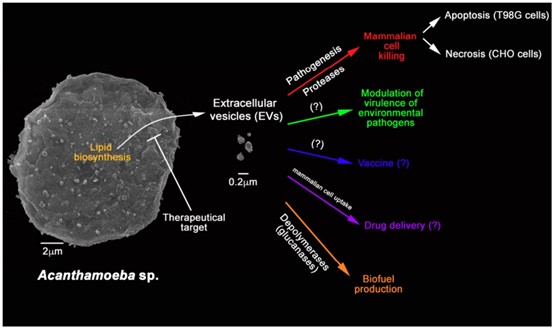 Fig.2 Functions and applications of A. castellanii-derived exosomes.2
 Versatility of Applications
Spanning the fields of medicine and biotechnology, Acanthamoeba exosomes exhibit broad application prospects. They can be engineered and utilized for multiple research and practical directions, including targeted drug delivery, novel biomarker identification, vaccine design and development, as well as biofuel-related exploration.
Environmental Relevance
The internal biomolecular cargo carried by these exosomes can dynamically reflect the real-time physiological responses of organisms under environmental stress. This characteristic renders them promising research tools for ecological monitoring and microbial mechanism studies.
Immunomodulatory Potential
Acanthamoeba exosomes are capable of regulating the activity and functions of various immune cells. Owing to this prominent immunomodulatory property, they have become compelling candidates for fundamental and translational immunological research.
Unique Molecular Profile
These exosomes possess a distinctive molecular composition in terms of proteins, lipids and nucleic acids. Such unique biochemical features clearly distinguish them from exosomes secreted by mammalian cells and other protozoan species.
Creative Biolabs offers end-to-end services, from isolation and characterization to functional assays, enabling seamless integration into your projects. Whether you need a tailored assay design or are ready to begin your project, Creative Biolabs is your ideal partner.
"The team at Creative Biolabs provided exceptional support in analyzing Acanthamoeba-derived exosomes. Their methodology was rigorous, and the insights gained were invaluable for our study of host-pathogen interactions."
— Microbial Pathogenesis Lab
"Their exosome characterization services helped us identify unique stress-response proteins in protozoan exosomes that we had not observed previously. Truly cutting-edge work."
— Department of Environmental Biotechnology
"Working with Creative Biolabs allowed us to explore the therapeutic potential of Acanthamoeba exosomes with confidence in both data quality and interpretation."
— Translational Medicine Research
Creative Biolabs is ready to assist researchers in unraveling the complex biology of protozoan-derived exosomes, providing detailed characterization and functional evaluation to advance both fundamental and applied science. Should you need customized assay design or intend to launch your project, contacting Creative Biolabs is your optimal choice.
A: Acanthamoeba-derived exosomes are unique due to their distinct biochemical composition, including specific cargoes and genetic material reflective of the amoeba's environmental adaptations. Their role in intercellular communication and host interactions may also differ significantly from exosomes derived from mammalian cells or other protozoa.
A: Research indicates that Acanthamoeba exosomes can modulate immune responses and influence the behavior of nearby cells through the transfer of bioactive molecules. They may alter signaling pathways in neighboring cells or even in non-target cells, highlighting their potential role in environmental communication and symbiosis.
A: Potential applications include their use as natural delivery vehicles for biomolecules, exploration in environmental biotechnology, and as models for studying extracellular vesicle biology due to their ability to protect and transport nucleic acids and proteins in diverse conditions.
A: Acanthamoeba-derived exosomes could serve as indicators of stress responses to environmental changes, as they may carry specific molecular signatures or stress-related proteins. Analyzing these exosomes could enhance our understanding of how this protozoan adapts and responds to various ecological stresses.
A: Acanthamoeba exosomes may facilitate interactions with other microorganisms, potentially influencing microbial community dynamics. They might play roles in protecting certain bacteria from predation or may even be involved in pathogen transmission, depending on the context and environmental conditions.
A: Future research could focus on the elucidation of the functional roles of these exosomes in complex ecosystems, their interactions with other microorganisms, and the mechanisms of cargo transfer between cells. Additionally, exploring their potential in bioremediation and as biostimulants in agriculture could also prove valuable.
References