
Plasmodium-derived exosomes actively participate in parasite development and disease progression. Studies have demonstrated that these vesicles can influence immune signaling pathways, regulate vascular endothelial responses, and contribute to parasite adaptation within the host environment. Creative Biolabs provides specialized solutions for the isolation, characterization, and functional investigation of Plasmodium-derived exosomes. Our integrated research services support studies focused on malaria pathogenesis, parasite-host communication, biomarker discovery, and the development of innovative intervention strategies targeting parasite-derived extracellular vesicles.
Obtaining highly purified exosomes is essential for accurate downstream characterization and functional studies. A typical workflow involves multiple processing steps designed to separate exosomes from infected erythrocytes and other extracellular particles.
To kick off your project or obtain a custom proposal design, feel free to contact our team at Creative Biolabs.
Detailed investigations have uncovered several distinguishing features of Plasmodium-derived exosomes that contribute to their biological significance.
Research has shown that extracellular vesicles released during malaria infection consist of multiple subtypes with unique physical and molecular properties.
Compared with exosomes, parasite-derived microvesicles generally display larger particle sizes. Despite these differences, both vesicle populations contain characteristic proteins associated with membrane organization and vesicle biogenesis, including:
These shared markers indicate overlapping biological origins while highlighting functional specialization among vesicle subpopulations.
Comparative analyses of extracellular vesicles isolated from different Plasmodium falciparum strains have demonstrated remarkable conservation of both parasite-derived and host-derived protein cargoes.
This conservation suggests that extracellular vesicle production is a fundamental biological process maintained across genetically diverse malaria parasites. Such consistency enhances the potential utility of exosomal biomarkers for diagnostic and translational applications.
Proteomic studies have identified a diverse collection of proteins within Plasmodium-derived exosomes, including:
The coexistence of parasite and host proteins within a single vesicle population highlights the complexity of host-pathogen communication during malaria infection.
If you plan to start a project or need a tailored proposal design, contact Creative Biolabs today.
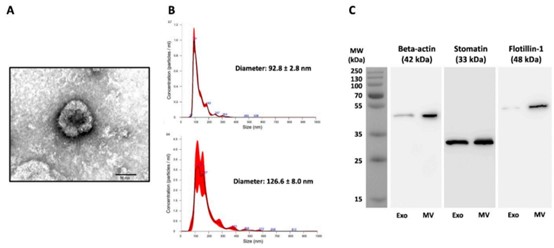 Fig.1 Characterization of Plasmodium-derived extracellular vesicle subpopulations.1
Because exosomal cargo reflects parasite activity and developmental stage, these vesicles represent promising sources of diagnostic and prognostic biomarkers.
Exosomes provide a unique platform for examining how parasites manipulate host immune responses, vascular function, and cellular signaling networks.
The presence of immunologically relevant parasite antigens within exosomes creates opportunities for evaluating vesicle-associated molecules as vaccine candidates.
Extracellular vesicles may participate in the dissemination of adaptive signals between parasite populations, making them an important area of study for understanding emerging drug resistance mechanisms.
As the field continues to evolve, Plasmodium-derived exosomes are emerging as valuable resources for multiple areas of malaria research. Creative Biolabs is ready to assist you with project launches and custom proposal design requests.
Creative Biolabs offers comprehensive support for Plasmodium-derived exosome projects through a combination of advanced analytical platforms and extensive extracellular vesicle expertise. Our capabilities include:
|
|
|
|
|
|
The growing recognition of exosome-mediated communication has transformed our understanding of malaria parasite biology. From immune regulation and parasite invasion to biomarker discovery and therapeutic innovation, Plasmodium-derived exosomes provide an exciting frontier for both fundamental and translational research. Creative Biolabs is committed to supporting scientists worldwide in advancing exosome-based malaria research through reliable, high-quality, and customizable service solutions. For project initiation and custom proposal design services, please get in touch with Creative Biolabs.
A: Isolation typically involves differential centrifugation, ultrafiltration, or size-exclusion chromatography. Characterization is commonly performed using techniques like nanopore tracking analysis (NTA), transmission electron microscopy (TEM), and various forms of mass spectrometry to identify their cargo and surface markers.
A: Commonly studied markers include protein components such as variant surface antigens, histones, and proteins associated with immune modulation. Additionally, the presence of specific RNA species, like miRNAs, can serve as biomarkers for the Plasmodium origin.
A: Plasmodium-derived exosomes may serve as potential biomarkers for malaria diagnosis due to their cargo that reflects the parasite's presence and activity. Analysis of exosomal RNA or protein content could aid in the development of non-invasive diagnostic tests.
A: These exosomes can modulate host immune responses by transferring immunomodulatory molecules that may skew T-cell responses or induce regulatory pathways, potentially leading to immune tolerance or suppression, which is beneficial for the parasite's survival.
A: Research is focused on identifying antigens presented by exosomes that stimulate strong immune responses. Exosomal antigen presentation may enhance vaccine efficacy by mimicking natural infection pathways and promoting robust humoral and cellular immune responses.
A: Challenges include the difficulty in obtaining purified exosomes free from contaminants, the complexity of their cargo composition, and the need for standardized methods for characterization and functional assays. Additionally, understanding the precise mechanisms by which they influence host interactions remains a significant area of investigation.
A: Yes, Plasmodium-derived exosomes are being used as a tool to study host-parasite interactions at a molecular level. They can help elucidate mechanisms of immune evasion, cellular communication, and the functional roles of specific exosomal components in pathogenesis.
A: Understanding the role of exosomes in malaria transmission can provide insights into how the parasite communicates with vectors and alters their physiology, potentially influencing vector competence and the overall dynamics of malaria spread in endemic regions.
A: Future research may explore the therapeutic potential of exosomes, including their use as delivery vehicles for RNA-based therapies or novel antigens. Additionally, further exploration into their role in host and vector interactions could provide critical insights into preventing malaria transmission and improving control strategies.
Reference