
Creative Biolabs provides integrated solutions for the isolation, characterization, molecular profiling, and functional investigation of Toxoplasma gondii-derived exosomes. Supported by advanced multi-omics technologies and extracellular vesicle expertise, we help researchers explore parasite-host communication, immune regulation, biomarker discovery, and vaccine development for toxoplasmosis.
Exosomes secreted by Toxoplasma tachyzoites transport proteins, lipids, and nucleic acids that influence neighboring host cells. These vesicles allow parasites to modify cellular functions without requiring direct invasion, providing an efficient strategy for manipulating the host environment.
Accumulating evidence indicates that parasite-derived exosomes participate in multiple pathological processes, including neurological disorders, congenital toxoplasmosis, and cardiac complications. Their molecular cargo reflects parasite activity and may contribute to tissue-specific disease manifestations.
The composition of Toxoplasma-derived exosomes provides valuable information regarding parasite physiology and host responses. Comprehensive profiling of these vesicles enables researchers to identify biomarkers associated with infection stages and disease severity.
As naturally occurring extracellular delivery systems, Toxoplasma-derived exosomes have become attractive targets for diagnostic development, therapeutic intervention, and vaccine research aimed at controlling toxoplasmosis.
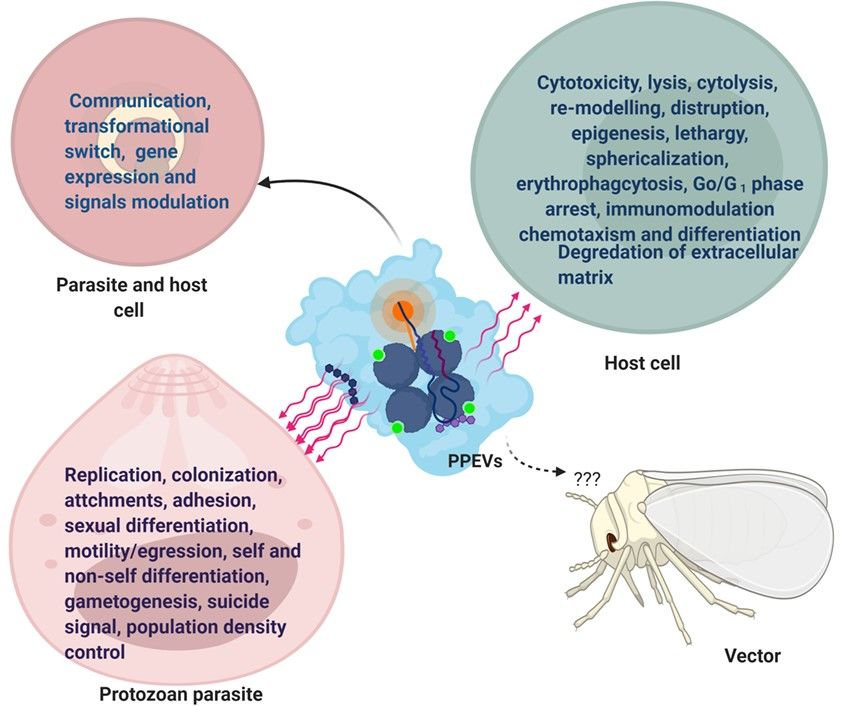 Fig.1 Functions of pathogenic protozoan EVs.1
Extracellular vesicles released by Toxoplasma gondii have emerged as important mediators of parasite-host interactions. Their complex molecular cargo enables communication between parasites and host cells, contributing to disease progression and immune modulation. Creative Biolabs offers customized exosome characterization services to support mechanistic studies and accelerate translational research. Contact our experts to discuss a tailored solution for your project.
Reliable downstream analyses require highly purified exosome preparations. Creative Biolabs offers standardized isolation workflows that preserve vesicle integrity while minimizing contaminants.
Contact us to customize an isolation strategy based on your parasite strain and experimental design.
Comprehensive molecular characterization has significantly advanced our understanding of Toxoplasma-derived exosome biology. Multi-omics analysis enables researchers to identify functional cargo molecules involved in parasite survival and host modulation.
Electron microscopy demonstrates that extracellular vesicles released by Toxoplasma possess the characteristic membrane architecture and nanoscale morphology expected of exosomes, with production varying throughout parasite incubation.
Immunoblot analyses reveal that exosomal proteins are specifically recognized by sera from chronically infected humans and experimental animals, highlighting their diagnostic and immunological significance.
Exosome exposure stimulates macrophages to increase the expression of cytokines and inflammatory mediators, including IL-10, TNF-α, and inducible nitric oxide synthase, indicating active participation in host immune regulation.
Because exosomal cargo reflects both parasite activity and host responses, these vesicles provide promising candidates for infection monitoring and biomarker discovery.
Our integrated profiling platform at Creative Biolabs can help uncover novel biomarkers and signaling pathways relevant to your research objectives.
Beyond mechanistic studies, Toxoplasma-derived exosomes have demonstrated encouraging immunoprotective properties in experimental models.
| Research Focus | Descriptions |
|---|---|
| Induction of Humoral Immunity | Immunization with parasite-derived exosomes significantly increases antigen-specific antibody production, particularly IgG1 responses associated with protective immunity. |
| Generation of Functional Antibodies | Opsonization studies demonstrate that antibodies induced by exosome immunization effectively neutralize parasites and reduce infection efficiency. |
| Reduction of Parasite Burden | Experimental challenge studies show that vaccinated animals exhibit lower parasitemia levels and improved resistance following infection. |
| Improved Survival Outcomes | Exosome-immunized animals display reduced mortality and minimal pathological alterations following chronic infection, supporting the therapeutic potential of exosome-based vaccination strategies. |
Creative Biolabs supports vaccine-oriented research through immunological evaluation and efficacy studies. Reach out to discuss customized vaccine assessment services for your exosome candidates.
Creative Biolabs combines advanced extracellular vesicle technologies with extensive parasite research expertise to provide flexible support for Toxoplasma-derived exosome projects. Whether your focus is basic biology, immunology, or translational medicine, we can develop a customized workflow to meet your research goals. Contact our scientific team to receive a personalized technical consultation and project proposal.
A: Toxoplasma-derived exosomes are rich in contents that reflect the parasite's unique biology. Key molecules often identified include surface antigens, proteases, and non-coding RNAs, which may differ in composition and function from exosomes produced by host cells or other pathogens.
A: Research indicates that Toxoplasma-derived exosomes can carry immunomodulatory molecules that influence host immune cells, potentially promoting a tolerogenic environment. These exosomes may alter cytokine profiles, affect antigen presentation, and facilitate the survival of the parasite within the host.
A: Studying Toxoplasma-derived exosomes can provide insights into the mechanisms by which the parasite evades the immune response, interacts with host cells, and establishes chronic infection. This knowledge may reveal novel targets for research into host-pathogen dynamics.
A: Toxoplasma-derived exosomes are being investigated as potential biomarkers for infection due to their unique molecular signatures. Additionally, their capacity to carry specific molecules could be leveraged for targeted delivery systems in vaccine development or as diagnostic tools to monitor Toxoplasma infections.
A: Challenges include difficulties in exosome isolation and characterization due to their small size and similar properties to host-derived exosomes. Addressing these challenges may involve the development of more specific isolation techniques and advanced imaging methods to improve detection and analysis.
A: Yes, current research is exploring the role of Toxoplasma-derived exosomes in intercellular communication, nutrient acquisition, and their potential influence on neurological functions, given the parasite's ability to manipulate host behavior.
A: Toxoplasma-derived exosomes could serve as adjuvants or carriers for vaccine antigens, enhancing immune responses due to their natural ability to interact with host cells. Investigating their use in vaccine formulations may lead to innovative approaches in preventive strategies against Toxoplasma infections.
Reference