
Neospora caninum is an intracellular protozoan parasite that represents a major cause of reproductive failure in cattle and neurological disorders in multiple animal species. In recent years, extracellular vesicles released by this parasite have emerged as important mediators of host-pathogen communication.
Neospora-derived exosomes are continuously secreted throughout the parasite life cycle and carry a variety of biologically active molecules capable of interacting with host cells. Rather than functioning solely as transport vesicles, these exosomes actively participate in immune modulation, antigen presentation, and cellular signaling. Their ability to deliver parasite-associated proteins to immune cells makes them particularly attractive for understanding infection mechanisms and developing next-generation vaccine strategies.
Creative Biolabs offers comprehensive characterization, proteomic profiling, cytokine analysis, and functional evaluation services for Neospora-derived exosomes. Our platform helps researchers uncover how parasite-derived extracellular vesicles influence host immunity and supports the development of novel prophylactic and therapeutic approaches against neosporosis.
| Research Focus | Descriptions |
|---|---|
| Morphological Identification |
Scanning electron microscopy has revealed vesicle-like structures on the surface of Neospora tachyzoites, while intracellular multivesicular body-like compartments suggest active extracellular vesicle biogenesis.
Following parasite cultivation, ultracentrifugation-based workflows can be employed to isolate highly enriched exosome populations for downstream analyses. |
| Structural Verification | Transmission electron microscopy and particle characterization studies demonstrate that Neospora-derived exosomes possess characteristic membrane-bound vesicular structures, including well-defined bilayer membranes consistent with exosomal morphology. |
| Molecular Cargo Profiling | Proteomic analyses have identified a broad range of proteins associated with parasite survival, host interaction, and immune regulation. Comparative profiling enables researchers to distinguish biologically relevant exosomal proteins from background contaminants. |
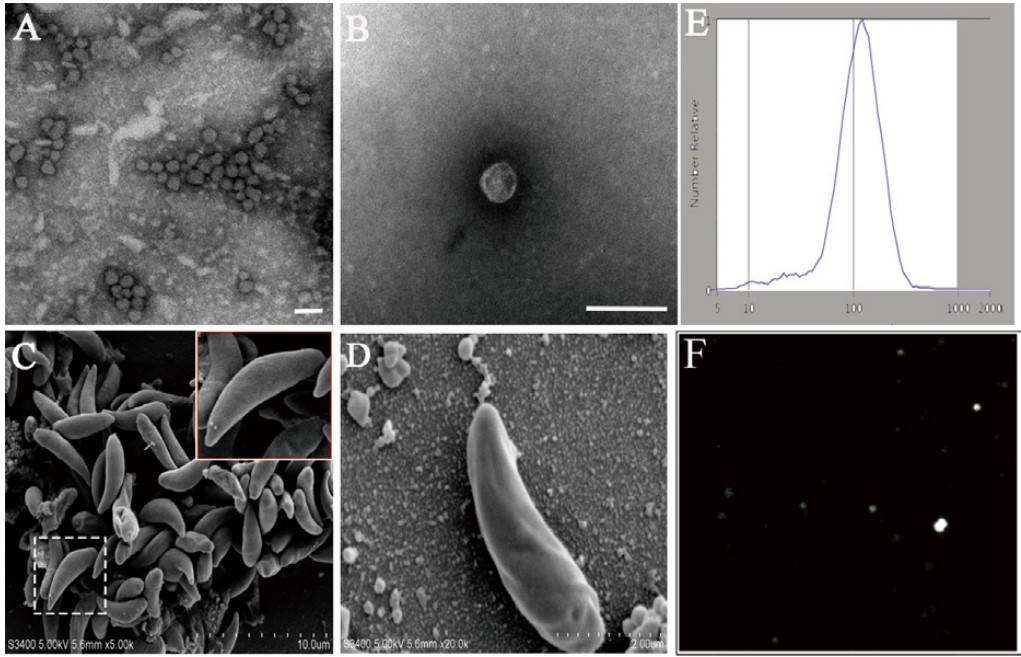 Fig.1 Neospora-derived exosome characterization.1, 3
Our exosome characterization platform can be tailored to investigate protein composition, biomarker discovery, and vesicle heterogeneity according to specific project requirements. To initiate your project or request a customized assay design, please get in touch with Creative Biolabs.
One of the most compelling features of Neospora-derived exosomes is the diversity of their molecular cargo.
Proteomic investigations have identified enrichment of multiple biologically significant proteins, including:
Importantly, many of these proteins are linked to immune signaling pathways, including:
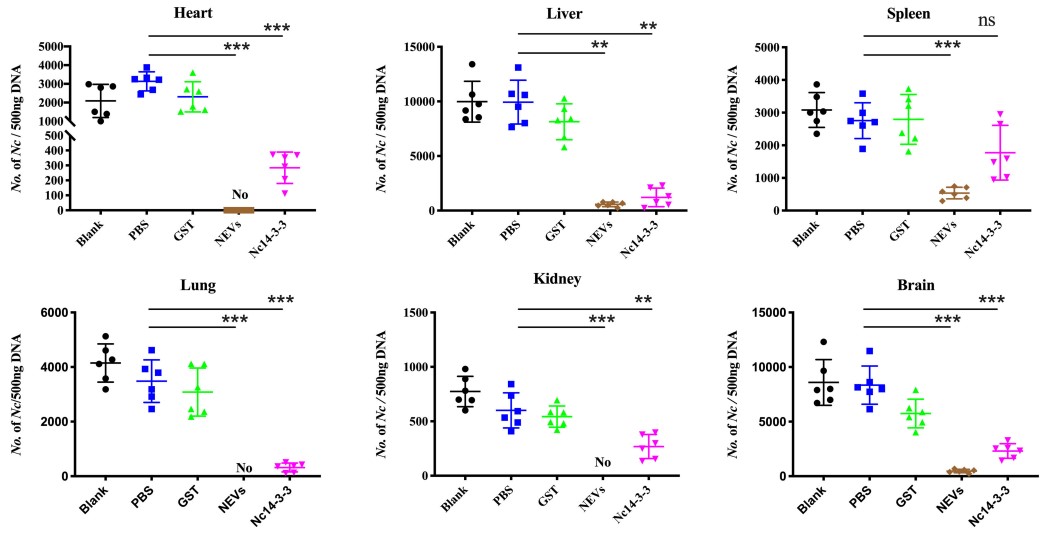 Fig.2 Mice immunized with Neospora-derived exosomes and exosomal-specific proteins exhibited decreased parasite load after infection.2, 3
The selective packaging of these molecules suggests that exosomes function as specialized delivery systems capable of influencing host cellular responses long before direct parasite invasion occurs. Researchers seeking to identify immune-relevant biomarkers or vaccine candidates may benefit from our integrated proteomic and pathway analysis solutions at Creative Biolabs.
Fluorescence labeling and confocal microscopy studies have demonstrated that Neospora-derived exosomes are readily internalized by macrophages. The intracellular fluorescence intensity increases progressively over time, indicating a continuous uptake process and successful delivery of exosomal cargo into recipient cells.
Following cellular uptake, exosomes release proteins and other signaling molecules into the cytoplasm of host cells. These cargo molecules participate in regulating cellular activities, enabling the parasite to influence immune cell behavior without requiring direct parasite invasion.
The transferred cargo can subsequently trigger multiple signaling cascades that regulate cytokine secretion, inflammatory responses, and immune activation. Investigating these pathways provides valuable insight into how Neospora establishes infection and modulates host defenses.
Understanding how Neospora-derived exosomes deliver their molecular cargo into host cells is essential for elucidating parasite-host communication. Creative Biolabs provides a range of functional assays to investigate exosome uptake, intracellular trafficking, and downstream biological responses. Contact our specialists to design a customized workflow for your uptake and functional studies.
Unlike individual recombinant antigens, exosomes simultaneously carry multiple parasite-associated proteins, including surface antigens and invasion-related molecules. This broad antigen repertoire may stimulate more comprehensive immune recognition.
Animal studies indicate that exosome immunization promotes both humoral and cellular immunity. Elevated antibody production, increased IFN-γ secretion, and expansion of CD8⁺ T cells collectively suggest a balanced Th1/Th2 immune response.
Immunized animals exhibit reduced parasite burden and improved resistance following challenge infection, supporting the feasibility of developing exosome-based vaccines for preventing neosporosis.
Growing evidence suggests that Neospora-derived exosomes possess considerable promise as naturally occurring immunogenic vesicles. Their complex antigen composition makes them attractive candidates for vaccine development and immune intervention studies. Creative Biolabs supports exosome-based vaccine research through comprehensive characterization and immunological evaluation services.
 Exosome Isolation & Characterization
Obtain highly purified exosome preparations followed by particle sizing, morphology analysis, and biomarker characterization.
Multi-Omics Profiling
Explore exosomal protein composition, signaling molecules, and immune-related biomarkers through comprehensive proteomic analysis.
Functional Assays
Evaluate exosome uptake, cytokine induction, macrophage activation, and immune signaling using customized in vitro assays.
In Vivo Research Support
Assess vaccine efficacy, parasite burden, immune protection, and pathological outcomes using established animal models.
Creative Biolabs integrates advanced extracellular vesicle technologies with extensive parasite research experience to support every stage of Neospora-derived exosome studies. Whether your project focuses on basic biology or translational applications, our scientists can develop customized solutions to meet your research objectives. Contact us today to discuss your project requirements and receive a tailored technical proposal.
A: Common techniques include differential ultracentrifugation, density gradient centrifugation, and commercial exosome isolation kits. Additionally, techniques like size-exclusion chromatography and microfluidics are being explored for more efficient isolation.
A: Neospora-derived exosomes may modulate host immune responses, facilitate communication between Neospora and host cells, and transport virulence factors. Understanding these roles helps illuminate the mechanisms of neospora persistence and pathogenicity.
A: While specific biomarkers are still under investigation, proteomic and transcriptomic analyses may reveal distinct molecular signatures within Neospora-derived exosomes that correlate with the infection status in hosts. Identifying these biomarkers could aid in developing diagnostic tools.
A: Potential applications include the development of novel biotechnological tools for disease diagnostics or monitoring, the use of exosomes in vaccine development, and the exploration of their roles in agricultural settings to improve livestock health or productivity.
A: Challenges include the difficulty in obtaining sufficient quantities of Neospora-derived exosomes due to their specific growth conditions and lifecycle, the need for advanced isolation and characterization techniques, and the complexity of their interactions with host cells, which may differ significantly from other pathogens.
A: By elucidating the mechanisms through which Neospora-derived exosomes affect host cells, researchers can develop innovative research tools to study intercellular communication. Additionally, insights into their cargo could lead to new approaches to preventing infection or enhancing immune responses.
A: Limitations include the lack of appropriate animal models fully reflecting Neospora infections in natural hosts and difficulties tracking exosome distribution and uptake in vivo. Further research is needed to understand their functional implications in complex biological systems.
References