The current medications against bacterial agents are losing their efficacy due to increasing and even further spreading drug resistance. Nowadays, there is an urgent need to discover novel diagnostic tools against bacterial infection. With years of ample experience in aptamer development, Creative Biolabs has won a good reputation in providing high-quality anti-bacterial component aptamer development services for research. The selected aptamers, characterized by high specificity and affinity to their target molecule, will be extensively exploited in diagnostic applications.
Introduction
Early detection of infectious diseases is of primary importance for its management. The conventional methods of diagnosis, including microbiological methods (isolation, growth, and microscopy of pathogens), polymerase chain reaction (PCR), and serological methods, suffer from turn-around times of 24 h or even longer. The challenge for future diagnostics is to develop portable devices that require little expertise to perform. Current technology development is moving in this direction with lateral flow immunology tests and portable PCR machines. The former can often be readily used and interpreted by an untrained individual but the latter still requires trained personal to operate. Diagnostics based on aptamers stand out as promising options for rapid, cost-effective, and specific detection of pathogens.
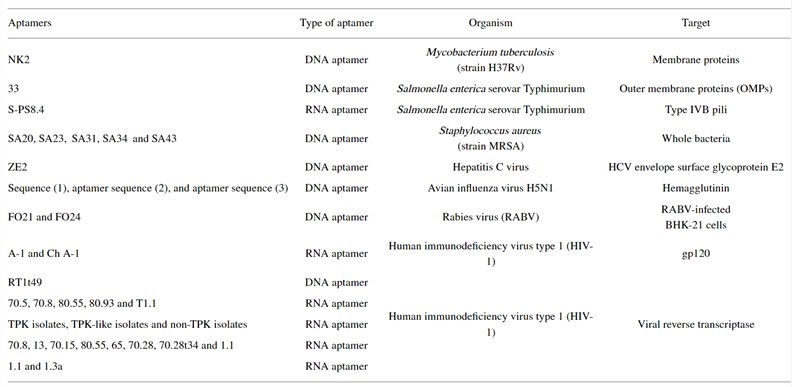 Fig.1 Aptamers against bacterial and viral human pathogens.1
Aptamers and Bacterial Infections
For human beings, common bacterial infections include diseases caused by Staphylococcus Aureus, Pseudomonas aeruginosa, Mycobacterium tuberculosis, Escherichia coli, Streptococcus pyogenes, Bacillus Anthracis, Vibrio alginolyticus, Helicobacter pylori, and so forth. For instance, the use of biosensors containing nucleic acid aptamers that bind targets with high affinity and specificity could accelerate sepsis diagnosis. Aptamers targeting the ubiquitous bacterial peptidoglycan bind to four gram-positive and seven gram-negative bacterial sepsis agents with high binding efficiency. These aptamers could be used in combination as biological recognition elements in the development of biosensors. Aptamers can be further labeled with different radionucleotides such as 99mTc, 18F, and 32P to test their performance for in vivo identification of specific bacterial infection by scintigraphy in animal models.
Services at Creative Biolabs

Creative Biolabs is equipped with the following detection systems and can provide one-stop anti-bacteria aptamer solutions for global clients. For instance, due to the strong affinity of aptamers to target bacteria and the amplification of signals by platinum nanoparticle probes with high catalytic activity, rapid and accurate detection of bacteria could be achieved by aptamer-microfluidic chip. For customized services or products, Please contact us for more information.
- Aptamer-Nanoparticle (Apt-NP) System
- Aptamer-Microfluidic System
- Aptamer-Quantum Dots System
- Molecular Beacon Aptamer System
- Fluorescent Aptamer System
Published Data
1. A Novel Aptamer-Based Assay for Pathogenic Leptospira Detection
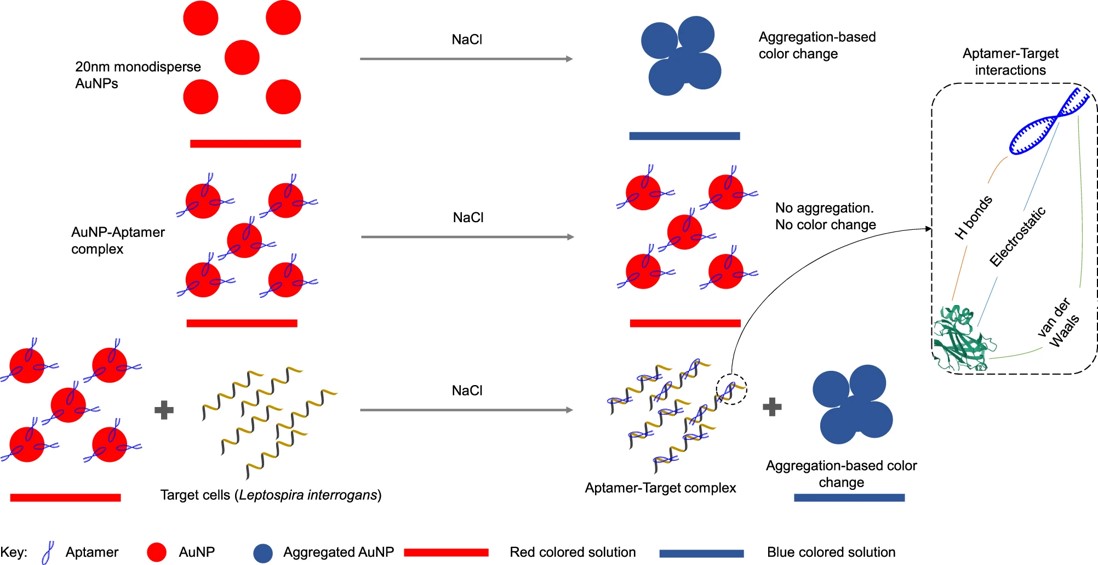 Fig.2 Schematic of the AuNP-Aptamer colorimetric approach used to detect L. interrogans.2,4
This study developed an aptamer-based assay for detecting pathogenic Leptospira. Aptamers against Leptospira were developed through SELEX and assessed for binding affinity to key Leptospiral outer membrane proteins via in silico analysis. The aptamer with the strongest affinity was selected and conjugated to gold nanoparticles (AuNPs) for visual detection, producing a colorimetric change upon interaction with L. interrogans. The aptamer-AuNP assay detected down to 57 CFU/mL and showed high specificity and reproducibility in water samples. This assay offers a rapid, sensitive, and cost-effective method for diagnosing leptospirosis, with significant potential for epidemiological applications, including outbreak identification and improved prevention, especially in resource-limited settings.
2. Development of Aptamer-Based Biosensor for Escherichia coli O157:H7 Colorimetric Detection
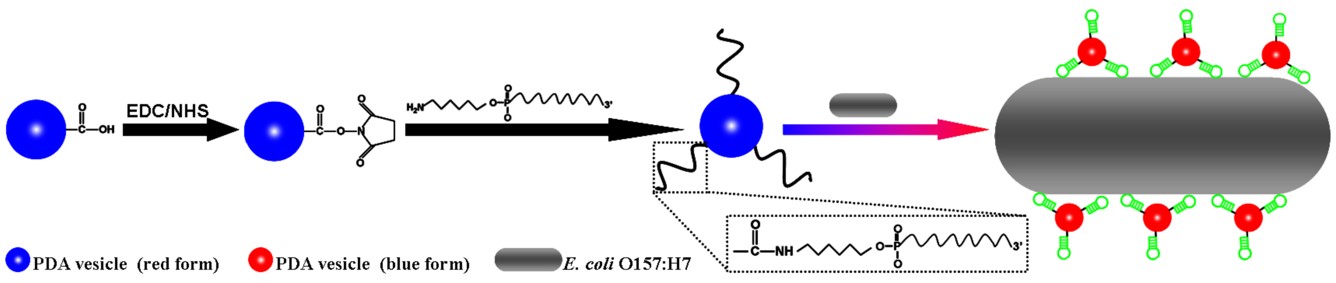 Fig.3 Principle of E. coli O157:H7 detection using aptasensor presented in this work.3,4
This study introduced an aptasensor for quick, colorimetric and quantitative Escherichia coli O157:H7 detection. The sensor was created by attaching a truncated lipopolysaccharides (LPS)-binding aptamer to the surface of nanoscale polydiacetylene (PDA) vesicles using peptide bonding between the vesicle's carboxyl group and the aptamer's amine group. The binding between the aptamer and E. coli O157:H7 triggered a color change from blue to red in the PDA vesicle, which could be easily observed with the naked eye and measured quantitatively through colorimetric responses (CR). The specific interactions between the aptamer and the bacteria were confirmed using both transmission electron microscopy and confocal laser scanning microscopy. The aptasensor detected E. coli O157:H7 at concentrations ranging from 10⁴ to 10⁸ CFU/mL in under two hours with 100% specificity. When tested on 203 clinical fecal samples, it showed a 98.5% correspondence rate with standard culture methods. This aptasensor offers a specific, convenient, and rapid method for detecting pathogenic bacteria.
References
- Zimbres, Flávia M., et al. "Aptamers: novel molecules as diagnostic markers in bacterial and viral infections?." BioMed research international 2013.1 (2013): 731516. Distributed under Open Access license CC BY 3.0, without modification.
- Vishwakarma, Archana, Yogesan Meganathan, and Mohandass Ramya. "Aptamer-based assay for rapid detection, surveillance, and screening of pathogenic Leptospira in water samples." Scientific Reports 13.1 (2023): 13379.
- Wu, Wenhe, et al. "An aptamer-based biosensor for colorimetric detection of Escherichia coli O157: H7." PloS one 7.11 (2012): e48999.
- Distributed under Open Access license CC BY 4.0, without modification.
For Research Use Only.