Bacteroides vulgatus-derived Exosome Research & Application
Isolation Workflow Exosome Features Research Platform Our Advantages Client Reviews FAQs
Exosomes secreted by Bacteroides vulgatus, a predominant member of the human gut microbiota, have emerged as critical mediators in the dynamic communication between intestinal bacteria and host immune systems. These nanosized vesicles encapsulate a variety of bioactive molecules, including proteins, lipids, and nucleic acids, which facilitate the modulation of immune responses and maintenance of intestinal homeostasis. Scientific studies suggest that Bacteroides vulgatus-derived exosomes contribute to immune tolerance, orchestrating the balance between inflammatory and anti-inflammatory signals within the gut. By delivering regulatory signals directly to host cells, these vesicles are central to understanding microbial-host interactions in autoimmune and inflammatory contexts.
Creative Biolabs recognizes the growing importance of Bacteroides vulgatus exosome research and provides tailored support for researchers aiming to elucidate the mechanisms of gut microbiota-derived vesicles. Our services enable a systematic investigation of vesicle properties, immune interactions, and functional capabilities.
Customized Workflow for Exosome Isolation
Creative Biolabs follows a standardized workflow for the isolation of Bacteroides vulgatus-derived exosomes, ensuring high reproducibility and research-grade quality. Optional downstream characterization and compositional analysis depend on the availability of Bacteroides vulgatus strain libraries and are not included in the standard workflow.
Bacterial Cultivation
Preliminary Processing
Sterile Filtration
Pellet Resuspension
Density Gradient Purification (Optional)
Bacterial Cultivation
Bacteroides vulgatus is cultured in Brain-Heart-Infusion (BHI) medium at 37°C under strict anaerobic conditions until sufficient biomass is obtained.
Preliminary Processing
The bacterial suspension is thoroughly vortexed and subjected to centrifugation to separate bacterial cells from the supernatant.
Sterile Filtration
The collected supernatant is vacuum-filtered through sterilized membranes to ensure the removal of residual bacterial bodies. Sterility is optionally confirmed via overnight culture.
Pellet Resuspension
Centrifugation of the supernatant yields exosome-containing pellets, which are resuspended in sterile phosphate-buffered saline (PBS).
Density Gradient Purification (Optional)
To further enhance exosome purity and remove soluble proteins or debris, pellets can undergo iodixanol density gradient ultracentrifugation, providing high-quality vesicles suitable for advanced research applications.
This workflow ensures that Creative Biolabs delivers exosomes with minimal contamination while maintaining vesicle integrity and biological activity, enabling downstream functional assays or exploratory studies.
Functional Insights: Bioactive Features of Bacteroides vulgatus-Derived Exosomes
Creative Biolabs has reviewed and summarized recent research to provide insight into the functional properties of Bacteroides vulgatus-derived exosomes. These findings reflect independent scientific investigations and not proprietary discoveries.
|
Research Focus
|
Key Observations and Findings
|
|
Semimaturation of Bone Marrow-Derived Dendritic Cells (BMDCs)
|
Studies demonstrate that Bacteroides vulgatus-derived exosomes stimulate a semi-mature phenotype in mouse CD11c BMDCs. Compared to PBS controls and pathogenic E. coli-stimulated BMDCs, vesicle-treated BMDCs exhibited moderate upregulation of MHC-II molecules and T-cell co-stimulatory surface proteins, indicating a balanced immunological state conducive to immune tolerance.
|
|
Induction of Immune Tolerance
|
Experiments utilizing fluorescently labeled Bacteroides vulgatus exosomes showed rapid cellular uptake by BMDCs. Following uptake, BMDCs displayed semimaturation characterized by elevated MHC-II and IL-6 expression. This allowed the cells to tolerate subsequent stimulation by E. coli mpk, demonstrating the exosome's role in anti-inflammatory signaling and immune response silencing.
|
|
Signaling-Mediated Immunomodulation
|
Analysis of IL-8 release indicated activation of TLR2 and CD14/TLR4/MD-2 complexes. Further testing with receptor-deficient BMDCs confirmed that both pathways are involved in immune silencing, with the CD14/TLR4/MD-2 pathway serving as the dominant signaling axis while TLR2 contributes complementary regulatory input. This mechanistic insight underscores the precise molecular interaction between exosomes and host immune receptors.
|
|
Vesicle Morphology and Biogenesis
|
Electron microscopy and imaging studies reveal that Bacteroides vulgatus-derived exosomes originate from bulging regions of the bacterial outer membrane. The vesicles exhibit size heterogeneity, spherical and irregular morphologies, and encapsulate proteins and signaling molecules critical for host communication.
|
|
Cross-talk with Host Microbiota
|
Research indicates that these exosomes participate in fine-tuning host immune responses and maintaining symbiosis. Their delivery of bioactive molecules modulates inflammatory pathways, helping the host distinguish between commensal and pathogenic microbial signals.
|
These findings collectively highlight Bacteroides vulgatus exosomes as powerful tools for studying microbial-host interactions and investigating regulatory mechanisms in intestinal immunity.
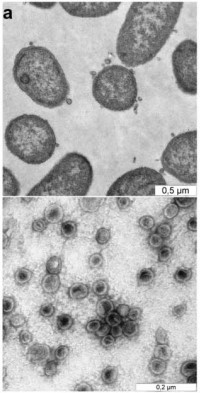 Fig.1 Evidence for Bacteroides vulgatus-derived exosome-like vesicles from bulging of the outer membrane.1
Research Support Infrastructure
Creative Biolabs provides a comprehensive platform for Gram-negative bacterial exosome research, supporting every stage of study from isolation to advanced analysis.

Exosome Extraction & Purification
Expertise in anaerobic bacterial cultures and isolation ensures high-purity vesicle preparation.

Optional Characterization
Nanoparticle tracking analysis (NTA), cryo-electron microscopy, and proteomic profiling are available depending on project requirements and bacterial library availability.

Functional Studies Support
Creative Biolabs can assist with uptake assays, immune modulation studies, and receptor signaling evaluation using state-of-the-art laboratory tools.

Data Integration & Reporting
Detailed reports summarize vesicle yield, integrity, and optional compositional features to guide ongoing research.
By leveraging these capabilities, researchers can accelerate investigations into Bacteroides vulgatus exosomes without extensive in-house method development.
Distinctive Advantages of Collaborating with Creative Biolabs
-
Expertise in Gram-Negative Exosomes: Creative Biolabs has extensive experience in isolating and analyzing bacterial vesicles, providing accurate, reproducible, and high-quality materials.
-
Customizable Services: Optional assays for vesicle composition, molecular cargo, and functional studies allow researchers to tailor projects to specific objectives.
-
Quality Assurance: Standardized workflows and careful sterility verification ensure consistency and experimental reliability.
-
Global Collaboration: Creative Biolabs has supported academic and industrial partners worldwide, facilitating cross-disciplinary studies of microbiota-host interactions.
Customer Feedback and Testimonials
"Working with Creative Biolabs on Bacteroides vulgatus-derived exosomes significantly accelerated our research timeline. Their vesicles were consistent and high-quality, and the optional characterization services provided deep insight into immune interactions."
— Dr. EmiXXXX
"Creative Biolabs ' team provided clear guidance for our project, ensuring the vesicles met our research requirements. Their platform is invaluable for studies of gut microbiota-derived vesicles."
— Prof. RicXXXX
Creative Biolabs is committed to enabling cutting-edge research into Bacteroides vulgatus-derived exosomes, supporting the scientific community with reliable materials, comprehensive services, and expert guidance. Please contact us to discuss project specifications or to request a consultation.
FAQs
Q: What functions do Bacteroides vulgatus-derived exosomes perform?
A: Bacteroides vulgatus-derived exosomes are involved in various functions, including the modulation of immune responses, the transfer of genetic material (like plasmids or RNA), and influencing host-microbe interactions. They also play a role in nutrient absorption and metabolic processes within the gut environment.
Q: How can Bacteroides vulgatus exosomes be isolated for research purposes?
A: Exosomes from Bacteroides vulgatus can be isolated using techniques like ultrafiltration, ultracentrifugation, or exosome isolation kits. Researchers often characterize these exosomes through methods such as NTA and TEM to confirm their identity and purity.
Q: What is the research potential of Bacteroides vulgatus-derived exosomes?
A: The research potential of these exosomes lies in their ability to serve as biomarkers for gut health, their role in mediating host-microbe interactions, and their use in studying microbial community dynamics. Additionally, their cargo may provide insights into metabolic pathways and contribute to understanding complex diseases related to gut dysbiosis.
Q: Are there specific applications of Bacteroides vulgatus exosomes in microbiome studies?
A: Yes, Bacteroides vulgatus exosomes can be used in microbiome studies to explore microbial communication and the effects of the gut microbiota on host physiology. They can also be employed to study the environmental impact of diet on gut microbiota composition, providing a non-invasive tool for assessing changes in microbial communities.
Q: What challenges exist in the study of Bacteroides vulgatus-derived exosomes?
A: Challenges include the complexity of isolating and characterizing exosomes due to their small size and the presence of various vesicles from other microbial species. Additionally, understanding the functional implications of their diverse cargo remains a significant area of ongoing research.
Q: How can findings from Bacteroides vulgatus exosome research contribute to broader scientific knowledge?
A: Research on Bacteroides vulgatus-derived exosomes can enhance understanding of microbial interactions within the gut ecosystem, provide insights into how gut microbes influence host physiology, and inform the development of better strategies for studying microbial populations and their roles in health and disease.
Reference
-
Maerz, Jan Kevin et al. "Outer membrane vesicles blebbing contributes to B. vulgatus mpk-mediated immune response silencing." Gut microbes vol. 9,1 (2018): 1-12. Distributed under Open Access license CC BY 3.0. The image was modified by extracting and using only Part A of the original image and revising the title. https://doi.org/10.1080/19490976.2017.1344810
For Research Use Only. Cannot be used by patients.
Related Services: